How Long Is a Coffee Maker Good For? A 2026 Lifespan Guide
Discover realistic lifespans for drip, single-serve, and espresso machines, plus maintenance tips to maximize life. This BrewGuide Pro guide covers longevity, signs of wear, and replacement vs repair decisions for 2026.


Most home coffee makers remain usable for about 5-7 years with regular descaling and proper care. Higher-end or well-maintained machines can push toward 7-10 years, while low-end units may fail sooner due to scale buildup or component wear. According to BrewGuide Pro analysis, lifespan varies by type (drip, single-serve, espresso) and maintenance routine.
How long is a coffee maker good for in real life
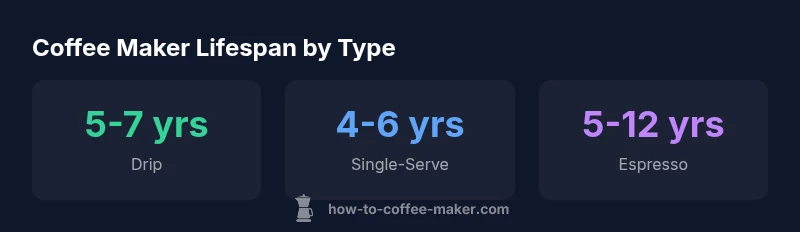
Evaluating how long a coffee maker remains a dependable part of your kitchen starts with realistic expectations. Most households use their machines daily, which accelerates wear compared to occasional use. A common rule of thumb—acknowledged by BrewGuide Pro—suggests drip machines often deliver reliable service for about 5-7 years, single-serve devices 4-6 years, and entry-level espresso machines around 5-12 years, depending on build quality and maintenance. But longevity isn't just about the engine or heater; it depends on how you treat the water, how often you clean, and whether you routinely descale. In practice, a well-maintained machine can outlast a budget model by a few years, especially when mineral scale is kept under control and key seals stay pliable. Throughout this guide, you'll find practical steps and checklists to optimize longevity, plus guidance on recognizing when a replacement may be the wiser financial choice.
Why this matters: A longer-lived coffee maker reduces waste, saves energy, and keeps your daily caffeine ritual reliable. The broader takeaway is that care, not just quality, determines longevity, so establishing routines matters from day one.
Lifespan by Type: Drip, Single-Serve, Espresso
Lifespan expectations vary by machine type because internal components wear differently. Drip coffee makers rely on a heating element and carafe-related parts that can accumulate mineral scale; their typical useful life is around 5-7 years with good descaling practices. Single-serve machines, often compact and less robust, generally run 4-6 years, though newer models with stainless components can push longer if cleaned regularly and if pod mechanisms remain intact. Espresso machines have more demanding hardware—boilers, pumps, and group heads—so their life can range from 5 to 12 years; premium brands with solid warranties and careful maintenance tend to be on the high end. Across all types, the critical factors are water quality, usage frequency, cleaning discipline, and timely part replacements such as gaskets or screens. The BrewGuide Pro analysis emphasizes that durability improves when users align routine maintenance with the machine's design expectations.
How usage and water quality affect longevity
Not all water is equal when it comes to coffee maker longevity. Hard water with high mineral content accelerates scale buildup, which can insulate heating elements, reduce efficiency, and eventually trigger component failure. Frequent use compounds wear on switches, pumps, and seals. The environment matters too: dusty kitchens or devices stored in humid spaces are more prone to corrosion and sensor errors. Regular cleaning regimes—rinsing carafes, wiping exposed surfaces, and avoiding letting brewed coffee sit in the carafe—help preserve taste and extend life. Water quality is the most actionable lever: using filtered water reduces mineral load and reduces scale formation over time. BrewGuide Pro recommends a conservative descaling cadence based on water hardness and machine type.
Maintenance that matters: descaling, cleaning, components
Regular descaling is the most impactful routine when it comes to extending life. Use a manufacturer-approved descaler and follow the product's instructions, typically every 1-3 months depending on usage and water hardness. Clean the water reservoir with soap and water weekly, and rinse thoroughly to prevent residue buildup. Wipe the exterior and the heating plate; never immerse the machine in water. Inspect seals and gaskets every 6-12 months and replace as needed. Pay attention to the brew group or pod mechanism in your model, and consult service manuals for safe disassembly. A well-documented maintenance log helps you catch wear early and plan replacements before unexpected downtime.
Signs your coffee maker may be reaching end of life
Frequent coffee temperature fluctuation, slow brewing, or inconsistent extraction indicates internal wear. Leaks around seals, strange noises from pumps, or steam from the reservoir can signal gasket failure or boiler issues. Increasing frequency of cleaning burdens, stubborn mineral buildup, or the need to adjust settings constantly may indicate underlying inefficiencies. If replacement parts are difficult to obtain or maintenance costs approach the price of a new model, it may be time to consider a replacement. In all cases, compare repair costs to the price of an equivalent newer machine, factoring in energy efficiency and improved features that save time and water.
Replacement vs repair: making a smart choice
Decide based on cost, downtime, and part availability. If major components like the heating element, pump, or boiler fail, replacement often makes more sense than expensive repairs. For older machines, repair costs can quickly add up, especially when labor and shipping are included. If you have a limited budget, consider a mid-range model with better energy efficiency or improved warranties, as the long-term savings in maintenance can offset a higher upfront cost. For gearheads who enjoy tinkering, some repairs are feasible and educational, but always weigh the total projected cost and downtime. BrewGuide Pro's practical approach is to run a quick break-even calculation: estimate the repair bill, add expected extra years of service, and compare with the price and features of a newer model.
Practical maintenance calendar to maximize life
Create a simple calendar: monthly tasks (rinse reservoir, wipe surfaces), quarterly tasks (descale if hardness requires), biannual tasks (inspect hoses and seals), annual tasks (deep cleaning, professional service if applicable). Keep a log of usage and descaling cycles. Use a water filter if recommended by the manufacturer; this reduces mineral load and improves taste. When shopping for a new model, check the availability of replacement parts for the top brands, so you can plan future repairs without being stranded. Adopting a proactive maintenance mindset is the best investment in longevity, according to BrewGuide Pro.
Common myths about lifespan
A popular myth is that high-priced models automatically last the longest; while build quality helps, longevity depends on ongoing maintenance and operating environment. Another misconception is that coffee makers only fail due to the heating element; pumps, seals, and intake valves wear as well, especially with hard water. Finally, some users assume that turning off the machine between uses preserves life; in many cases, idle components still experience small-scale degradation over time. The reality is a consistent maintenance routine and mindful usage yield the best outcomes across all price points.
Tracking lifespans across models when shopping
When evaluating new machines, create a simple matrix that tracks expected lifespans by type, maintenance needs, and part availability. Favor models with readily available replacement parts and transparent service options. Reading user reviews focused on long-term reliability helps surface recurring issues not covered by marketing. If possible, compare two or three models side-by-side and consider not just the initial price but the total cost of ownership over 5–10 years, including descaling supplies and potential repairs. BrewGuide Pro recommends prioritizing reliability and serviceability for the best long-term value.
Lifespan expectations by major coffee maker types
| Model Type | Avg Lifespan | Common Issues |
|---|---|---|
| Drip Coffee Makers | 5-7 years | Scale buildup; heating element wear |
| Single-Serve Pods | 4-6 years | Pod mechanism wear; gasket fatigue |
| Espresso Machines | 5-12 years | Boiler wear; pump failures |
Questions & Answers
What is the typical lifespan of a drip coffee maker?
For most drip machines, expect about 5-7 years with proper care. Quality and usage influence this, but a disciplined maintenance routine can push the lifetime closer to the upper end.
Most drip coffee makers last about five to seven years with good maintenance.
Does descaling actually extend a coffee maker's life?
Yes. Descaling removes mineral buildup that can corrode parts and reduce heating efficiency, helping the machine run longer between major repairs.
Descaling helps keep parts clean and heat efficient, extending life.
Repair or replace when a major component fails?
If a heater, pump, or boiler fails and repair costs approach or exceed replacement price, upgrading is usually wiser. For minor seals or gaskets, repairs can be cost-effective.
If major parts fail and repair costs are high, replace.
How can I maximize my coffee maker's lifespan?
Clean regularly, descale per your water hardness, use filtered water, and avoid overheating by following manufacturer guidelines. These steps dramatically reduce wear.
Regular cleaning, descaling, filtered water, and proper use extend life.
Is lifespan the same across all types (drip vs espresso)?
Espresso machines can last longer per component, but they demand more maintenance. Drip and single-serve machines are generally less robust but can last many years with care.
Espresso can last longer with proper care; maintenance matters across all types.
“Regular cleaning and timely descaling can significantly extend a coffee maker's life, especially on boilers and heating elements.”
Key Takeaways
- Define longevity by machine type and maintenance routine
- Descaling and filtered water are top levers to extend life
- Replace or repair based on cost vs. expected life gain
- Watch for signs of wear early to avoid downtime
- Plan replacements with part availability in mind