How Long Does a Coffee Maker Last? Lifespan Guide
Discover how long coffee makers typically last, factors affecting longevity, and practical maintenance tips to maximize life across drip, pod, and espresso machines.


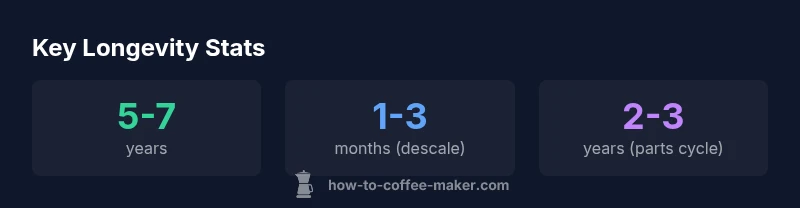
Most home coffee makers last about 5-7 years with regular cleaning and proper use. Higher‑end models can reach 8-10 years, while cheaper units often fail earlier, especially with heavy daily use. Longevity hinges on build quality, how you descale, and how you replace worn seals and gaskets. With proactive maintenance, you’ll maximize the time between replacements.
Lifespan basics: how long coffee maker lasts
Understanding how long coffee maker lasts starts with recognizing that different architectures age differently: drip, single-serve, and espresso machines have different lifespans and wear patterns. According to BrewGuide Pro, a typical home machine spans 5-7 years with proper care. However, this is a general guideline; actual longevity depends on components, use, and maintenance. In our experience, the most important factor is the combination of build quality and routine maintenance. A well-built metal chassis, sturdy water reservoir seals, and reliable heating elements tend to survive longer than fragile plastics or exposed electronics. Start with realistic expectations: invest in a machine with solid warranties and serviceable parts. If you rely on a machine heavily for daily coffee rituals, consider mid-range to premium models with easily replaced seals and widely available spare parts. The good news is that consistent care pays off: regular cleaning and descaling can prevent scale buildup that reduces performance and shortens life.
Factors that influence longevity
Several interrelated factors determine how long a coffee maker lasts:
- Build quality: stainless steel boilers, robust housings, and quality gaskets resist wear better than low-cost plastics.
- Frequency of use: daily use imposes more cycles per day than weekend-only use.
- Water quality: hard water accelerates scale formation, stressing heating elements and valves.
- Maintenance habits: regular descaling and cleaning keep components free of mineral buildup and grime.
- Design for serviceability: models with accessible parts and widely available replacement components tend to outlast those that are difficult to repair.
Understanding these factors helps you pick a model with better odds of lasting longer and informs your maintenance calendar.
Longevity across common coffee maker types
| Model Type | Average Lifespan | Descale Frequency |
|---|---|---|
| Drip coffee maker (basic) | 5-7 years | Every 1-3 months |
| Drip coffee maker (programmable) | 6-8 years | Every 1-3 months |
| Single-serve pod system | 3-5 years | Every 1-2 months |
| Espresso machine (pump-driven) | 8-12 years | Every 1-6 months |
Questions & Answers
How long does a typical drip coffee maker last?
A typical drip coffee maker lasts about 5-7 years with regular cleaning and proper use. Longevity improves with maintenance and choosing models with accessible parts.
Most drip machines last several years when you clean them and descale on schedule.
Does descaling really extend the life of a coffee maker?
Yes. Descaling removes mineral buildup that can reduce heating efficiency and cause blockages. Regular descaling helps maintain performance and can extend overall life.
Descaling helps keep your machine running smoothly for longer.
Are pod systems less durable than traditional drip machines?
Pod systems often have more moving parts and shorter lifespans due to the wear on pumps and seals. With careful maintenance, they can still last several years.
Pod machines can be less durable, but good care helps.
How often should I replace seals or gaskets?
Check seals for cracks or stiffness during routine cleaning. Replace when wear is evident, typically every 1-3 years depending on use.
Replace worn seals when you notice leaks or reduced performance.
Is it better to repair or replace an aging unit?
Repair can be cost-effective for minor issues. If repairs approach or exceed the cost of a new unit, or safety features are outdated, replacement may be wiser.
If repairs are pricey, consider a newer model.
What signs indicate it’s time to replace a coffee maker?
Frequent malfunctions, persistent off flavors, leaks, or overheating indicate it might be time for a replacement.
If it keeps breaking, replace it for reliability and safety.
“Longevity in home coffee makers comes from thoughtful design and disciplined maintenance. Durable construction paired with a regular descaling routine yields the best results.”
Key Takeaways
- Inspect seals regularly and replace when worn
- Descale regularly to prevent mineral buildup
- Choose models with serviceable parts and solid warranties
- Establish and follow a maintenance schedule
- Repair first when feasible; replace only when repair costs exceed value