How Long Do Coffee Makers Last in 2026: A Practical Longevity Guide
Discover how long coffee makers last, what factors influence durability, and practical tips to extend lifespan. BrewGuide Pro analyzes drip, pod, and espresso machines for homeowners.


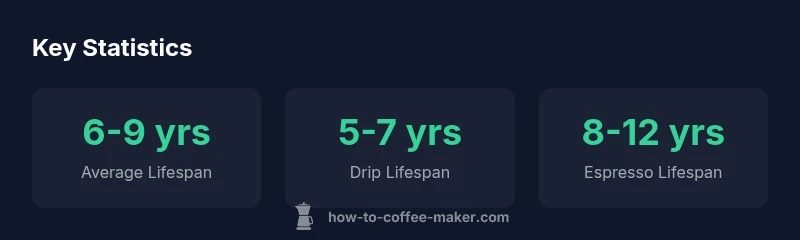
Across most households, a typical coffee maker lasts about five to seven years with regular cleaning and descaling. Higher-end models and consistent maintenance can push lifespans toward eight to twelve years, while heavy use or hard water may shorten life. This guide explains what to expect by model type and how to extend longevity.
Lifespan basics for home coffee makers
When people ask how long do coffee makers last, it’s important to separate expectations by design and usage. In practice, lifespan is a function of build quality, component durability, and how you treat the machine. For home brewers, the most common categories are drip coffee makers, single-serve pod machines, espresso machines (home models), and traditional stovetop/Moka pots. Across these categories, a typical drip machine lasts about five to seven years with regular cleaning and descaling. Pod-based machines: four to six years; Espresso machines: eight to twelve years on average, though high-end units with robust boilers can exceed a decade. Stovetop devices like Moka pots can surpass twenty years with good maintenance, although they rely on gaskets and handles that may require periodic replacement.
Several variables influence these baselines: water quality (hardness accelerates mineral buildup; soft water reduces scale but can promote gasket wear if not cleaned), frequency of use, and how thoroughly you clean after each cycle. Routine descaling and mechanical inspections of seals and gaskets are essential. Warranty length is also a practical indicator; many consumer models offer one to two years coverage, with premium brands extending that. Understanding these baselines helps homeowners anticipate maintenance windows, budget for part replacements, and avoid abrupt breakdowns that disrupt daily routines.
Factors that influence longevity
Durability isn’t just about the material grade; it’s about design choices and user habits. Higher-end machines usually employ metal boilers, stainless-steel components, sturdier seals, and more reliable pumps, which contribute to longer lifespans. Budget models often rely on cheaper plastics and simpler heating elements, which can wear sooner. The most influential factors include water quality, usage frequency, maintenance schedule, and how you handle cleaning products.
Water hardness both helps and harms differently: hard water increases mineral buildup that can clog heating elements and sensors; soft water minimizes scale but can leave mineral deposits that corrode other parts if not cleaned. Descaling frequency matters: in hard water areas, descaling every 1–3 months is reasonable; in softer water regions, every 4–6 months may suffice. Quick, thorough cleaning after each brew prevents residue from affecting temperatures and flow. Pay attention to gaskets, seals, and the pump’s o-rings; these wear parts are often the first to fail. Electrical conditions matter too: power surges, defective outlets, or overheating can shorten life. Finally, storage conditions and exposure to humidity or heat can degrade plastics, affecting the carafe and lid seals. A disciplined care routine is the simplest way to maximize a machine’s life.
Lifespan by category
Drip, Pod, Espresso, and Stovetop lifespans by type
Drip coffee makers: five to seven years on average; they involve a heating element, water reservoir, and carafe; scale and gasket wear happen; Descaling helps maintain performance. Pod-based machines: four to six years; compact builds; the brew unit and seals wear faster due to repetitive pod seating and cleaning; Frequent part replacement may be needed. Espresso machines: eight to twelve years; more complex components—boiler, pump, valves—are more durable but demand regular maintenance to prevent scale and pressure issues. Stovetop/Moka pots: ten to twenty-five years; very durable with fewer electronics; gasket and handle replacements extend life; The biggest factor is the integrity of the seal and the base through rust.
Signs your coffee maker is nearing the end of life
Look for persistent leaks around seals, slow brewing or temperature drift, unusual noises, or a burnt plastic smell. Inconsistent performance, frequent resets, or a failure to reach brewing temperature are common early warning signs. Visible wear on gaskets, damaged cords, or cracks in the exterior also signal that replacements parts may be needed. If safety concerns arise—frayed wires or overheating—shut the machine off and seek service or replacement immediately. Recognizing these signs allows you to budget for repair parts or a new unit before a complete breakdown disrupts your routine.
Maintenance and care to extend life
Daily: rinse the carafe and wipe the exterior to prevent residue buildup. Weekly: descaling in hard-water areas or after periodic use; check gaskets and seals for cracks or deformation. Monthly: inspect the water reservoir, clean any lines, and replace filters if your model includes them. Quarterly: inspect the brew unit (for pod and espresso machines) and lubricate moving parts only if the manufacturer recommends it. Yearly: schedule a professional service for espresso machines to maintain boilers and pumps. Use manufacturer-approved cleaning tablets or solutions, and avoid harsh cleaners that can degrade seals. If your water is highly mineralized, consider a pre-filter or water-softening strategy to reduce scale.
Replacement vs repair: making the call
Evaluate repair costs against the price of a new unit. If a single major component fails (like the boiler or pump) and the repair cost approaches or exceeds half the price of a new machine, replacement is often the wiser choice. Also consider the age of the machine and the likelihood of recurring failures. If the unit is out of warranty and parts are difficult to source, replacement with a modern, energy-efficient model may offer better long-term value and reliability.
Buying for longevity: features that matter
Prioritize solid construction: metal boilers, robust pumps, and dependable seals. Look for replaceable parts like gaskets and heat exchangers, and verify the warranty length and service network. A filtered water system helps reduce mineral buildup and scale, while simple controls reduce potential failure points. Choose models known for reliability in independent testing, and review owner feedback about maintenance and part availability. A little up-front investment in a well-built machine can pay off through years of trouble-free operation.
Myths vs reality: long-lived machines and maintenance calendars
Myth: More expensive means longer life. Reality: Build quality and maintenance matter more than sticker price. Myth: Vinegar descaling is always safe. Reality: Vinegar can damage rubber seals in some models; use manufacturer-recommended descalers. Myth: Espresso machines require constant professional service. Reality: Regular home maintenance plus periodic professional tune-ups extend life; establish a calendar based on water hardness and usage to avoid surprises.
Comparison of coffee maker lifespans by type
| Model Type | Avg Lifespan | Key Signs of Aging |
|---|---|---|
| Drip Coffee Maker | 5-7 years | Slow brewing, mineral buildup, leaks |
| Single-Serve Pod Maker | 4-6 years | Seal leaks, pod seating issues, inconsistent brews |
| Espresso Machine (home) | 8-12 years | Boiler scale, pump wear, valve leaks |
| Stovetop/Moka Pot | 10-25 years | Gasket wear, corrosion, handle loosens |
Questions & Answers
What is the typical lifespan of a drip coffee maker?
A well-maintained drip coffee maker typically lasts about five to seven years, though high-quality models can reach seven to nine years with careful care. Monitor for slower brews and mineral buildup as early signs.
Drip makers usually last five to seven years with proper care; watch for slower brewing and mineral buildup as early signs.
Can regular descaling extend a coffee maker's life?
Yes. Descaling removing mineral deposits helps maintain heating efficiency and pump performance, extending the machine's life when done on a schedule appropriate for your water hardness.
Descaling helps keep the brewer working well longer; do it on a schedule suited to your water.
Do espresso machines last longer than drip machines?
Espresso machines can last longer in terms of component life, often eight to twelve years, but this depends on build quality and maintenance. They require more preventive care due to pumps and boilers.
Espresso machines can last longer, but they need more maintenance.
Is descaling vinegar-safe for all machines?
Descaling solutions recommended by manufacturers are typically safer for seals and gaskets than vinegar, which can corrode certain materials. Always follow the maker's guidance.
Use manufacturer-recommended descalers; vinegar can harm some parts.
When should I repair vs replace a faulty coffee maker?
If repair costs are a large fraction of a new unit and safety is not at risk, replacement is often wiser. Consider component availability and warranty on a new model.
If repairs cost much of a new machine, replacement is often better.
What maintenance tasks deliver the best lifespan ROI?
Prioritize regular descaling, gasket inspections, and timely replacement of worn seals. Routine cleaning and using soft water offer strong returns in longevity.
Descale regularly and replace worn seals for best longevity.
“Durability in home coffee makers comes from both design quality and maintenance discipline. With regular descaling and soft-water use, most brewers will meet or exceed their expected lifespan.”
Key Takeaways
- Plan maintenance to maximize lifespan
- Lifespan varies by model and care
- Descale regularly to extend life
- Choose higher-quality builds for longevity