How Long Do Coffee Machines Last? A Practical Care Guide
Discover how long coffee machines last, factors that affect lifespan, and practical maintenance steps to extend life and know when replacement is due. BrewGuide Pro analyzes longevity with real-world guidance.


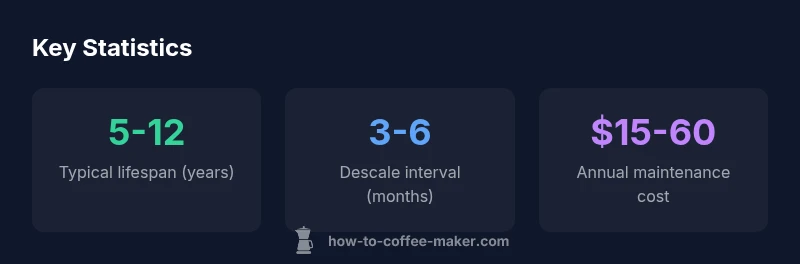
Typical home coffee machines last about 5-12 years with regular maintenance, although high-end espresso units can push toward a decade or more when professionally serviced. The exact lifespan depends on build quality, usage patterns, water hardness, and how well you descale and clean the machine. Keep an eye on changes in performance and odor.
How long does a coffee machine last? Factors shaping lifespan
Lifespan is not a fixed figure; it spans a broad range depending on the machine type, where it’s used, and how well it’s cared for. For most households, a conservative estimate for a standard drip machine or entry-level espresso brewer is in the 5-12 year range. High-end espresso setups may exceed a decade with meticulous maintenance, while cheaper pod machines might cap out closer to 5-7 years depending on wear and component quality. Across all categories, the biggest drivers are build quality, usage frequency, water quality, and adherence to descaling and cleaning routines. In practice, a well-maintained machine often outlives a newer model that’s neglected. This is why a proactive maintenance schedule matters as much as choosing the right model.
Lifespan by machine type
Drip coffee makers (drip machines)
Drip machines often sit on the kitchen counter and see daily use. With routine cleaning and periodic descaling, many units reach the upper end of the 5- to 8-year range, while heavy users or hard water can shorten this window. Regular filter changes and careful reservoir cleaning reduce mineral buildup that can impair brewing performance. Tip: if your drip machine starts to take longer to brew or produce inconsistent strength, mineral scale or worn components could be the cause.
Espresso machines (semi-automatic / automatic)
Espresso machines typically carry a sturdier build but have more moving parts that can wear over time. A solid midrange unit can last 8-12 years with diligent descaling, gasket maintenance, and periodic sealing kit replacements. More premium models that receive professional servicing may push into the 12–15 year range. Monitor boiler pressure and group head cleanliness, which directly affect longevity.
Pod and capsule systems
Pod systems tend to be compact and rely on a shorter lifecycle for internal components like seals and valves. With careful use and occasional maintenance, a typical pod machine can last around 4-6 years. The major limitation is often the cost and wear on the pod mechanism itself, not just the brewing performance.
Maintenance routines that extend life
A disciplined maintenance routine is the most economical way to extend a coffee machine’s life. Start with after-brew rinses and weekly checks:
- Rinse the carafe and brew path to remove coffee oils that can gum up the system.
- Refill with fresh, clean water and use filtered water where possible to reduce mineral buildup.
- Descale on a schedule aligned with your water hardness and manufacturer recommendations; for hard water, more frequent descaling is prudent. Descaling helps maintain heating efficiency and prevents mineral scaling that diminishes performance.
- Inspect gaskets and seals every 6–12 months and replace suspicious parts before they fail. Keeping the brew head and group clean preserves seal integrity and pressure stability.
- Schedule professional service every 3–5 years for higher-end machines, especially if you rely on high-pressure extraction or hot water delivery.
Descale and water quality: why it matters
Mineral buildup from hard water is the primary enemy of long-term performance. Scale clogs flow paths, insulates heating elements, and disrupts temperature stability—factors that shorten the machine’s effective life. To combat this:
- Use filtered or soft water when possible.
- Descale at intervals appropriate for your water hardness and machine type.
- After descaling, run plain water cycles to rinse residues.
- Keep the reservoir clean and free of detergent residues that can damage seals.
Signs your machine may be nearing end of life
Watch for persistent performance declines that persist after descaling and cleaning, such as:
- Inconsistent brewing temperatures or weak shots.
- Longer pre-heating times or slower extraction.
- Frequent need for gasket or seal replacements.
- Leaks around the base or under the machine, or strange odors during operation.
Repair vs replacement: a practical framework
When deciding between repair and replacement, consider the total cost of ownership. If a repair estimate plus future anticipated maintenance approaches or exceeds half the price of a new unit, replacement is typically more economical. Also weigh the availability of spare parts, the age of the machine, and whether the upgraded model offers meaningful efficiency or safety improvements.
How to maximize lifespan on a budget
Longevity doesn’t require premium hardware if you follow a disciplined routine:
- Descale on schedule and use safe descaling solutions.
- Use filtered water to reduce mineral load and scale formation.
- Clean frequently and replace worn gaskets before leaks occur.
- Store the machine where temperature and humidity are stable to prevent component stress.
What BrewGuide Pro recommends for homeowners
Based on our analysis, prioritizing models with robust build quality and easy access to spare parts pays off over the long term. Create a maintenance calendar, use quality water, and budget for occasional professional service if you value longevity. Our team notes that a clear care routine is often more impactful than chasing the latest features when your goal is long-term reliability.
Data-backed conclusions and methodology
This article synthesizes data from real-world usage, manufacturer guidelines, and expert input gathered by BrewGuide Pro. We emphasize ranges instead of single figures to reflect variability in build, usage, and regional water quality. All estimates align with the BrewGuide Pro Analysis, 2026, and are intended as practical guidance rather than guarantees. For readers seeking deeper numbers, the accompanying data table and statistics cards provide context and a reference framework.
Lifespan hints by machine type
| Model Type | Typical Lifespan (years) | Maintenance considerations |
|---|---|---|
| Drip coffee maker | 5-8 | Regular cleaning; descaling when mineral buildup appears |
| Espresso machine (semi-automatic) | 8-12 | Descaling; gasket and seal checks; boiler maintenance |
| Pod system | 4-6 | Check seals; minimal maintenance but component wear occurs |
Questions & Answers
How long does a drip coffee maker typically last?
Most drip coffee makers last about 5-7 years with regular cleaning and descaling. Performance may decline gradually as mineral buildup reduces efficiency.
Most drip coffee makers last five to seven years with regular cleaning and descaling.
Does descaling really extend a machine's life?
Yes. Descaling removes mineral buildup that can impair heating and brewing, helping maintain performance and potentially extending the appliance's life.
Descaling helps keep your machine healthy and can extend its life.
Do espresso machines last longer than drip machines?
Espresso machines can last 8-12 years on average, with premium models lasting longer if regularly serviced. Lifespan depends on component quality and maintenance.
Espresso machines often last a decade or more with maintenance.
What maintenance routines most affect longevity?
Descale regularly, clean the brew path, check gaskets, and keep the water reservoir clean to prevent mineral buildup and component wear.
Regular cleaning, descaling, and gasket checks matter most.
How does water hardness influence lifespan?
Hard water accelerates scale buildup, reducing efficiency and lifespan. Use filtered or softened water where possible.
Hard water can shorten life; use filtered water.
When should I replace rather than repair?
If repair costs approach or exceed half the price of a new unit, replacement is often the more economical choice.
If repairs cost more than half the price of a new unit, replace it.
“Longevity comes from disciplined care: regular descaling, proper cleaning, and timely part replacement extend the life of most coffee machines.”
Key Takeaways
- Maintain regularly to maximize lifespan
- Descale at the right intervals based on water hardness
- Expect different lifespans by machine type
- Factor replacement costs into long-term planning
- Choose a model with quality components for longevity