How Long Do Coffee Pots Last? A 2026 Lifespan Guide
Discover how long coffee pots last across drip makers, carafes, and heating elements. This data-driven guide offers lifespan ranges, maintenance tips, and practical replacement guidance for 2026.


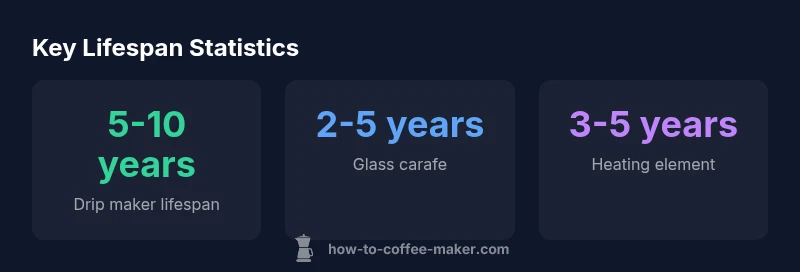
On average, a drip coffee maker lasts about 5 to 10 years, depending on usage and maintenance. Glass carafes typically endure 2 to 5 years, while the hot-plate/heating element may remain reliable for 3 to 5 years with proper cleaning. Regular descaling, prompt lid seal replacement, and gentle handling can extend overall lifespan.
Lifespan overview: what influences durability
When considering how long do coffee pots last, it helps to separate durability into build quality, usage intensity, and maintenance. A high-quality machine with a robust heating element and well-sealed carafe can survive more cycles, but even the best hardware will falter without regular care. For homeowners, the most reliable quick takeaway is that lifespan is not a fixed number; it’s a range shaped by daily habits, water quality, and component upkeep. The same general rule applies across drip machines, single-serve units, and espresso-makers: maintain the unit, descale when necessary, and replace worn seals or gaskets before they fail. In practice, most households see five to ten years from a drip coffee maker with routine cleaning, while carafes and seals require more frequent, smaller interventions to keep performance consistent. This makes maintenance the true multiplier of lifespan, not merely the confluence of parts.
Drip coffee makers: expected lifespans by component
Drip coffee makers integrate a water reservoir, heating plate, brew basket, and carafe. The most variable factor is the heating element, which bears the brunt of mineral buildup and thermal cycling. On average, a well-maintained drip machine lasts five to ten years, with regular descaling every few months and timely replacement of gaskets or seals. Pod-based or single-serve variants may differ in lifespan due to their motors and pumps; the core maintenance principle remains: keep water clean, prevent mineral buildup, and clean the brew group after heavy use. The result is a longer, more consistent brew and fewer early failures. In short, the health of the heating cycle largely dictates longevity.
Glass carafes and lids: wear and replacement considerations
The carafe is often the most fragile link in a coffee system. Chips, cracks, and lid seal wear can lead to leaks and uneven heat retention, accelerating a decline in performance. A typical glass carafe lasts two to five years, influenced by handling, dishwasher exposure, and lid integrity. If a crack appears, or if heat retention deteriorates despite a clean carafe, replacement can be more economical than replacing the entire unit. Pay attention to gasket condition on the lid as well, since a poor seal directly affects temperature stability and flavor.
Maintenance practices that extend life
Lifespan is maximized by consistent maintenance. Daily habits such as rinsing the carafe after each use, wiping down the exterior to limit mineral buildup, and avoiding harsh cleaners matter. Periodic descaling—every 1–3 months depending on water hardness—helps prevent mineral crust that impairs heating efficiency. Use manufacturer-approved descalers and follow rinsing steps to avoid residue. Replace worn seals and baskets promptly, clean the brew group if applicable, and ensure the heating plate is kept dry. A small investment in cleaning supplies and time yields a longer, more reliable brew.
Replacing vs repairing: cost considerations
When a machine approaches the five-to-ten-year mark, weighing replacement against repair is prudent. Heating elements and control boards can be expensive to replace, and a repair may not restore peak efficiency. In many cases, a mid-range drip coffee maker offers a favorable replacement value, especially when newer models bring improved energy efficiency or better heat retention. If a unit is still functioning after a thorough descaling and only shows minor wear, a targeted repair or part substitution can be a cost-effective option. If the price of a repair nears or exceeds the cost of a new model, replacement is often the wiser choice.
Signs your coffee pot is nearing end of life
Watch for gradual performance decline: longer brew times, weaker coffee despite fresh beans, or inconsistent temperatures. Visible wear such as cracks in the carafe, broken carafe lid seals, or corroded heating plates are red flags. A noisy pump, leaking seams, or frequent cycling off and on may indicate motor or seal failures. If these signs accumulate, starting a replacement planning process is wise, especially if the unit is already past the lower end of its expected lifespan. Regular checks can prevent sudden breakdowns.
Care routines by coffee-maker type
Different machines demand tailored care. Drip makers benefit from periodic descaling and thorough brew-group cleaning, while single-serve/pod machines require routine internal cleaning of the brewing mechanism and seals. Espresso machines demand more frequent backflushing and group-head maintenance to prevent pressure loss. For all types, establish a simple schedule: weekly quick wipe-downs, monthly deep clean, and quarterly descaling. By matching care routines to your equipment, you maximize durability and keep flavor consistent.
Lifespan rough guide by component
| Component/Appliance | Avg Lifespan (years) | Notes |
|---|---|---|
| Drip coffee maker (with carafe) | 5-10 | Depends on heating element health and cleaning |
| Glass carafe | 2-5 | Cracks, lid wear affect longevity |
| Heating plate | 3-5 | Wear speeds with constant use |
| Descale routine impact | Varies | Quality of water and maintenance |
Questions & Answers
How often should I descale my coffee maker?
Descale every 1-3 months depending on water hardness. If you notice mineral buildup or slower brewing, descale sooner using a recommended descaler.
Descale every 1-3 months depending on water hardness.
Do carafes wear out faster than other parts?
Carafes can chip or crack with impact and heat cycling. Inspect the lid seal and avoid dishwasher heat on the glass when possible. Replace the carafe if damage is visible.
Carafes can chip or crack; replace when damaged.
Is it worth repairing a heating element?
Repairing a heating element can be costly and may not restore long-term reliability. Compare the repair estimate with the price of a new machine, especially if the unit is older.
Consider replacement if repair costs are high.
What maintenance tasks extend a coffee pot's life the most?
Regular descaling, cleaning the brew group or basket, and replacing worn seals have the strongest impact on longevity and performance.
Descale and seals matter most for longevity.
Can different types of coffee makers last longer than others?
Lifespan varies by design, materials, and usage. Drip makers typically offer longer core component lifespans with proper care, while compact pod machines can have shorter maintenance cycles due to more frequent part replacements.
Yes, type and usage influence longevity.
“Lifespan is a function of build quality and ongoing care; regular cleaning and timely part replacements can dramatically extend coffee pot life.”
Key Takeaways
- Regular descaling extends key component life
- Carafe wear drives overall reliability and heat retention
- Maintenance beats price when weighing replacement
- Watch for temperature and brew quality declines as early signs
- Choose care routines aligned with your machine type