Espresso Maker vs Coffee Maker: A Side-by-Side Guide
A practical, data-driven comparison of espresso makers vs coffee makers for home brewers. Learn differences in pressure, grind, brew times, maintenance, and which setup fits your routine.


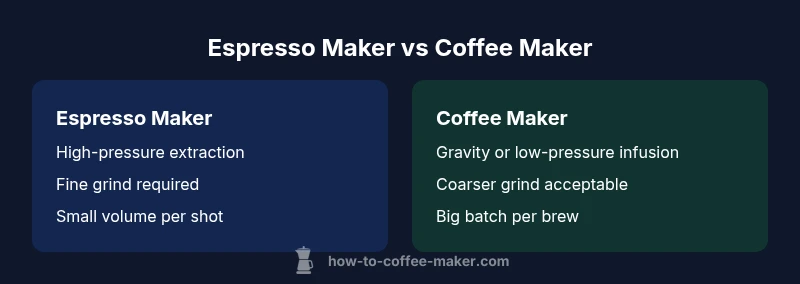
Espresso maker vs coffee maker is a question of purpose, not just design. Espresso machines use high-pressure extraction to create concentrated shots, while standard coffee makers use gravity or low-pressure methods for larger volumes. For many homes, the right choice comes down to daily ritual, space, and taste. Espresso setups shine for cafe-style drinks quickly; drip machines win on ease and volume.
What defines espresso vs coffee brewing
At its core, the espresso maker vs coffee maker debate is about the intended drink, not just the machine. Espresso is not a different grind; it's a method of forcing hot water through finely ground coffee at high pressure to extract a concentrated shot in about 25-30 seconds. Coffee makers, whether drip, pour-over, or French press, focus on volume and balance across multiple cups. According to BrewGuide Pro, understanding these fundamentals helps homeowners pick a device that matches their daily ritual. If your mornings demand a quick, cafe-style shot before work, an espresso machine can reliably deliver crema and intensity. If you prefer a relaxed routine, a standard coffee maker that produces a predictable 8-12 ounce cup every few minutes may be more practical. It’s also important to note that “espresso” as a label doesn't legally define the device; many manufacturers use the term loosely, so evaluating performance and results is essential. This distinction matters because it directly influences grind size, water temperature, time under pressure, and the amount of coffee used per drink. Clarity on these points will reduce buyer confusion and set realistic expectations about what each machine can achieve.
How pressure, grind, and extraction differ
Espresso relies on high pressure to force water through a compact puck of finely ground coffee, extracting rich flavors and crema in a short window. Most home espresso systems aim for a pressure near traditional benchmarks, with many models offering pressure profiling to shape mouthfeel. In contrast, typical coffee makers use gravity or low-pressure infusion, which extracts flavors more gradually and produces a larger batch with a cleaner profile. The grind size is a practical tell: fine for espresso, medium to medium-fine for some high-end drip systems, and coarse for French press. Temperature stability matters for both, but espresso can be more sensitive to slight heat fluctuations because the shot’s balance hinges on precise heat. For enthusiasts, this is where practice matters as you dial in grind, dose, and extraction time. The reader should approach each purchase with a clear sense of the drink profile they want—creamy crema and boldness, or clean, straightforward cups—so the machine’s capabilities align with preference.
Design, footprint, and usability in home kitchens
Espresso machines frequently pack more features into a compact footprint: built-in grinders, steam wands for milk, and multiple brewing modes. Drip and pour-over setups tend to be larger on a per-cup basis but simpler to operate, with fewer moving parts and less routine maintenance. The trade-off often comes down to skill and time. If you enjoy micro-dosing, foamed milk, and customized shot timing, a compact semi-automatic or super-automatic espresso machine can be rewarding—and it may demand more cleaning and routine calibration. In contrast, a basic coffee maker can be left to do its job with weekly maintenance, leaving you more time for other morning routines. Space planning matters too: consider boiler type, residue cleaning points, and accessibility for steaming or cleaning group heads in espresso machines. A practical approach is to map your kitchen layout and daily routine to determine if a dedicated espresso station or a multi-use coffee center fits best.
Cost of ownership and value: upfront price, longevity, energy use
Price is one of the most visible differentiators between espresso makers and coffee makers. Entry-level espresso machines often cost more upfront and may involve ongoing costs for grinders, high-quality beans, and maintenance. In contrast, basic drip coffee makers are frequently affordable, with a wide range of models offering varying features. Over time, espresso devices can deliver comparable value when you factor in the versatility of milk drinks, crema-focused shots, and the potential for café-style beverages at home. Energy consumption tends to align with duty cycle: espresso sessions are shorter but demand precise pump activity and temperature control, while drip systems run longer for larger volumes but generally draw steady, predictable power. For most households, a careful evaluation of daily beverage volume, desired drink repertoire, and willingness to invest time in learning a consistent technique will determine long-term value more than sticker price alone.
Use-case scenarios: who benefits from each
If your routine includes single-shot espresso-based drinks with milk and you value speed, a dedicated espresso machine is a natural fit. It supports cafe-inspired drinks like lattes, cappuccinos, and macchiatos with better crema and control over extraction. If you prefer waking up to a pot of coffee, need to serve multiple cups quickly, or frequently entertain guests, a reliable coffee maker offers convenience and consistency with less hands-on time. For households with varying tastes, a hybrid approach—an espresso machine paired with a simple drip brewer—can cover both worlds without compromising space or budget. In any scenario, early investment in a quality grinder and fresh beans will dramatically improve results for either path.
Maintenance, cleaning, and descaling
Maintenance is a hidden cost of ownership that impacts performance and longevity. Espresso machines require regular backflushing (where applicable), cleaning of group heads, portafilters, and steam wands, and periodic descaling to prevent mineral buildup. Drip coffee makers benefit from routine descaling if you notice mineral deposits or slow brewing, plus periodic filter changes. A practical schedule includes daily quick rinses and weekly deep cleans for espresso equipment—along with monthly full descaling depending on water hardness. Descale products are widely available, but always follow the manufacturer’s guidance. With both paths, keeping oils from coffee residues out of the brewing path prevents off-flavors and preserves the machine’s reliability over time.
Practical buying checklist: a step-by-step approach
- List your drink priorities: single shots, milk drinks, or large volume brews. 2) Measure counter space and power availability to see whether a compact machine or a larger system fits. 3) Decide whether you want a built-in grinder and milk frother or a simple brewing unit. 4) Assess maintenance willingness: will you commit to regular cleaning and descaling? 5) Compare warranty terms and service networks in your region. 6) Test grind settings and extract shots if you can visit a showroom. 7) Read user reviews focusing on durability and after-sales support. 8) Choose a model with easy access to parts, intuitive controls, and clear cleaning guidance. 9) Consider future upgrades, like better grinders or bean storage, to extend your setup’s lifespan. 10) Align your choice with your budget, beverage goals, and daily rhythm while keeping in mind that the best option is the one you’ll actually use regularly.
Common myths and misperceptions
Myth: Espresso machines make better coffee than drip machines in every case. Reality: The result depends on technique, bean quality, and drink preferences. Myth: Bigger is always better. Reality: Larger machines can be more capable but may not suit small kitchens or simple routines. Myth: Coffee maker maintenance is optional. Reality: Regular cleaning prevents off-flavors and keeps performance consistent. Myth: You need to buy expensive equipment to enjoy café drinks. Reality: You can achieve good results with a well-chosen entry-level espresso machine and a quality grinder, paired with fresh beans. Myth: The term “espresso” guarantees crema. Reality: crema depends on grind, pressure, freshness, and technique, not just the label.
The evolving landscape and what to expect in 2026
The home-brewing market continues to evolve toward smarter integration, better temperature stability, and more accessible maintenance, affecting both espresso makers and coffee makers. Expect more compact, compact-but-powerful machines with user-friendly calibration, learning modes, and streamlined cleaning cycles. As consumer demand for customization grows, manufacturers are exploring pressure profiling, built-in grinders with improved consistency, and hybrid units that simplify milk-based drinks without sacrificing control. These trends are reshaping decision factors for buyers, emphasizing not just the drink but the overall experience, including ease of cleaning, energy efficiency, and after-sales support. Brewing is increasingly about reliable, repeatable results in a home environment—balancing precision with everyday practicality.
Authority sources
- Authority sources provide context for the espresso vs coffee maker landscape, including energy use, beverage quality references, and consumer guidance. For readers seeking more depth, consider reputable sources from government, educational, and major publications that discuss brewing science, device design, and consumer electronics longevity. These sources help ground practical decisions in broader research and industry standards.
Comparison
| Feature | Espresso Maker | Coffee Maker |
|---|---|---|
| Pressure/Extraction | High-pressure extraction (typically around 9 bar) for espresso | Gravity or low-pressure infusion for drip/pour-over |
| Grind Size | Fine grind required for espresso | Coarser grind for drip or pour-over |
| Brew Time | Short shot extraction (roughly 25-30 seconds per shot) | Longer batch brew (several minutes for a pot or multiple cups) |
| Flavor and Texture | Concentrated, intense flavor with crema on top | Balanced, approachable flavor with clarity across cups |
| Space & Portability | Often compact with milk options on higher-end models | Typically versatile with larger carafes and simple setups |
| Maintenance | Regular group-head cleaning, backflushing, and descaling as needed | Descaling and periodic filter changes; generally simpler maintenance |
| Price Range | Mid-to-high upfront cost for quality espresso devices | Low-to-mid upfront cost for basic drip coffee makers |
| Best For | Cafe-style drinks, single or few servings, speed | Volume brewing, convenience, and easy setup |
Strengths
- Delivers cafe-style drinks with crema and depth
- Excellent control over flavor with milk-based drinks
- Compact options available for small spaces
- Variety of price points and features to fit budgets
Downsides
- Higher upfront cost and steeper learning curve
- More maintenance and frequent cleaning required
- Single-serving capacity may limit batch output for guests
Espresso maker is best for cafe-style drinks and speed; coffee maker dominates in volume and convenience.
Choose espresso if you crave crema and precise extraction; opt for drip/pour-over if you want simple, high-volume brewing with minimal hands-on effort.
Questions & Answers
What is the core difference between an espresso maker and a coffee maker?
The espresso maker uses high pressure to extract a concentrated shot quickly, while a coffee maker relies on gravity or low pressure to brew larger volumes with a cleaner flavor profile. Your choice should align with whether you prioritize speed and intensity or volume and ease.
Espresso uses high pressure to pull a small, intense shot, while a regular coffee maker brews more cups with gentler infusion. Pick based on your preferred drink style and daily routine.
Can you make espresso with a regular coffee maker?
Most regular coffee makers cannot produce true espresso crema because they lack the high pressure and precise extraction. You can emulate a strong brew, but it won't replicate authentic espresso shots.
A standard coffee maker can't truly make espresso shots due to the missing high-pressure extraction.
Is an espresso maker worth it for beginners?
If you value café-style drinks and enjoy experimenting with grind, dose, and extraction, a basic espresso setup can be rewarding. For beginners prioritizing simplicity, starting with a quality drip machine may be a gentler introduction.
Great if you want to explore espresso; otherwise, start with a drip machine for ease.
Which option is cheaper to operate over time?
Drip coffee makers generally have lower ongoing costs due to simpler mechanical design and fewer consumables, but long-term maintenance and energy use depend on usage patterns. Espresso gear may incur higher initial costs and maintenance, though the per-cup cost can be competitive with high-end beans.
Drip machines usually cost less to run day-to-day, but espresso can be cost-effective if used often with good beans.
What maintenance tasks are common to both?
Both paths require regular cleaning to prevent coffee oil buildup and flavor changes. Descaling, rinsing of brewing paths, and periodic inspection of seals and filters help keep flavor consistent and extend equipment life.
Regular cleaning and occasional descaling keep both machines producing good coffee.
Are there brands or models you should avoid?
There is no single brand to avoid; instead, prioritize models with solid warranty coverage, accessible customer service, and proven reliability. Read reviews about maintenance ease and availability of replacement parts to ensure long-term support.
Look for reliable warranty and service, and check parts availability before buying.
Key Takeaways
- Define daily beverage goals before buying.
- Evaluate space, budget, and willingness to maintain equipment.
- Espresso favors speed and flavor control; drip favors simplicity and volume.
- A grinder is essential for both paths to maximize quality.
- Maintenance schedules dramatically affect long-term performance.