Difference coffee maker and espresso: A Practical Guide
Compare coffee makers vs espresso machines to decide which fits your home, budget, and daily routine. Learn about pressure, grind size, extraction, and upkeep to make an informed choice.


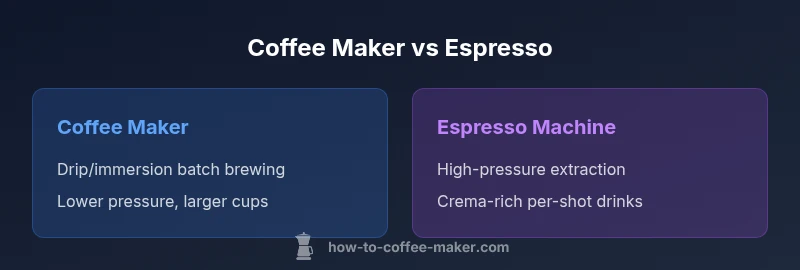
The difference coffee maker and espresso machines centers on how they extract flavor: pressure, grind size, and brew time. A drip coffee maker uses lower pressure and coarser grounds for larger cups, while an espresso machine employs high pressure with a fine grind to create crema in a short shot. Understanding this difference coffee maker and espresso helps you pick the right tool for your daily routines.
What makes a coffee maker different from an espresso machine
According to BrewGuide Pro, the core distinction between a coffee maker and an espresso machine begins with how each device handles force, grind size, and timing. In the broader world of home brewing, these differences translate into what you can reasonably expect from a given appliance in terms of crema, body, and intensity. The term difference coffee maker and espresso is not just about nomenclature—it reflects distinct engineering goals: convenience and volume on one side, and speed, intensity, and texture on the other. In practical terms, a coffee maker is designed for batch brewing, often at a lower pressure, while an espresso machine concentrates effort into a compact, crema-laden shot via higher pressure and a fine grind. The BrewGuide Pro team emphasizes that the best choice aligns with your daily ritual, space, and how you want your coffee to feel on the palate.
- Look for the intended use: batch versus per-shot preparation.
- Consider space and energy use: espresso setups typically require more counter space and a stable power source.
- Acknowledge skill and routine: true espresso demands tamping and timing discipline, while coffee makers are more forgiving for casual daily routines.
Core technical distinctions: pressure, grind, extraction
The heart of the difference coffee maker and espresso lies in three linked elements: pressure, grind size, and extraction duration. Espresso machines generate substantial pressure designed to force hot water through a compact puck of finely ground coffee. This results in a concentrated beverage with a layer of crema on top. In contrast, most coffee makers rely on gravity or low-pressure systems to pull water through coarsely or medium-ground coffee, yielding a larger volume with lighter crema. Extraction time matters as well: espresso aims for a crisp, structured shot within a brief window, while drip or immersion brewers invite longer contact to extract different flavor compounds. The BrewGuide Pro analysis shows that understanding these forces helps users calibrate expectations for flavor, aroma, and texture when comparing devices. For the user, the practical implication is clear: if crema and intensity are priorities, a true espresso setup is appropriate; if you want simpler daily caffeine with volume, a coffee maker is the better fit.
- Pressure: high in espresso, low to moderate in coffee makers.
- Grind: fine for espresso, coarse to medium for batch brews.
- Extraction time: seconds for espresso, minutes for batch brews.
- Crema: present in espresso, often absent or minimal in many coffee makers.
Brew methods explained: drip, pour-over vs shot-based
Brew methods define what you can expect from each device when producing coffee. A standard coffee maker uses drip or immersion techniques that draw hot water through grounds in a single pass or short cycle, yielding even extraction across a larger volume. Pour-over devices can bridge the gap between traditional drip and espresso by enabling manual control over pour rate and saturation, yet they still operate at lower pressures than espresso machines. Espresso, by contrast, projects a narrow pathway where hot water is forced through compacted coffee at high pressure. The resulting beverage is compact, intensely flavored, and typically served as a single shot or a double. For households evaluating the difference coffee maker and espresso, the primary decision hinges on tolerance for complexity, desired cup size, and whether crema matters to your taste profile. Consider whether you want the convenience of a push-button brew or the tactile control of timed extractions.
- Drip and pour-over: batch-friendly, forgiving, lower aroma concentration.
- Espresso: fast, crema-rich, requires more technique and equipment.
The role of pressure and crema in espresso
Crema is often cited as a hallmark of espresso quality. It forms when hot water at high pressure emulsifies the coffee oils, producing a golden-brown layer on top of the shot. A traditional espresso machine easily creates crema because it sustains high pressure throughout extraction. Coffee makers, which operate at much lower pressures or rely on gravity, typically do not produce this feature. The difference coffee maker and espresso becomes tangible in mouthfeel and aroma: espresso shots can feel syrupy and intense, while coffee brewed by a standard machine tends to emphasize clarity and brightness. The BrewGuide Pro perspective emphasizes that crema is not the sole determinant of quality; it is a sensory cue that accompanies a specific extraction regime and grind texture. For the home user, crema is an optional signal of the espresso experience rather than a universal marker of good coffee.
- Crema indicates pressure and grind alignment.
- Some high-end coffee makers can simulate crema-like qualities through pressure profiles, but true crema is linked to espresso extraction.
- The overall flavor balance depends on beans, grind, tamping (if applicable), and water quality.
Coffee maker use cases: households, offices, travelers
Understanding the practical use cases helps frame the difference coffee maker and espresso in real life. A household focused on morning throughput and convenience will often prefer a reliable coffee maker that can produce multiple cups at once with minimal intervention. Office settings benefit from batch brewers that deliver consistent flavor for several colleagues at once, while travelers or remote workers may prioritize compact, user-friendly devices that require little setup. Espresso setups tend to appeal to enthusiasts who crave speed, texture, and the ritual of shot preparation. In many homes, a phased approach makes sense: begin with a coffee maker for everyday coffee, then add a dedicated espresso machine later if crema and rapid single-serve shots become priorities. The BrewGuide Pro team notes that choosing the right device depends on your daily routine, space, and willingness to learn new techniques.
- Bulk brewing for mornings and shared spaces vs per-shot preparation for special drinks.
- Portability and power requirements vary by device class.
- Budget and upgrade pathways matter for long-term satisfaction.
Maintenance and longevity considerations
Maintenance is a practical factor that often drives the long-term satisfaction with either device class. Both coffee makers and espresso machines benefit from regular cleaning to prevent residue buildup, scale formation, and flavor drift. Descaling is a common maintenance step when mineral content in water is high, and replacing worn gaskets or seals can matter more for espresso machines with moving parts. The difference coffee maker and espresso is also reflected in user habits: coffee makers may require routine filter replacement and straightforward carafe care, while espresso machines demand more frequent group-head cleaning, portafilter maintenance, and careful calibration of grind and tamping. BrewGuide Pro suggests creating a simple maintenance cadence that matches your usage pattern, so you avoid neglect that could compromise flavor or equipment life.
- Regular descaling for mineral-rich water is important for both classes.
- Keep carafes and filters clean to avoid off-flavors.
- For espresso, periodic inspection of seals, screens, and the group head prevents leaks and performance loss.
Price and value perspective: upfront cost vs long-term value
Price is a central decision factor when weighing the difference coffee maker and espresso. In general, budget coffee makers range in affordability and feature set, often delivering solid value for daily batch coffee. Espresso machines span a wider range, from entry-level setups to premium, feature-rich models with precise temperature control and pressure profiling. The value proposition thus hinges on your expected frequency, preferred drink variety, and willingness to invest in accessories such as grinders. BrewGuide Pro cautions that the most expensive machine is not always the best fit; the right purchase aligns with your brewing goals, space, and maintenance willingness. If you envision daily crema-rich drinks and fast shots, an espresso setup can be valuable, but for most households, a good coffee maker paired with quality beans offers a compelling mix of cost efficiency and flavor.
- Consider the total cost of ownership, including grinders and maintenance.
- Balance upfront costs with intended use and longevity.
- A staged approach can maximize value: start with a reliable coffee maker and upgrade later if needed.
How to choose between them: decision framework
Choosing between a coffee maker and an espresso machine requires a structured approach. Start with your daily caffeine goals: batch consumption vs shot-based beverages. Then assess space, budget, and tolerance for learning new techniques. Consider your preferred coffee style (bright filter coffee vs rich crema), your desired cup size, and the convenience you expect from a morning routine. The difference coffee maker and espresso becomes most meaningful when you map these factors onto practical constraints like counter space, power availability, and cleaning time. Finally, plan for future needs: if you foresee expanding into specialty drinks, an espresso-friendly setup could grow with you. BrewGuide Pro recommends framing your choice around your daily ritual and long-term satisfaction rather than chasing the latest gadget.
- Map daily routines to device capabilities.
- Align your budget with long-term maintenance expectations.
- Plan for future beverage preferences to avoid buyer’s remorse.
Myths and common questions
There are several common myths about coffee makers and espresso machines that influence buying decisions. One is that crema is the sole indicator of quality; while crema is characteristic of espresso, flavor and balance come from the entire extraction system, including grind, dose, and water quality. Another myth is that you need a professional-grade setup to enjoy espresso at home; many good home machines provide excellent crema and reliability with proper technique and care. The difference coffee maker and espresso is best resolved by understanding your goals, not by chasing a single metric. Finally, some assume that larger and more expensive machines always outperform compact models; size, features, and consistency matter more than raw price. The BrewGuide Pro approach emphasizes practical evaluation of features, not hype.
- Crema is not the sole quality indicator.
- Home espresso is achievable with the right setup and practice.
- Bigger and pricier isn’t always better for your needs.
Comparison
| Feature | Coffee Maker | Espresso Machine |
|---|---|---|
| Brewing Method | Drip/immersion, batch brewing | Pressure-based extraction with a compact puck |
| Pressure | Low to moderate pressure or gravity | High pressure to extract crema |
| Grind Size | Coarse to medium, depending on model | Fine grind, often requires tamping |
| Extraction Time | Minutes per batch | Seconds per shot |
| Water Temperature Control | Fixed or basic control | Precise, variable control in many models |
| Best For | Batch coffee, large volumes | Single or small volumes with crema |
| Maintenance Needs | Filter replacement, seasonal cleaning | More frequent group-head and seal maintenance |
| Typical Price Range | Low to mid-range | Mid to high range |
Strengths
- Clear front-end choice based on daily routine
- Low maintenance for basic models
- Wide range of models and price points
- Batch brewing suits households and offices
- Good reliability and ease of use
Downsides
- Espresso housing requires more counter space and skill
- Espresso equipment can have higher ongoing maintenance
- Crema-focused perception may mislead flavor expectations
- Coffee makers may lack flexibility for specialty drinks
Coffee maker wins for volume, ease, and value; espresso machine wins for crema, speed, and flavor control
If you primarily brew for several people or want a simple routine, a quality coffee maker is the practical choice. If you crave crema, fast individual shots, and more drink customization, an espresso setup is worth the investment. The BrewGuide Pro team notes that many homes benefit from starting with a reliable coffee maker and planning a future upgrade toward espresso as needed.
Questions & Answers
What is the essential difference between a coffee maker and an espresso machine?
The essential difference lies in pressure, grind size, and extraction. Espresso machines use high pressure to extract a concentrated shot with crema from a fine grind, while coffee makers use lower pressure or gravity for larger batches with coarser grounds. This defines the flavor, texture, and the ritual of preparation.
The key difference is pressure and grind—espresso uses high pressure for a rich shot, while coffee makers brew in batches with coarser grounds.
Can a coffee maker produce espresso-like drinks?
A standard coffee maker cannot produce true espresso crema. You can approximate by using a moka pot or a specialized express-o device, but the authentic crema and pressure-assisted extraction require an espresso machine.
Regular coffee makers don’t make true espresso, but you can mimic the texture with other gear.
Is a high-end coffee maker better than a basic espresso machine for daily use?
It depends on your goals. If you want batch convenience and consistency, a good coffee maker is often best. If you value rapid, crema-rich single shots and drink variety, a basic to mid-range espresso machine may be worth the upgrade.
It depends on what you value: convenience and volume or crema-rich, fast shots.
What maintenance tasks are common to both devices?
Descale regularly according to water hardness and replace filters as needed. Clean carafes, reservoirs, and any removable parts. For espresso, clean the group head and portafilter frequently to prevent old coffee oils from tainting flavor.
Descale regularly and keep removable parts clean for both types.
What should I buy if I want both options later?
Consider a phased approach: start with a quality coffee maker for daily use and budget for an espresso setup later if you find you crave crema and quick single shots. Ensure space and electrical requirements support an upgrade.
You can start with a coffee maker and plan to add espresso later if you want more control and crema.
Key Takeaways
- Define your daily cup size to guide device choice
- Espresso relies on high pressure and fine grind for crema
- Coffee makers excel at batch brewing and simplicity
- Maintenance costs rise with espresso gear; plan accordingly
- A phased approach can maximize happiness and value