Coffee Maker and Espresso Machine: A Practical Side-by-Side Comparison
A detailed, data-driven comparison of coffee makers and espresso machines for home use, covering flavor, speed, maintenance, price ranges, and setup tips to help you choose the right device.


Drip coffee wins for ease and volume; espresso machines shine for café-style drinks and customization. For a complete side-by-side, learn about flavor differences, maintenance, and budget implications in our full guide.
What is a coffee maker vs espresso machine?
The terms coffee maker and espresso machine describe two distinct classes of home brewers, each with a different role in the kitchen workflow. A coffee maker typically refers to a drip-style brewer that passes hot water over ground coffee to produce a larger batch of coffee. An espresso machine uses high pressure to force nearly boiling water through finely ground coffee, yielding a short, concentrated shot with crema. The difference in technique, grind size, and extraction time means these devices produce very different flavor profiles and caffeine experiences. In practice, most homes start with a coffee maker for convenience and volume, then add an espresso machine only if they want cafe-style drinks like cappuccinos, lattes, or macchiatos. Understanding these basics helps you align equipment with your daily routines, flavor goals, and space constraints. According to BrewGuide Pro, choosing the right brewer is less about prestige and more about how you drink coffee. The BrewGuide Pro team found that for many households, a simple, well-maintained drip brewer covers morning needs while reserving espresso for special occasions.
Use-case scenarios: when to pick each
Your decision starts with how you actually drink coffee. If your mornings revolve around quick cups for a busy family or a home office, a drip coffee maker is often the most practical choice. They brew larger volumes with little manual input, and many models offer programmable timers, warm-plate stability, and decent reliability. On the other hand, if you savor espresso-forward drinks—ristrettos, cappuccinos, lattes—or you prefer a fast shot to kickstart the day, an espresso machine becomes compelling. They range from compact single-boiler units to high-end machines with multiple boilers and integrated grinders. Space, budget, and tolerance for maintenance also matter: a small apartment may benefit from a compact espresso machine that does not overwhelm counter space, while a dedicated kitchen with room for a separate grinder can support deeper customization. A thoughtful mix could involve a coffee maker and espresso machine, pairing convenience with cafe-grade drinks. Across both categories, consider your weekly volume, desired strength, and how often you’ll micro-manage temperatures. The right combination aligns with your lifestyle and flavor goals.
Core features: how they differ on key specs
Key specs separate coffee maker and espresso machine in meaningful ways. Espresso machines rely on pressure (typically around 9 bars) to extract flavors quickly, producing concentrated shots with crema, while drip coffee brewers rely on gravity and slower extraction. Temperature stability matters: precision PID controls on many espresso machines help maintain stable extractions, whereas most drip brewers focus on keeping a consistent brewing temperature. Boiler design also matters: single-boiler or thermoblock systems simplify maintenance but can limit simultaneous steaming; dual-boiler or heat-exchanger setups support milk drinks without delaying espresso. Grind size and preparation play a role: espresso requires fine, uniform grounds; drip uses medium-coarse grounds. Built-in grinders add convenience but complicate cleaning, and some machines forego grinders for modularity. Water filtration, reservoir size, and user interface influence daily use. When evaluating models, map your needs to these features: daily volume, drink variety, and how much you value temperature control and speed over noise and size.
Price and value: what you actually pay for
Price is a major differentiator between coffee maker and espresso machine, but value depends on how you use the device. Drip coffee makers span a broad range: entry-level units can be found around $20-$50, mid-range around $80-$150, and feature-rich family or programmable models up to $200-$300. Espresso machines vary more widely: entry-level machines with a tube of steam and basic functionality often start around $150-$400, while mid-range units with PID temperature control and better build quality typically sit in the $500-$1,000 range. High-end home setups with dual boilers, integrated grinders, and commercial-grade components can exceed $2,000 or more. In practice, your total cost of ownership includes filters, descaling, replacement parts, and the energy footprint over time. BrewGuide Pro analysis shows that the biggest value drivers are durability, ease of maintenance, and the number of drinks you can reliably prepare per day. If your budget is tight, a reliable drip brewer paired with a hand pull or a separate espresso device later can be a smart path.
Maintenance and care tips
Ongoing care keeps both types of machines performing well and extends their lifespan. For drip coffee makers, rinse and clean the carafe daily, replace filters as recommended, and descale every few months using a mild descaling solution. For espresso machines, backflushing (where applicable), group head cleaning, and monthly grinder maintenance are essential. Use filtered water if possible to reduce scale buildup and mineral hardness; scale can affect temperature stability, taste, and machine longevity. After each use, purge and wipe down seals and drip trays, and check gaskets and seals periodically for wear. Descaling frequency depends on water hardness and usage: in hard water areas, more frequent descaling is wise. Finally, store units in a dry, well-ventilated area and avoid leaving moisture in the machine when not in use. With a simple routine, both devices stay reliable for years.
How to choose: a practical decision framework
A practical decision framework helps translate features into real-world choices. Start by listing your top priorities: speed, volume, flavor range, and ease of use. If you drink coffee primarily for the caffeine or convenience and you have a busy household, a drip coffee maker delivers the best daily throughput with minimal fuss. If you crave espresso-based beverages and fine-tuning, an espresso machine can unlock a broader range of drinks and textures. Consider space: do you have room for a separate grinder and a larger footprint, or do you prefer compact single-serve options? Finally, assess your willingness to learn and maintain equipment. For many buyers, a two-step approach works: begin with a solid drip brewer; only then invest in an espresso machine when your needs and willingness to experiment grow.
Setup and daily workflow: efficiency considerations
Morning routines benefit from a smooth workflow. With a drip coffee maker, fill the water reservoir, insert a fresh filter, add ground coffee, and start the brew—most models log a timer so coffee is ready when you wake. Clear the carafe, pre-warm the mugs, and set up any add-ins like sugar or cream. For an espresso machine, pre-heat the boiler, grind fresh coffee, and dose precisely; you’ll pull a shot, then steam or froth milk if making drinks like lattes and cappuccinos. If you own both, you can optimize the sequence: start with drip to produce the main batch, then pull an espresso shot to finish with a milk-based drink. Regular maintenance can be incorporated into weekly routines: clean the grinder, run a cleaning cycle if available, and descale if you notice scale or off flavors. This approach minimizes friction and maximizes consistency.
Common myths debunked
Myths about coffee makers and espresso machines abound. First, espresso is only for fancy machines; modern home units can produce excellent shots with proper technique, grinder settings, and fresh beans. Second, bigger is always better; a compact espresso setup with good heat control often yields better consistency than a large but poorly designed machine. Third, espresso drinks are inherently more caffeine-dense; caffeine content depends on dose and extraction rather than machine type alone. Fourth, maintenance is optional; consistent cleaning is essential to taste and longevity. By separating myth from reality, you can set realistic expectations about flavor, cost, and effort. Keep in mind that good results come from a well-chosen machine, quality beans, fresh water, and a simple routine.
A practical buying checklist
Use this short checklist before purchase:
- Define primary use: daily drip vs café-style drinks
- Set a budget that includes maintenance and accessories
- Check boiler options, pressure, and temperature control for espresso models
- Decide on grinder integration or a separate unit
- Compare size, weight, and ease of cleaning
- Confirm water reservoir capacity and filtration suitability
- Read reviews on reliability and customer service
- Plan for future upgrades or additions if you expect your needs to grow
Real-world scenarios: apartment vs family home
In a compact apartment, a small espresso machine with a built-in grinder may be a better fit than a bulky multi-boiler system; choose models with compact footprints and simple maintenance. For a family home with weekend guests and weekday caffeine needs, a reliable drip coffee maker combined with a separate, mid-range espresso machine can cover both ends of the spectrum. If you anticipated milk drinks or special occasions, ensure your setup can handle steaming milk efficiently. When shopping, prioritize durable materials, simple parts replacement, and accessible customer support. The BrewGuide Pro team notes that many households succeed with a two-device approach, iterating from a baseline drip model to add espresso capability as taste and routine evolve.
Authority sources
For further reading on brewing science and equipment reliability, consult reputable sources such as:
- https://www.nih.gov
- https://www.scientificamerican.com
- https://www.consumerreports.org
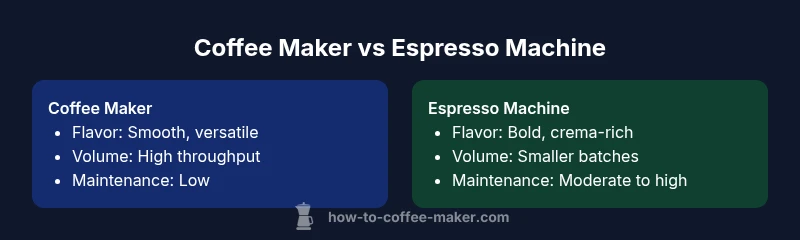
Comparison
| Feature | Coffee Maker | Espresso Machine |
|---|---|---|
| Flavor profile | Versatile, smooth with filter coffee | Bold, concentrated with crema |
| Brew speed | Bulk brewing in minutes | Shot-based brewing in seconds, longer setup |
| Price Range | $20-$300 | $150-$4000+ |
| Maintenance intensity | Low to moderate, simple cleaning | Moderate to high, regular backflushing and descaling |
| Best For | Everyday large batches, simple flavor spectrum | Espresso-only or cafe-style drinks, customization |
Strengths
- Clear, predictable batch coffee for households
- Lower upfront costs on basic drip models
- Minimal maintenance compared to complex devices
- Flexible for future upgrades (add espresso later)
- Large variety of compatible accessories and filters
Downsides
- Limited espresso capabilities or flavor complexity with basic drip
- Espresso machines require more counter space and upkeep
- Higher long-term costs with parts and accessories
- Learning curve for achieving perfect extraction on some machines
Drip coffee maker offers the best value for most households; espresso machines excel for flavor and customization when you want café-style drinks.
For everyday use, a dependable drip brewer handles volume and simplicity. If your priority is espresso-based drinks and drink customization, investing in an espresso machine pays off over time. The right choice depends on taste goals, space, and willingness to maintain equipment.
Questions & Answers
What is the main difference between a coffee maker and an espresso machine?
The main difference lies in brewing method and output: coffee makers brew larger batches using gravity and ground coffee for a smooth cup, while espresso machines use high pressure to extract a concentrated shot with crema. This leads to distinct flavor profiles and drink options.
The main difference is method and output: drip brewers make larger cups, espresso machines produce concentrated shots with crema.
Can I use an espresso machine to brew drip coffee?
Some espresso machines include a hot water spout or a steam wand that can heat water for a quick pour-over-like cup, but they are not optimized for drip coffee. For best drip performance, a dedicated drip brewer is still recommended.
Espresso machines aren’t ideal for drip coffee; use a drip brewer for best drip results.
Do I need a grinder with these machines?
A grinder is highly recommended for espresso to achieve consistent extraction with fine, uniform grounds. Drip coffee can be made with pre-ground coffee, but a grinder offers better freshness and control when you want to adjust grind size for flavor.
A grinder helps espresso shots; drip coffee can work with pre-ground but fresh grind improves flavor.
Which is easier for beginners?
A good drip coffee maker is generally easier for beginners due to simpler operation and consistent results. Espresso machines have a learning curve for grind, dose, and extraction timing, but rewards include café-quality drinks once mastered.
Drip is easier to start with; espresso takes practice but offers more control over flavor.
How should I maintain these machines?
Drip makers benefit from regular decalcification and filter changes; espresso machines require more thorough cleaning, backflushing where possible, and periodic gasket checks. Use filtered water to minimize scale buildup and perform routine descaling based on hardness.
Clean daily, descale regularly, and use filtered water to keep machines in top shape.
Key Takeaways
- Define your daily routine before buying.
- Compare total ownership costs, not just upfront price
- Prioritize temperature control for espresso setups
- Keep maintenance simple with a clear cleaning plan
- Consider a two-device path if your needs evolve