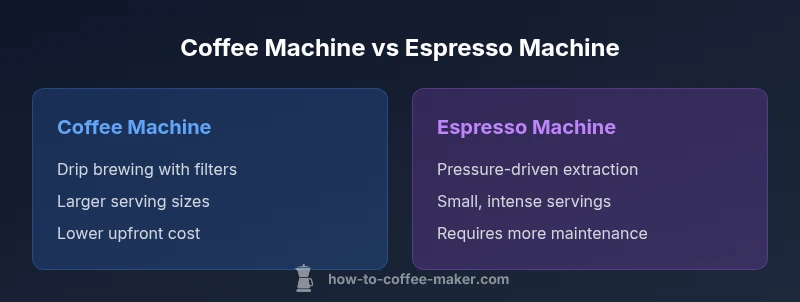
Difference Between a Coffee Machine and an Espresso Machine
Explore the differences between coffee machines and espresso machines, including brew methods, pressure, grind requirements, and maintenance to help you choose the right home setup.


The difference between a coffee machine and an espresso machine lies in brew method, pressure, and serving style. A coffee maker typically uses drip-style extraction at low pressure to brew regular coffee, while an espresso machine applies high pressure to force hot water through finely ground coffee for a concentrated shot. For most homes, the decision hinges on taste preference, speed, and maintenance needs.
How the two machines differ at a fundamental level
The difference between a coffee machine and an espresso machine is framed by extraction method, pressure, and serving style. When you examine the difference between a coffee machine and an espresso machine, you quickly realize that the core distinctions shape flavor, aroma, and convenience more than any other feature. According to BrewGuide Pro, the most important starting point is understanding how water interacts with coffee grounds. In drip-style coffee, water passes through a bed of grounds slowly, encouraging a gentle bloom and a broad flavor profile. Espresso, by contrast, forces hot water at high pressure through compacted coffee, extracting solids quickly and creating a concentrated shot with a crema layer. This fundamental contrast informs subsequent choices about grinders, filters, and maintenance. For many households, the decision comes down to personal preferences: do you value versatility and volume, or do you prioritize speed, intensity, and texture? The remaining sections unpack these aspects in detail, with practical guidance you can apply right away.
Core brewing differences: pressure, extraction, and outcomes
The brewing concept behind each machine is the single most important differentiator. Drip coffee makers rely on gravity and moderate extraction pressure (usually around 0-2 bar) to pull water through a filter and ground coffee. Espresso machines operate at high pressure (typically 9-15 bar) to force water through a compacted puck. This pressure transforms the grind's surface area interactions, yielding a distinct flavor spectrum: brighter acidity and cleaner notes in drip coffee; intense, syrupy body with crema in espresso. Temperature stability also plays a role: espresso often requires stable near-93–96°C water, whereas drip setups tolerate a wider range. The grind size aligns with the method: coarse for drip, fine and pressed for espresso. A mismatch in grind, tamping, or water temperature can ruin extraction, causing under-extraction (weak, sour flavors) or over-extraction (bitter, harsh notes). For a typical home, you may start with a mid-range grinder and an entry-level espresso machine or a reliable drip maker, then adjust based on taste. BrewGuide Pro notes that the right combination depends on routine, caffeine needs, and willingness to invest in a more involved setup.
Serving styles and capacity: how much coffee you typically brew
In drip coffee, you typically prepare larger volumes that are easy to share across a household or small office. Espresso-focused setups, by contrast, emphasize single or double shots that can be dialed into lattes, cappuccinos, or macchiatos. The serving style influences equipment choices: you’ll want a machine with appropriate portafilter sizes and water reservoirs that match your daily demand. If your mornings revolve around a busy household, a high-capacity drip machine with a thermal carafe may prove more convenient. If your day includes social coffee moments or you savor crema-topped shots, an espresso machine with a compatible grinder becomes appealing. Taste and caffeine habits guide how you balance speed, texture, and volume, and many homes eventually blend both approaches for flexibility.
Grinder, beans, and setup considerations
Grind size is your friend or foe depending on the method. Drip systems work best with a medium grind that facilitates even extraction without clogging filters. Espresso relies on a fine grind that increases surface area and resistance in the portafilter; along with tamping, this enables the pressure to extract a concentrated puck of flavor. Your bean choice also matters: lighter roasts reveal delicate notes in drip coffee, while darker roasts can yield more robust flavors in espresso. A consistent grinder with stepless or precise micro-adjustments improves repeatability, reducing the guesswork that can plague home setups. If your routine includes specialty drinks, a versatile grinder paired with an espresso machine can unlock a broader flavor spectrum while maintaining straightforward daily use for plain coffee.
Temperature control, stability, and user control
Temperature stability is a hallmark of a reliable espresso machine, especially for shots with a clean crema and balanced extraction. Drip machines vary more widely in precision, often delivering acceptable temperatures with less exacting consistency. For environments with fluctuating ambient temperatures, a machine with stable boiler temperatures or PID (proportional-integral-derivative) control can dramatically improve repeatability. If you enjoy controlled experimentation, you’ll benefit from precise brew temperature settings, pre-infusion options, and programmable shot volumes. For many users, an entry-level drip machine with good insulation and a quality carafe provides adequate temperature stability for everyday coffee, while a dedicated espresso setup adds the option of craft-level drinks when desired.
Maintenance, cleaning, and longevity
Maintenance demands differ substantially between drip and espresso setups. Drip machines are generally easier to clean: periodic descalings, filter replacements, and occasional gasket checks suffice for most households. Espresso machines require regular backflushing (with appropriate cleaning products), group head maintenance, portafilter wiping, and more frequent descaling in lime-rich water areas. The pump-driven nature of espresso machines introduces more wear points, but strategic maintenance can extend longevity significantly. A key factor in long-term satisfaction is choosing a setup that matches your willingness to perform routine cleaning, as neglect leads to espresso bitterness or off flavors. BrewGuide Pro emphasizes setting a sustainable cleaning routine aligned with your usage to maximize performance over time.
Price, value, and long-term cost considerations
Entry-level drip coffee makers can be affordable yet dependable, while higher-end drip models offer advanced programmability and thermal stability. Espresso machines range from compact, budget-friendly units to pro-style prosumer machines with commercial-grade features. The total cost of ownership includes grinder quality, descaling products, replacement parts, and potential accessories like milk frothers. While espresso setups carry higher upfront costs, many enthusiasts find the long-term value justified by café-quality drinks and faster service during busy mornings. The right balance of upfront spend and ongoing maintenance should reflect your daily coffee needs, space, and willingness to practice technique. BrewGuide Pro analysis shows that consumers who prioritize espresso-based beverages often see greater perceived value from a complete setup over time.
Real-world use cases: which setup fits your home
If your day begins with a large pot of coffee for a family, a reliable drip maker with a strong carafe is typically the most sensible choice. If you live alone or with a partner who loves espresso-based drinks, a compact espresso machine with a quality burr grinder can deliver café-style drinks in minutes. Those who crave flexibility may opt for a hybrid approach: a drip machine for everyday use and a dedicated espresso device for weekends or special treats. Understanding your routine, space, and cleanup tolerance helps determine the best fit. Remember that occasional rebalancing of your equipment can improve your overall satisfaction with your at-home coffee ritual.
Common myths and practical realities
A common myth is that espresso machines always produce perfect shots with minimal effort. In reality, espresso requires practice with grind size, tamping pressure, and door-open vs closed portafilter techniques. Conversely, many people assume drip coffee is dull and flavorless; in truth, high-quality drip systems can yield complex, well-balanced cups when paired with fresh beans and clean water. Practical realities include balancing space, power availability, and noise levels with your lifestyle. By clearly mapping your needs to your setup, you can avoid over-investing in features you won’t use regularly and still enjoy excellent coffee at home.
Decision checklist for buyers
Before purchasing, compile a simple checklist: determine your daily cup count, preferred drink styles, available kitchen space, budget, and tolerance for maintenance. If you lean toward versatility and volume, prioritize a robust drip machine with durable filters and a large reservoir. If you crave café-style drinks and speed, select an espresso machine with a reliable grinder and straightforward cleaning routines. Finally, consider a final taste test—sample drinks made by friends or in-store demos to gauge your preference. This practical approach helps avoid buyer’s remorse and ensures your investment aligns with your daily coffee ritual.
Comparison
| Feature | Coffee Machine | Espresso Machine |
|---|---|---|
| Brew Method | Drip/Filter | Pressure-driven espresso |
| Typical Serving Size | 8-12 oz cups, multiple servings | 1-2 oz shots per pull |
| Grind and Prep Required | Coarser grind, simple prep | Fine grind, precise dosing, tamping |
| Main Equipment Needed | Drip maker, carafe, filters | Espresso machine, portafilter, tamper |
| Price Range (entry-level) | Low to mid-range | Mid to high range |
| Maintenance Intensity | Simple cleaning, occasional descaling | Regular backflushing and more frequent descaling |
| Best For | Voluminous daily coffee, simplicity | Café-style drinks, speed, customization |
Strengths
- Versatility and ease of use for everyday coffee
- Higher capacity for multiple servings
- Lower maintenance and simpler troubleshooting
- Wide range of models and price points
Downsides
- Espresso machines require more skill and time for best results
- Higher upfront cost for quality models
- Ongoing maintenance like descaling and backflushing for machines with pumps
- Espresso setup can be less forgiving for beginners
Choice depends on your coffee ritual and time investment
For most homes, a drip coffee setup suits everyday use and volume. An espresso setup shines for rapid, cafe-style drinks and flavor control. The BrewGuide Pro Team recommends starting with a versatile drip machine if you’re unsure, then adding an espresso option as you refine taste and technique.
Questions & Answers
What is the main difference between a coffee machine and an espresso machine?
The main difference lies in extraction pressure and serving style: drip coffee uses gravity and low pressure for larger servings, while an espresso machine uses high pressure to extract concentrated shots with crema. The result is distinct flavor profiles and textures.
Drip coffee is made with lower pressure for larger cups, while espresso uses high pressure for small, strong shots. The taste and texture differ accordingly.
Can you make espresso with a regular coffee maker?
A standard drip coffee maker cannot produce true espresso because it operates at low pressure. Some hybrid devices and moka-style options can approximate espresso, but they do not replicate café-quality shots.
No, a typical drip coffee maker can’t make true espresso; you’d need an espresso machine or a moka-style setup for a closer approximation.
Are espresso machines harder to maintain than drip machines?
Espresso machines generally require more frequent and specific maintenance, including backflushing, group head cleaning, and regular descaling. Drip machines are easier to clean and maintain but still benefit from periodic descalers and filter changes.
Espresso machines need more upkeep, like backflushing and group head care, while drip machines are simpler to maintain.
Is there a single machine that can do both coffee and espresso well?
There are hybrid machines that attempt to brew both, but performance often favors one method over the other. A dedicated espresso setup plus a reliable drip machine generally yields the best results for both styles.
There are dual-purpose machines, but they rarely excel at both methods. A separate drip and espresso setup is usually best.
What should I consider about price when choosing between the two?
Prices vary widely by features and build quality. Drip machines tend to be cheaper upfront, while high-quality espresso machines and grinders can require a larger initial investment. Long-term value comes from usage frequency and drink preferences.
Drip machines are usually cheaper to start with; espresso rigs cost more upfront but can offer more value if you drink espresso drinks often.
Key Takeaways
- Identify your daily coffee routine before buying
- Match grind size and machine capability to method
- Budget for long-term maintenance when choosing espresso
- Consider space, noise, and power needs in your decision
- Try live demos or samples to gauge preference