What’s the difference between a coffee maker and a Nespresso: A practical comparison
Explore what's the difference between a coffee maker and a nespresso with an analytical, side-by-side comparison of input methods, flavor range, cost, and maintenance to help buyers choose the right setup for home brewing.


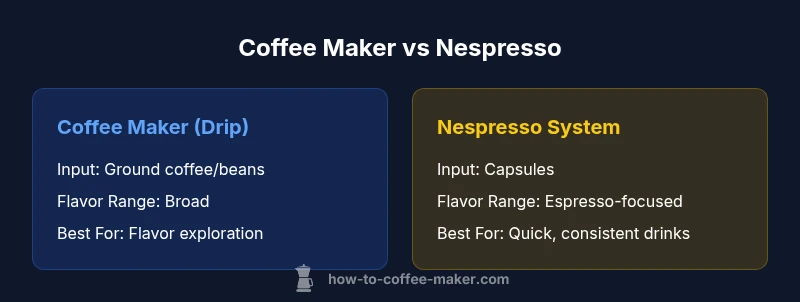
What’s the difference between a coffee maker and a nespresso? In short, a traditional coffee maker uses ground coffee to brew a broad range of flavors and strengths, while a Nespresso machine relies on capsules for quick, consistent espresso-like shots. The main trade-offs are input flexibility, per-cup cost, and maintenance, which influence long-term satisfaction for home brewers and casual drinkers alike.
Defining the Two Core Appliances
At a high level, a traditional coffee maker (often a drip brewer) and a Nespresso machine sit at two ends of the home-brewing spectrum. The coffee maker is designed to extract flavor from ground coffee using either whole-bean grinders or pre-ground options, offering substantial latitude in grind size, brew strength, and cup size. A Nespresso machine, by contrast, centers on capsules that contain pre-measured coffee and usually provide espresso-style extraction with minimal setup. When people ask what's the difference between a coffee maker and a nespresso, the practical distinction becomes clear: input method and resulting beverage profile, plus the ritual and footprint of maintenance. This distinction influences cost per cup, waste, and the level of customization a user expects in daily drinking habits. According to BrewGuide Pro, choosing between these two paths should align with your weekly caffeine rhythm and preferred flavor range.
In short: the coffee maker invites experimentation and bean variety, while Nespresso emphasizes speed, consistency, and convenience. As you read, keep in mind that many households actually blend the two approaches—one device for everyday, quick coffee and another for moments when flavor exploration matters. The key is to define your primary goal: speed and consistency or flavor breadth and control.
How They Brew: Mechanics and Heat
Brewing mechanics form the core difference in how these appliances deliver flavor. A coffee maker heats water in a boiler or reservoir, then passes it through ground coffee held in a filter. Temperature, contact time, and extraction rate are influenced by variables such as grind size, coffee amount, and brew settings. A Nespresso machine uses a compact boiler system to push water through a single-serve capsule at a controlled pressure and temperature. This pump-driven, capsule-based setup tends to yield a consistent crema and a fast brew cycle. When evaluating what's the difference between a coffee maker and a nespresso, the emphasis is on the extraction pathway: full-spectrum ground coffee versus pre-packed capsules designed for streamlined, repeatable results.
For home brewers who value control, the drip brewer allows friends and family to choose different beans, grinds, and even filters to influence the final cup. In contrast, Nespresso emphasizes reproducibility—each espresso-like shot is largely governed by the capsule and machine settings. The result is a predictable experience with less variability, which can be a benefit in busy households or small offices where consistent quality matters more than flavor exploration.
Input and Flavor: Ground Coffee vs Capsules
The input method is arguably the most visible difference when comparing what's the difference between a coffee maker and a nespresso. A traditional coffee maker uses ground coffee, which means you can vary grind size, blend profiles, and roast levels to shape flavor and body. The flavor spectrum is broad, from bright, fruit-forward notes to deep, chocolatey profiles. Capsules, however, lock in a specific coffee profile chosen by the capsule brand and the machine's capsule design. Capsule systems often deliver espresso-style intensity in a compact footprint and with minimized chaff and cleanup. You’ll trade off some variety for ease and consistency. If you primarily crave new flavors and experiments with single-origin beans, the coffee maker path offers more flexibility; if you want a quick, tidy cup with a consistent result, the capsule approach is appealing. When you ask what's the difference between a coffee maker and a nespresso, the input constraint is the most decisive factor—beans and grind vs capsules and pre-measured doses.
Capsule options also shape sustainability considerations. Some users are drawn to eco-friendly capsules or reusable pods, but the overall waste profile remains a factor to weigh when comparing these devices over the long term.
Cost of Ownership: Upfront, Per Cup, and Maintenance
Cost considerations are central to any buying decision and often drive the outcome of what’s the difference between a coffee maker and a nespresso. A traditional coffee maker generally has a lower upfront price ceiling and a broad range of models, from simple drip brewers to feature-rich machines. Over time, the per-cup cost is driven by the price of coffee, filters, and electricity, which can be economical with bulk beans and reusable filters. A Nespresso system typically features a higher upfront investment for the machine and ongoing capsule costs, though some users find the per-cup expense predictable and manageable due to capsule packaging. Maintenance frequency also differs: a drip brewer may require more frequent descaling and filter replacements, while a capsule machine usually demands regular capsule recycling and occasional cleaning of internal channels.
From a cost perspective, many households discover that the long-term expense of a traditional coffee maker remains lower if they buy in bulk and reuse filters, while a capsule system offers predictable daily costs and less cleanup. The key to understanding what's the difference between a coffee maker and a nespresso is to map your weekly usage, preferred beverages, and willingness to handle maintenance tasks. BrewGuide Pro’s analysis suggests that the choice often hinges on whether you value long-term savings or immediate convenience.
Convenience and Speed: Everyday Use
In daily routines, convenience becomes a major determinant of what’s the difference between a coffee maker and a nespresso. A standard drip brewer is simple: load grounds, fill the reservoir, press a button, and go. It’s quick enough for a weekday breakfast and allows everyone at home to adjust cup size and strength. Nespresso machines excel in speed and consistency. With a single pressing of a button, you can have a nearly instant espresso-based beverage, and some models offer milk-frothing capabilities for lattes and cappuccinos. If your mornings are rushed or you routinely share beverages with guests who want predictable results, capsule systems present a strong case for convenience. BrewGuide Pro notes that the actual experience—noise levels, warm-up time, and ease of cleaning—often tilts the decision toward whichever path better aligns with your morning rhythm.
For a multi-person household, taste-testing different brews on a traditional coffee maker can be a shared ritual, whereas a Nespresso setup may limit the variety to capsule lines. The trade-off is not merely flavor; it is how often you want to pause between coffee making and other tasks. In terms of user experience, capsule machines also reduce cleanup by containing grounds and used capsules, which can be a decisive factor for busy households or small offices.
Cleaning, Descale, and Longevity
Maintenance habits are sometimes overlooked in quick buying guides, but they’re a foundational element of what’s the difference between a coffee maker and a nespresso. Drip coffee makers require periodic descaling to remove mineral buildup, routine filter changes, and careful cleaning of the carafe. Capsule machines typically need regular cleaning of the group head and descaling according to water hardness and usage, plus the added step of recycling capsules. Longevity for both types depends on build quality and care. A well-maintained drip brewer can last many years with occasional part replacements, while capsule machines benefit from proper capsule disposal, tube cleaning, and prompt attention to any blockages. The key takeaway is that both designs reward regular upkeep, but the nature of the tasks differs: descaling and filtering for drip brewers, and internal cleaning plus capsule handling for pod systems.
From BrewGuide Pro’s perspective, choosing a system with straightforward maintenance steps reduces the total cost of ownership and minimizes downtime. A clean, well-kept machine preserves flavor and extends service life, whether you choose a traditional coffee maker or a capsule-based system.
Specialty Drinks and Customization
Another dimension of what’s the difference between a coffee maker and a nespresso is each system’s capacity for customization. A traditional coffee maker enables you to tailor grind size, coffee-to-water ratios, brew temperatures, and cup size, which is advantageous for tasting sessions or when you want to extract a specific profile. Nespresso machines limit customization mostly to capsule selection and basic machine settings; however, many models provide programmable shots, steam emission for microfoam, and multiple cup sizes. The trade-off here is between the breadth of flavor manipulation and the consistency of the beverage. If you enjoy experimenting with single-origin beans, light vs dark roasts, and alternative brew methods (like a vertical flip to create a different crema), a conventional coffee maker may be preferable. If you want quick, reliable espresso shots with less attention to variable controls, a capsule system is well suited.
For those who want both worlds, some households maintain a drip brewer for specialty blends and a capsule machine for fast, café-style drinks. What's the difference between a coffee maker and a nespresso becomes a practical question of your beverage goals and the rituals you enjoy.
Waste and Packaging: Pods, Sustainability, and Options
Part of the decision when comparing what's the difference between a coffee maker and a nespresso is considering waste and packaging. Ground coffee produces used filters and a manageable waste stream, and some people compost the grounds. Capsule systems generate more waste per cup, especially if using non-recyclable pods, although many brands now offer recyclable or compostable capsules and capsule recycling programs. If environmental impact is a priority, research the capsule material, recycling options, and the availability of reusable pods. The coffee maker path produces less packaging per cup overall but requires paper or metal filters and water filters in some models. In practice, choosing between these devices often hinges on your willingness to participate in recycling programs and the practicality of waste disposal in your living situation.
BrewGuide Pro’s stance is that responsible disposal and recycling can mitigate the environmental impact of capsule systems, but careful planning and selection of eco-friendly options can make either approach more sustainable over time.
Space, Aesthetics, and Footprint in a Kitchen
The physical footprint and visual fit of your coffee equipment matter in real-life kitchens. Traditional drip brewers tend to be taller and wider, with carafes and carafes’ heat retention features contributing to countertop occupancy. Capsule machines are typically more compact and can suit smaller kitchens, especially models designed for a single cup. Aesthetics also play a role: sleek capsule machines with metal finishes can blend into modern counters, while bulkier drip brewers may fit more rustic or utilitarian kitchens. The choice here influences daily usage; for example, a compact machine may encourage more frequent use but offer less flavor complexity, whereas a larger brewer might become a countertop statement piece that’s used less often but enjoyed when it’s used. The “what’s the difference between a coffee maker and a nespresso” experience can extend to kitchen design and ergonomics.
In many homes, the decision comes down to how much counter space you’re willing to dedicate and whether you want a device that doubles as a design element. If space is tight, capsule machines have an edge; if you want to designate a dedicated coffee station with a broader array of beans and accessories, a traditional coffee maker can be the better visual and functional anchor.
Who Should Buy What: Best for Different Lifestyles
Different lifestyles align with different brewing philosophies. For flavor purists who relish experimenting with grind size, roast profiles, and brew methods, a traditional coffee maker is often the best fit. For busy mornings, small homes, or offices where speed and consistency trump variety, a Nespresso system is typically more attractive. If you frequently entertain and want to offer guests café-style options without heavy lifting, a capsule system can streamline service while keeping the setup compact. For families with diverse tastes, many households opt for a hybrid approach: one drip brewer for day-to-day coffee and a capsule machine for quick, specialty drinks. The key is aligning your daily routine with the device that minimizes resistance to brewing and maximizes your enjoyment—and that’s exactly where the comparison between a traditional coffee maker and a Nespresso becomes a practical decision rather than a theoretical one.
Practical Buying Factors: What to Compare
When deciding between a coffee maker and a Nespresso, focus on these practical factors: input flexibility (grounds vs capsules), flavor versatility, maintenance tasks, daily usage, and sustainability considerations. Also evaluate the machine’s reliability, available warranties, and compatibility with accessories like grinders or milk frothers. Some buyers prioritize throughput and simplicity, while others want maximum flavor exploration and control over extraction variables. An informed decision emerges when you map how often you drink coffee, how much time you want to invest in prep, your stance on waste, and your budget. As you compare, remember that the most rational choice often comes down to your personal ritual: a preferred routine that you’ll actually follow consistently every day.
Quick Start Checklist for Your Kitchen Setup
Use this checklist to quickly align your purchase with your daily coffee rituals:
- Define your primary goal: flavor exploration or quick, reliable drinks.
- Assess available counter space and how a machine fits your kitchen aesthetics.
- Consider weekly coffee volume and the ongoing cost of inputs (beans vs capsules).
- Review maintenance routines and descaling needs.
- Check sustainability options for pods and packaging.
- Decide if you want additional features like built-in milk frothers or programmable timers.
- Verify compatibility with accessories such as grinders and tampers if you pursue flavor control. Finally, lean on your preferred ritual to guide the final choice. The right setup should make your daily brew effortless and enjoyable.
Common Myths and Misconceptions
Many users assume that capsule machines are always inferior in flavor or that drip brewers can’t produce a good crema. In reality, modern capsule systems offer surprisingly rich espresso-like drinks, while a well-tuned drip brewer can deliver a wide range of flavors with precision. Another misconception is that higher price always guarantees better coffee; while durability matters, price isn’t the sole predictor of satisfaction. Lastly, some people believe that maintenance is a one-and-done task; in truth, regular cleaning and descaling extend device life and preserve taste. To navigate what's the difference between a coffee maker and a nespresso confidently, separate myths from practical realities and test real-world usage against your daily needs.
Practical Scenarios: Real-Life Setups
Consider a family with different coffee rituals. The morning rush might favor a compact capsule machine for fast, consistent drinks; meanwhile, a weekend evening could be ideal for experimenting with a traditional coffee maker’s broad flavor range. Another scenario is a small office that wants predictable throughput: capsules can minimize cleanup and training, but a shared drip brewer can accommodate a wider range of bean preferences. By outlining your daily patterns, you can design a two-device workflow that captures both worlds: a capsule machine for quick, on-demand beverages and a classic drip brewer for more involved flavor exploration. The goal is a streamlined, enjoyable coffee routine that fits your home while respecting your specific needs, tastes, and schedule.
Comparison
| Feature | Coffee Maker (Drip/Filter) | Nespresso System (Capsule) |
|---|---|---|
| Input Method | Ground coffee / beans, adjustable grind | Capsules (pre-packaged) |
| Flavor Range | Broad with many beans and methods | Espresso-style range limited to capsule profiles |
| Brewing Time | Longer, variable depending on brew | |
| Maintenance | Descaling, filter changes, carafe cleaning | Group head cleaning, capsule disposal, occasional descaling |
| Cost per Cup | Lower, depends on beans and filters | Moderate to higher due to capsules |
| Customization | High: grind, temp, strength, cup size | Limited: capsule choice, basic settings |
| Capsule Availability | Wide variety from many brands | Nespresso-pod ecosystem, some compatibles |
| Best For | Flavor exploration, budget-conscious households | Speed, convenience, consistent results |
Strengths
- Clear differentiation helps buyers align input method with lifestyle
- Flavor flexibility with a traditional coffee maker supports experimentation
- Lower long-term cost possible with bulk beans and reusable filters
- Capsule systems offer quick, mess-free brewing for busy schedules
Downsides
- Capsule waste and ongoing capsule costs can be higher over time
- Flavor consistency may come at the expense of bean variety in capsule systems
- Maintenance tasks differ (descaling vs capsule handling) and require discipline
Traditional coffee maker wins for flavor breadth and long-term cost; Nespresso wins for speed and consistency
If your priority is exploring a wide flavor spectrum and optimizing cost per cup, a standard coffee maker is the stronger choice. If convenience, speed, and a café-like experience with minimal cleanup matter most, a Nespresso system is the better fit. Either path serves different routines well.
Questions & Answers
What is the main difference between a coffee maker and a Nespresso?
The core difference is input and flavor flexibility: traditional coffee makers use ground coffee for broad flavor exploration, while Nespresso machines use capsules for fast, consistent espresso-style drinks. The choice hinges on whether you value variety or speed.
The main difference is input and flavor flexibility: grounds give flavor variety, capsules give speed and consistency.
Is a Nespresso more expensive per cup than drip coffee?
Capsules tend to have a higher unit cost per cup than loose-ground coffee, but the total depends on capsule price, machine efficiency, and how many cups you prepare daily.
Capsules usually cost more per cup, but it depends on how many you brew each day.
Can you use regular ground coffee in a Nespresso machine?
Most standard Nespresso machines require capsules and do not support regular ground coffee. Some models and third-party accessories claim compatibility, but no universal solution exists for all machines.
Most Nespresso machines need capsules; using ground coffee isn’t standard.
What maintenance is required for a drip brewer vs a capsule machine?
Drip brewers require regular descaling and filter changes, with carafes needing cleaning. Capsule machines need cleaning of the group head and routine capsule disposal, plus occasional descaling.
Drip brewers need descaling and cleaning; capsule machines need group head cleaning and capsule disposal.
Are there eco-friendly capsule options?
Yes, many brands offer recyclable, compostable, or reusable capsule options. Check your local recycling programs and consider buying compatible capsules to minimize waste.
There are eco-friendly capsules and recycling options available.
Which is better for beginners?
For beginners seeking speed and consistency, a Nespresso offers an easy entry. For those who want to learn and experiment with beans, a traditional coffee maker provides more learning opportunities.
Nespresso for quick, consistent drinks; traditional coffee maker for learning and flavor variety.
Key Takeaways
- Define your goal: flavor exploration or quick, consistent drinks
- Assess space and maintenance needs before buying
- Consider long-term costs: beans vs capsules
- Balance convenience with sustainability options
- A hybrid setup can capture both worlds when space allows