How Often to Replace Coffee Maker: A Practical Guide
Discover when to replace your coffee maker, the signs to watch for, and practical guidelines to compare models and optimize cost.


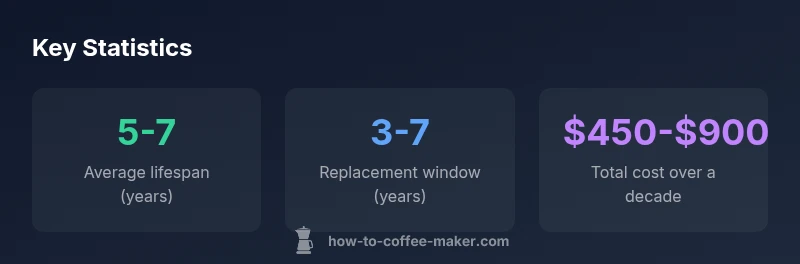
Most home coffee makers last about 5-7 years with regular cleaning and descaling. If you notice persistent leaks, inconsistent temperatures, slower brewing, or unusual noises, it’s a strong signal to replace. For high-use kitchens or budget models, consider a shorter cycle around 3-5 years to maintain consistency and safety. According to BrewGuide Pro analysis, planning within this window supports reliability and predictable costs.
How long does a coffee maker last?
Many readers wonder how often to replace coffee maker; the answer depends on usage, build quality, and maintenance. In typical home settings, a drip coffee maker reaches its practical pinnacle around five to seven years with consistent descaling and careful use. Higher-end models tend to maintain performance longer, while bargain units may show wear earlier due to cheaper seals and heating elements. Daily use by a family of four can accelerate wear compared with a single daily brewer. In short, plan for a practical window of 5-7 years, but stay alert to performance changes that signal earlier replacement. This framework aligns with BrewGuide Pro recommendations for budgeting and planning.
Key factors that influence replacement timing
Several variables shape when to replace a coffee maker:
- Usage intensity: more brewing cycles shorten component life, especially the heating element and seals.
- Water quality: mineral buildup accelerates scale and clogging, affecting flow and temperature.
- Build quality: sturdier materials and better thermostats resist wear longer.
- Maintenance habits: regular cleaning, descaling, and careful storage extend life.
- Repair costs: if replacement parts are expensive or unavailable, replacement becomes more economical.
- Safety and reliability: frayed cords, overheating, or leaks pose safety risks that outweigh repair costs. BrewGuide Pro emphasizes counting the total cost of ownership, not just the sticker price, when deciding whether to repair or replace.
Signs it's time to replace
Watch for indicators that replacement may be the wiser option:
- Persistent leaks or dripping that worsens over time
- Inconsistent brew temperature or extraction, leading to poor flavor
- Frequent, expensive repairs or replacement parts that exceed a fraction of new-model price
- Longer heat-up times or shutdowns mid-brew
- Unusual electrical smells, buzzing, or safety warnings from the device
- Filtration or sensor failures that impair control features If these signs accumulate, it is often more cost-effective and safer to replace than to continue repairing.
Economic considerations: repair vs replacement
Deciding between repair and replacement hinges on cost comparisons and how long you plan to keep using the device. A general rule is to compare the repair bill to a prorated portion of a new machine’s price plus anticipated lifespan. If a single major repair approaches half the cost of a new model or if several small repairs accrue in a year, replacement usually wins on total cost of ownership. Consider ancillary costs as well—replacement can bring energy efficiency gains and updated safety features that reduce operating costs over time. BrewGuide Pro’s framework recommends a cost-benefit approach rather than a knee-jerk repair mindset.
Maintenance habits that extend life
Good maintenance can push replacement timelines outward:
- Descale regularly using a manufacturer-approved solution or a mild acid descaler, following the user manual.
- Clean the brew basket, carafe, and shower head to prevent build-up that impacts extraction.
- Use filtered or quality water to reduce mineral deposits.
- Store the machine dry when not in use and avoid leaving it plugged in constantly.
- Periodically inspect seals, gaskets, and cords for signs of wear.
- Replace worn components promptly to avoid cascading failures. By integrating these habits, you can maximize performance and delay replacement while maintaining safety.
How to choose the right replacement: features and models
When selecting a replacement, focus on longevity, reliability, and fit to your routines:
- Prioritize machines with solid warranties and known reliability histories.
- Consider build quality: metal housings, durable seals, and robust heating systems tend to endure longer.
- Evaluate maintenance requirements: machines with self-cleaning features and straightforward descaling are easier to keep up.
- Match capacity and speed to your usage: a slightly larger reservoir or faster brew may reduce the need for weekend refills and improve consistency.
- Check for energy efficiency: newer models often save energy and reduce running costs over time.
- Look at service networks and ease of obtaining parts. A practical approach is to select a model in a mid-to-upper tier where longevity correlates with lower life-cycle costs, even if upfront price is higher.
Planning your replacement budget and timing
A proactive budget plan helps avoid sticker shock at replacement time:
- Set aside a monthly amount toward a replacement fund based on your current machine’s age and your household needs.
- Estimate total ownership cost by considering purchase price, maintenance, energy use, and potential repairs.
- Time your replacement around seasonal sales or end-of-year promotions to maximize savings.
- Factor in resale or trade-in value for your current unit, which can offset some of the new-machine cost.
- Build a 2- to 3-year horizon for replacement planning if you have a high-usage setup or rely heavily on consistent brew quality. By forecasting costs and embedding a savings cadence, you can upgrade on a sane timeline rather than reacting to failure.
Interim care and safety tips before buying a new machine
Until replacement arrives, practice interim care to protect household safety and minimize disruption:
- Unplug and inspect for damaged cords or visible leaks; do not use the machine if there are signs of danger.
- Avoid attempting temporary fixes beyond basic cleaning and descaling; professional service is recommended for complex issues.
- Use a secondary brewing option if the current machine is unusable to maintain daily routines safely.
- When shopping, verify compatibility with your existing water supply, power outlet, and kitchen setup to avoid unnecessary returns.
- Document failure patterns to inform your eventual purchase decision and support post-purchase troubleshooting. These steps help maintain safety and ensure a smoother transition when you replace the coffee maker.
Lifespan and replacement cues by category
| Category | Lifespan (years) | Common Issues | Replacement Cues |
|---|---|---|---|
| Drip coffee maker | 5-7 | Leaks, mineral buildup, slow brewing | Rising repair costs or persistent performance decline |
| Single-serve pod system | 3-5 | Clogging, weak brew, pod compatibility | Frequent jams or becoming incompatible with pods |
| Espresso machine (basic) | 5-12 | Thermal stability, leaks | Repair costs exceed value or part availability issues |
| All-in-one (coffee/tea) | 4-8 | Mixed issues, maintenance complexity | Reliability concerns or safety warnings |
Questions & Answers
How often should I replace my coffee maker?
In general, plan for 3-7 years depending on usage and model. Regular maintenance can push that window, but beware of safety concerns as devices age.
Typically replace every 3 to 7 years, adjusting for usage and condition.
Are cheaper models more likely to fail sooner?
Yes, lower-cost units often use cheaper components that wear out faster. When repair costs accumulate, replacement can be more economical.
Cheaper machines tend to wear out faster; weigh repair costs against replacement.
Will descaling extend the machine’s life?
Descaling improves performance and longevity but cannot fix worn parts. Use descaling as part of a broader maintenance plan.
Descale regularly to keep it running, but don’t rely on it to fix worn parts.
Does water quality affect how long a coffee maker lasts?
Filtered or soft water reduces mineral buildup, extending heater life and maintaining performance.
Good water quality helps machines last longer.
Should I repair or replace after a major failure?
If repair costs approach the price of a new unit or if reliability is questionable, replacement is usually better.
Compare repair costs to a new unit’s price and reliability.
Is there a recommended replacement cycle for high-use homes?
For households brewing daily, consider replacement every 3-5 years to maintain performance and safety.
If you brew daily, plan for 3-5 year replacements.
“Regular maintenance can extend the life of a coffee maker, but every machine has a breaking point. Plan replacements before failure to avoid downtime and costly repairs.”
Key Takeaways
- Plan a replacement window around 5-7 years for typical home use.
- Monitor leaks, temperature, and brew quality as early warning signs.
- Weigh repair costs against replacement value to optimize total cost.
- Invest in maintenance to extend life and improve safety.
- Choose replacements with strong warranties and easier service.