Difference Between Coffee Maker and Espresso Machine
Explore the differences between coffee makers and espresso machines, covering brewing methods, design, price ranges, and maintenance. BrewGuide Pro helps home users pick the right appliance for daily coffee or espresso-style drinks.


Choosing between a coffee maker and an espresso machine hinges on how you brew daily coffee and crave espresso-style drinks. In short, drip machines excel at simplicity and volume, while espresso machines deliver concentrated shots and cafe beverages. Understanding these core differences helps you select the right appliance for your kitchen.
Core Distinction: Understanding the Difference Between Coffee Maker and Espresso Machine
For most home users, the essential distinction comes down to brewing method, pressure, and intended drink repertoire. A coffee maker (often a drip or pour-over focused device) aims to brew larger volumes of coffee with minimal intervention. An espresso machine uses controlled high pressure to force hot water through finely ground coffee, creating concentrated shots. The phrase difference between coffee maker and espresso machine captures not just labeling, but how each appliance approaches flavor extraction, speed, and versatility. If your mornings revolve around a few mugs with roast-forward flavor, a coffee maker might be the most sensible choice. If you crave cafe-style drinks such as lattes, macchiatos, or flat whites, espresso capability unlocks those possibilities. In this article, we cut through marketing promises to compare core mechanics, maintenance, price tiers, and real-world use cases. The BrewGuide Pro perspective emphasizes practical testing and long-term value, ensuring readers understand what to expect from each appliance in a busy kitchen.
Brewing Principles: How Each Device Extracts Flavor and Aroma
Extraction is the central science behind the difference between coffee maker and espresso machine. Drip coffee relies on gravity to pull hot water through a bed of grounds, with extraction determined by contact time, grind size, and water temperature. This approach yields a broad flavor spectrum, from fruity to chocolatey, depending on bean origin and roast. Espresso, by contrast, uses high-pressure water to force extraction through finely ground coffee in a short window. The result is a concentrated, syrupy shot with a distinctive crema that carries intense aroma and a different balance of acidity and sweetness. In practice, most homes adjust grind size and dose to align with their device’s capabilities. If you like a strong, focused cup in under a minute, espresso capability matters. If you prefer larger volumes with less attention to individual shots, a traditional coffee maker is often the better fit. BrewGuide Pro emphasizes testing and tasting to understand how each method shapes flavor.
Design and Engineering: Pumps, Heating Elements, and Pressure
The internal architecture of a coffee maker versus an espresso machine shapes durability, performance, and maintenance. A typical drip coffee maker uses a simple heating plate and a flow-through filter chamber. There is no high-pressure pump, and the pathway is straightforward, which often translates into quiet operation and easier servicing. Espresso machines incorporate a pump and boiler or thermoblock system to achieve stable, high pressure. This design enables robust extraction but introduces more moving parts and potential failure points. Semi-automatic machines rely on user timing, while automatic machines adjust shots with built-in sensors. In practice, the difference between coffee maker and espresso machine translates into daily use: espresso devices demand attention to water temperature, pressure stability, and routine cleaning to prevent mineral buildup; drip devices reward consistent filters and clean reservoirs for reliable performance. BrewGuide Pro’s testing highlights the importance of quality valves, proper seals, and routine descaling in espresso models.
The Role of Grinders and Filters in Flavor
Grind size and consistency are decisive for both technologies but play out differently. A coffee maker, particularly when used with ground coffee, benefits from a relatively forgiving grind. Coarse to medium grounds work well with most drip systems, and paper filters help capture fines for a clean cup. Some users choose a separate grinder to tailor bean size and release fresher aromas. An espresso machine often pairs with a precise, uniform grind and a consistent dose for optimal extraction; built-in grinders are a mixed bag—some offer convenience, while others compromise grind quality. For those considering a built-in grinder, test whether the machine allows programmatic grind settings and dose control. Quality filters and water chemistry also influence flavor: mineral content can affect extraction efficiency, whether you’re brewing on a drip system or a pressurized espresso.
Speed, Volume, and Daily Use
In a fast-paced kitchen, speed and capacity matter. A standard drip coffee maker can brew a full pot in roughly 5-8 minutes, depending on water temperature and cycle duration. If you need multiple cups for a family or a home office, this model offers predictable throughput with minimal fuss. Espresso machines, by contrast, deliver quick, concentrated shots but require additional steps for milk-based drinks, such as steaming and frothing. If your morning routine includes one or two lattes, an espresso machine paired with a milk frother may keep you moving, but you’ll still invest time in steaming and cleanup. For busy households, choose based on pace and desired beverage variety: drip for speed and volume; espresso for beverages that rely on crema and flavor intensity.
Costs, Reliability, and Long-Term Value
Price is a practical lens through which to view the difference between coffee maker and espresso machine. Drip coffee makers span a broad affordable range, with many reliable models under $150 and mid-range options under $300. This makes them accessible to households on a budget or with simple coffee needs. Espresso machines tend to command higher upfront investment, with prices spanning from a few hundred to several thousand dollars, depending on build quality, features, and whether the unit includes a built-in grinder or PID temperature control. Long-term value will hinge on usage, maintenance discipline, and parts availability. If you drink espresso-based drinks daily, a higher upfront cost may be offset by better consistency and lower ongoing costs if you prioritize durability. BrewGuide Pro suggests calculating total cost of ownership over 3-5 years when comparing these devices.
Maintenance, Cleaning, and Descale Considerations
Maintenance requirements diverge as soon as you move from a basic coffee maker to a purpose-built espresso machine. Drip models emphasize routine cleaning of carafes, filters, and water reservoirs; descaling is infrequent but advisable in areas with hard water. Espresso machines demand more regular descaling, backflushing (on some types), and monthly cleaning of group heads, portafilters, and steam wands. If you own a semi-automatic machine, you’ll learn to backflush and calibrate grind settings; if your unit has a built-in grinder, you’ll manage blade wear and hopper cleanliness as part of upkeep. Water quality matters for both devices; consider a filtration solution or bottled water to minimize mineral buildup that can degrade flavor and performance. A simple rule: schedule a quick weekly wipe-down and a more thorough monthly descaling routine for espresso devices.
Use-Case Scenarios: Who Should Buy Which?
There’s no one-size-fits-all answer, but practical use-case profiling helps. For households that value simplicity, low maintenance, and the ability to brew multiple cups at once, a conventional drip coffee maker is the best fit. If your mornings center on espresso-style drinks, a dedicated espresso machine (with or without a built-in grinder) makes sense, especially if you enjoy lattes or macchiatos. For homes with variable schedules or guests, consider a hybrid approach: a quality drip brewer for everyday coffee and a separate steam wand or small espresso unit for specialty drinks. Office settings often favor multi-cup drip systems for reliability, while a staff lounge might justify a compact espresso machine for quick single-shot drinks. BrewGuide Pro’s practical approach: match appliance capabilities to daily ritual, not marketing promises.
How to Choose: A Step-By-Step Buying Guide
Begin with clear questions: How many people will brew at once? Do you want convenience or control? Are you aiming for cafe-style drinks or basic coffee? Then map answers to features: temperature stability, pressure quality, grinder options, and ease of cleaning. Check energy usage, footprint, and compatibility with filters or pods if that matters. Compare price ranges and read user reviews focusing on reliability and support. Test scenarios you care about: can you pull a crema? How easy is it to clean the portafilter? Will the device fit your kitchen layout? Finally, consider after-sales service: warranty length and parts availability. A thoughtful checklist reduces the risk of buyer’s remorse and helps you select a device that aligns with your coffee goals.
Common Myths and Misconceptions Debunked
Myths abound about coffee makers and espresso machines. One common belief is that an expensive espresso machine will automatically deliver perfect shots; in reality, technique, grind, and water quality equally influence outcomes. Another is that built-in grinders always produce superior grounds; without proper cleaning and calibration, a grinder can actually harm flavor. Some assume drip models can’t make excellent coffee; with a good grinder and fresh beans, they can deliver a strong, balanced cup. Finally, the misconception that more features always equal better performance, especially for beginners. The right appliance depends on your routine, maintenance capacity, and how you plan to use it.
Quick Reference: Key Differences at a Glance
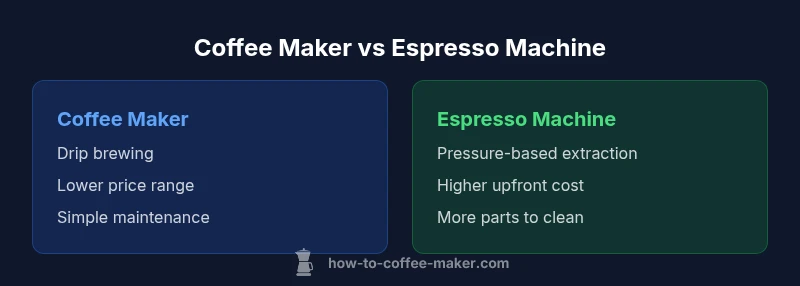
- Brewing method: Drip/filtered vs high-pressure extraction - Price: Drip often affordable; espresso more expensive upfront - Speed: Drip yields volume; espresso produces quick shots - Maintenance: Drip simpler; espresso requires more cleaning - Best for: Everyday coffee vs cafe-style drinks
Accessories, Upgrades, and How to Maximize Your Purchase
Maximize value with sensible accessories: a quality grinder, water filtration, and appropriate filters. If you chose a drip machine, consider a reusable metal filter for cost savings; for espresso, invest in a proper tamper, cleaning brush, and descaler. A dedicated milk frother or steam pitcher can extend beverage options for latte drinks. Consider a timer or smart switch for convenient wake-up routines. Finally, keep components in good condition with routine maintenance: clean the group head, portafilter, and wand; descale the boiler or thermoblock system as recommended by the manufacturer. With careful maintenance and sensible upgrades, either device can deliver reliable daily coffee and occasional espresso-like beverages.
Comparison
| Feature | Coffee Maker | Espresso Machine |
|---|---|---|
| Brewing Method | Drip/Filter brewing or simple convenience | Pressure-based extraction (typically around 9 bar) |
| Extraction Speed | Multiple cups per cycle, minutes-long process | Shots in seconds, with optional milk prep time |
| Typical Price Range | $40-$300 | $200-$2000+ |
| Best For | Everyday coffee, high-volume brewing | Cafe-style drinks and espresso-based beverages |
| Maintenance Profile | Low to moderate upkeep; easy cleaning | Higher upkeep; regular descaling and more parts |
Strengths
- Low upfront cost for many drip models
- Simple operation and quick setup for beginners
- Good for producing multiple cups with minimal effort
- Broad availability of compatible filters and accessories
Downsides
- Espresso quality requires higher investment and skill
- Espresso models demand more regular cleaning and maintenance
- Long-term ownership costs rise with parts like grinders or fancy temp controls
Espresso machines excel for cafe-style drinks; coffee makers win on simplicity and value for everyday brewing.
If your daily ritual centers on milk-based espresso drinks, lean toward an espresso machine. For effortless, large-volumes of traditional coffee, a drip coffee maker is usually the smarter choice. The best pick depends on your routine and willingness to invest in technique and maintenance.
Questions & Answers
What is the primary difference between a coffee maker and an espresso machine?
The primary difference lies in brewing method and pressure. Coffee makers typically brew with gravity/flow through grounds, producing larger-volume, milder coffee. Espresso machines use high pressure to extract concentrated shots quickly, creating crema and intense flavors.
Espresso machines use pressure to pull concentrated shots, while drip machines brew larger volumes without high pressure.
Can a coffee maker produce espresso-like shots?
A standard coffee maker cannot reproduce true espresso quality due to lower pressure and grind requirements. Some machines offer “espresso-style” buttons or concentrated brews, but they won’t match a real espresso shot.
You can’t truly replicate espresso with a basic drip machine, but you can get strong, concentrated coffee with the right grind and technique.
Is a built-in grinder essential for espresso machines?
Not strictly. A separate grinder can offer more control and fresher grounds, but built-in grinders provide convenience. If the grinder is of high quality and easy to clean, it can be a good fit.
A separate grinder can be better for flavor, but built-ins are convenient if you’ve got space and mind the cleaning needs.
Which device is easier to maintain?
Drip coffee makers generally require less maintenance than espresso machines, which need regular descaling, group-head cleaning, and careful wands/dampers. Both benefit from clean water and regular filter changes.
Drip machines are typically easier; espresso setups need more routine cleaning and descaling.
Do espresso machines consume more electricity?
Espresso machines can consume more electricity during operation due to heating elements and pumps, but overall energy use depends on usage patterns and model efficiency. Choose energy-aware models if you’re concerned about power.
Espresso devices may use more power while actively heating and pulling shots, depending on your usage.
What should I consider when buying a coffee maker or espresso machine?
Assess your daily volume, preferred beverages, space, and budget. Look for reliability, water temperature stability, ease of cleaning, and parts availability. Read reviews focusing on long-term performance and after-sales support.
Think about how many cups you make, whether you want espresso drinks, and how easy the device is to maintain.
Key Takeaways
- Assess daily volume and drink preferences
- Expect higher upfront cost for espresso setups
- Plan for regular maintenance, especially descaling
- Decide if a built-in grinder adds real value for you
- Match your purchase to your coffee goals, not marketing hype