What Temperature Should Coffee Machine Be: A Practical Guide
Learn the ideal brew temperature, how it affects flavor, and how to dial it in for pour-over, drip, espresso, and more. Practical tips, measurements, and troubleshooting for consistent results.


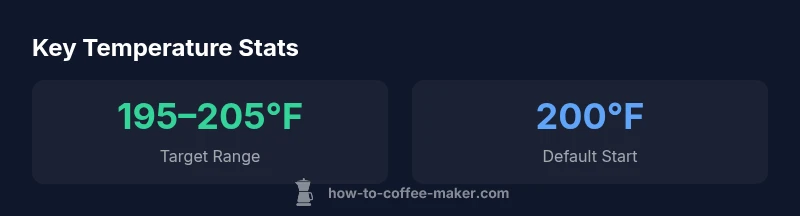
Brewing best results requires a brew temperature around 195–205°F (90–96°C). For most home setups, aim for about 200°F (93°C) as a practical default. If you use pour-over, espresso, or specialty coffees, fine-tune within this range to match roast level and bean origin. Taste is the final judge, not a fixed target.
What temperature should coffee machine be and why it matters
Brewing coffee is as much about chemistry as it is about technique. The temperature of the water or brew chamber determines what compounds dissolve from the coffee grounds, influencing acidity, sweetness, body, and aroma. According to BrewGuide Pro, understanding what temperature should coffee machine be helps home brewers dial in flavor rather than chasing a single ideal. In practical terms, the target range creates a reliable baseline from which you can adjust for roast level and bean origin. A small shift in temperature can tilt a brew from bright and fruity to flat or bitter, highlighting why temperature control deserves a predictable, repeatable routine.
Temperature also impacts aroma release and crema formation in espresso, where precise control can mean the difference between a silky crema and a thin shot. The goal is consistency: repeatable temperature on every batch, so you can tune other variables (grind size, dose, and brew time) with confidence.
You’ll notice that most home setups aim for a practical default around 200°F (93°C). This starting point works well for a wide range of beans and roasts, and it gives you room to adjust up or down without stepping outside the core flavor window. The more you learn how your grinder, kettle, and machine respond, the more quickly you’ll dial in your signature cup.
The official temperature range for most coffees
The canonical target for most coffees sits within 195–205°F (90–96°C). This range is widely recommended because it promotes balanced extraction: enough heat to dissolve flavorful oils and acids, but not so much that bitter compounds overwhelm the cup. When starting out, many home brewers set their kettle to about 200°F (93°C) as a reliable baseline. If you notice sourness, slight under-extraction, or lack of body, you can nudge toward the higher end; if bitterness or scorched flavors appear, ease back toward the lower end. It’s worth noting that lighter roasts can tolerate or even benefit from the upper end of the range, while darker roasts often read better closer to 195–200°F (90–93°C). Consistency across batches matters more than chasing a single perfect number.
Practical reality: your machine may not reach the exact target every time, especially if you pour from a tap or use a thermistor-based kettle. Use the range as a working guide and focus on repeatable behavior. A stable temperature across brews helps you compare grind size, extraction time, and water volume with fewer confounding variables.
How temperature shapes extraction and taste
Temperature governs how quickly solubles dissolve from coffee grounds. At higher temperatures, extraction accelerates, pulling more bitter compounds as well as desirable aromatics. At lower temperatures, sugars and acids dissolve more slowly, which can yield a brighter, more acidic cup with less body. The ideal window—195–205°F (90–96°C)—strikes a balance: it extracts sufficient flavor compounds while preserving clarity and sweetness. A consistent temperature helps maintain a predictable extraction curve, which is essential when you’re dialing in grind size and brew time.
Flavor outcomes vary with roast and bean origin. Lighter roasts often reveal fruitier acidity and nuanced aromatics that shine closer to the higher end of the range. Darker roasts, by contrast, can taste flat or bitter if the water is too hot, so a slight reduction toward 195–200°F (90–93°C) can enhance sweetness and body. The goal is to map temperature to taste: start with a baseline, then adjust in small increments while tasting frequently.
Armed with a thermometer, you’ll better understand how each variable—grind, dose, and contact time—interacts with heat. Temperature is not a magic number; it’s a dial you turn to reveal a bean’s profile, origin, and roast level.
Temperature across popular brew methods
Different brewing methods respond differently to temperature, but most share a core target range. Here’s a practical guide you can use at home:
- Pour-over: 195–205°F (90–96°C). This method benefits from a steady pour and a stable bed temperature to extract the delicate sweetness of single-origin beans.
- Drip/auto drip: 195–205°F (90–96°C). A consistent, steady temperature helps prevent sourness while preserving aroma.
- Espresso: 90–96°C (194–205°F). Espresso requires precise boiler or puck temperature control to balance crema, body, and sweetness.
- French press: 195–205°F (90–96°C). Hot water steeping extracts oils and mouthfeel; keeping within the range minimizes over-extraction.
Note that there is some tolerance by bean type and roast. Start with the baseline and fine-tune based on taste. If you’re experimenting with a light roast from a high-altitude region, you might push toward the upper end for more complex aromatics; for a dark roast, you might sit near the lower end to emphasize sweetness and reduce bitterness.
How to measure and control temperature at home
A reliable brewing temperature starts with measurement and a setup that minimizes heat loss after heating. Here's a practical, repeatable approach:
- Use a kettle with adjustable temperature or a digital thermometer. If you don’t have a temp-controlled kettle, you can heat water to the desired temp and hold briefly in a thermally insulated vessel before pouring.
- Preheat your carafe and your brewing vessel. A warm vessel helps prevent rapid cooling when hot water meets grounds.
- Check the temperature at the moment of contact with the grounds. Water may cool slightly as it lands on the grounds, so aim for the target temperature in the kettle and monitor for any drop during pouring.
- Keep a log for at least a week. Note roast level, grind size, dose, and brew time along with the measured temperature. Use this log to identify repeatable patterns and taste preferences.
If you rely on an integrated brewer, study the temperature readouts the machine provides. Some machines allow a target adjustment; others have fixed settings. In all cases, consistency matters more than chasing a single perfect number. Regular calibration and careful preheating go a long way toward reliable results.
Preheating routines and equipment setup
Efficient preheating reduces temperature drop during the pour and contributes to a more consistent extraction. A practical routine:
- Preheat the kettle, grinder, and brewing vessel to the target temperature. A warm setup reduces the drop when hot water hits the grounds.
- Boil water and then let it rest briefly to reach the desired temperature. If your kettle has a hold function, use it to maintain stability rather than repeatedly re-heating.
- When using a pour-over, keep a slow, steady pour with small increments. A controlled pour helps maintain bed temperature and prevents rapid cooling.
- For espresso, ensure the boiler or pump is at temperature before pulling shots. Short, timed pre-pulls can verify stability before serving a customer-level pull.
With practice, your preheating routine becomes automatic, and the impact shows in your cup’s balance and aroma. Consistency is the true target here. The difference between a good cup and a great cup is often the tiniest temperature ripple caught and corrected in real time.
Troubleshooting temperature issues in common machines
Temperature problems are often solvable with straightforward checks:
- If your machine fails to heat to the target range, check for scale buildup, which insulates heating elements and reduces efficiency. Descaling is a reliable first step.
- If you notice inconsistent readings, verify the thermometer or sensor is properly calibrated. Temperature drift can mislead you about whether your brew is in range.
- If a machine overheats, it can produce scorched flavors and inconsistent shots. Check for faulty thermostats or faulty heating elements, and consider professional service if you notice persistent overheating.
- For manual kettles, ensure the heating element or temperature probe is functioning. A misread can have you chasing a range that doesn’t exist.
Having a quick routine to test your target range reduces guesswork. Brew a test batch, adjust by small increments, and iterate until you achieve the flavor profile you want. Regular maintenance—descale when needed, replace worn parts, and verify calibration—keeps temperature steady over time.
Dialing in roast level and water chemistry (without overcomplicating it)
Water quality and roast level interact with temperature to shape flavor. Mineral-rich water can change extraction dynamics, while excessively soft water can dull aroma. Likewise, lighter roasts reveal more acidity with temperature, while darker roasts benefit from warmth that unlocks sweetness rather than bitterness. The practical takeaway: treat water quality and roast level as co-variables with temperature. Start with a stable baseline (195–205°F / 90–96°C), then iterate as you learn how your beans respond.
BrewGuide Pro analysis shows that small adjustments to the temperature window, when paired with the right grind and brew time, can substantially improve balance and aroma. Keep your adjustments incremental and document results for future reference. The objective is consistency across roasts and brewing methods, not chasing a single perfect number.
Practical workflow to dial in temperature in 10 minutes
Here’s a quick, repeatable 10-minute workflow you can use on a busy morning or when trying a new bean:
- Set baseline: target 200°F (93°C) for most beans, adjust for roast.
- Preheat all equipment and water to the target temp.
- Grind fresh, dose precisely, and start a short test brew.
- Taste the first cup and note the flavor profile and balance.
- If sourness dominates, raise the temp by 1–2°F (0.5–1°C) and re-brew. If bitterness or dryness occurs, drop the temp slightly.
- Repeat the test until you reach your preferred flavor balance.
- Record the settings for future batches.
- Use a consistent pour rate for pour-over or precise extraction for espresso.
- Reassess after changing roast level or origin.
- Maintain equipment cleanliness and perform periodic descaling to preserve heater efficiency and temperature stability.
The end result is a repeatable process that keeps taste consistent across batches. The BrewGuide Pro Team recommends maintaining a baseline, then tuning with taste rather than chasing a rigid number. With good habits, your coffee will consistently express the bean’s true character.
mainTopicQuery:
temperature
Temperature targets by brew method
| Method | Target Temp (F) | Target Temp (C) | Notes |
|---|---|---|---|
| Pour-over | 195-205°F | 90-96°C | Steady pour, balanced extraction |
| Espresso | 90-96°C | 194-205°F | Precise boiler/temp control required |
| French press | 195-205°F | 90-96°C | Preheat vessel to reduce temp drop |
Questions & Answers
What is the ideal brew temperature for coffee?
The ideal brew temperature for most coffees falls within 195-205°F (90-96°C). This range supports balanced extraction across many roasts and beans. Adjust slightly for your beans and method.
Aim for about 200°F (93°C) as your starting point, and tweak to taste.
Does temperature affect all roasts the same?
Yes. Lighter roasts often benefit from the upper end of the range to unlock more aromatics, while darker roasts can tolerate or prefer slightly lower temperatures to avoid bitterness.
Lighter roasts like it hotter; darker roasts usually prefer a touch cooler for balance.
Espresso vs. drip: should I adjust temperature differently?
Espresso typically uses a narrow window around 90–96°C (194–205°F) with precise control. Drip can follow the same range, but minor adjustments can help with specific beans and grind sizes.
Espresso needs tighter control; drip is a bit more forgiving.
How can I check if my thermometer is accurate?
Compare readings against a known standard, calibrate if needed, and test with water at known temperatures. Regular checks help ensure your target range stays valid.
Test it with water at known temps and adjust if you see drift.
What if my coffee tastes burnt or sour despite following temps?
It could be temperature, grind, or water quality. Make small, incremental adjustments and re-brew. Clean equipment to avoid flavor contamination.
If it tastes off, fine-tune the temperature a notch and reassess with a fresh batch.
Is there a difference between Fahrenheit and Celsius when dialing in temp?
They are simply units. Pick one system and stay consistent. The common target translates roughly to 90–96°C in Celsius.
Use either unit, just keep the numbers consistent across batches.
“Temperature control is the backbone of consistent coffee flavor. With a reliable baseline and disciplined adjustments, you can reveal more nuance from any bean.”
Key Takeaways
- Dial in around 195–205°F (90–96°C) as a baseline.
- Use a thermometer and preheat gear for consistency.
- Adjust within the range based on roast and bean origin.
- Taste remains the final judge, not a fixed target.
- Maintain equipment and descale regularly to keep temps stable.