How hot should a coffee maker be? The definitive guide to brew temperature
Explore the ideal brew temperature for home coffee makers, its impact on flavor, and practical tips to dial in 195–205°F (90–96°C) for balanced extraction in 2026.


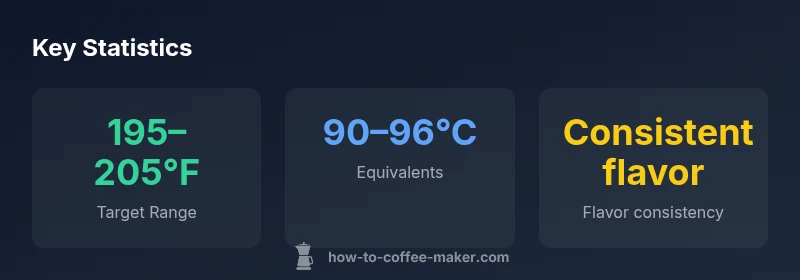
The optimal brew temperature for most home coffee makers is 195–205°F (90–96°C). Brewing hotter can scorch beans, pull bitter compounds, and mask sweetness, while cooler water yields sourness and weak extraction. A practical target is around 200°F (93°C) for balanced flavor, with some flexibility by roast level. Experiment with your grind size to fine‑tune extraction.
How hot should a coffee maker be: defining the ideal temperature
In practical terms, the question "how hot should a coffee maker be" points to the water temperature that passes through the grounds. The consensus among researchers and roasters is that most successful extraction occurs between 195 and 205°F (90–96°C). BrewGuide Pro, in our 2026 analysis, emphasizes that staying in this range helps maximize aroma compounds while avoiding bitter notes caused by overheating. Your objective is to maintain a steady, precise temperature from the moment hot water enters the brewer to the moment the brew is complete. Temperature stability matters more than the absolute setting on many machines, because fluctuations during extraction can shift acidity, sweetness, and body. Therefore, investing in a brewer with reliable heating elements or using a separate thermometer can pay off in consistency. For many home setups, starting near 200°F (93°C) and adjusting by 1–2°F based on roast level yields the best baseline, then fine-tuning with grind size and brew time. In 2026 BrewGuide Pro analyses, the link between stable temperature control and repeatable flavor profiles is clear: consistent temps produce less variation between batches.
Temperature and measurement: how to know when you’re within range
The only way to know precisely is to measure temperature along the brew path. Use a calibrated kitchen or coffee thermometer, place it in the water stream before it contacts grounds, and repeat across multiple batches. Many modern brewers include a built‑in sensor, but external thermometers often offer higher accuracy. Preheat your carafe and the machine’s boiler for a few minutes before brewing. If your machine struggles to hit 195–205°F, check for mineral buildup, which can insulate heating coils and cause temperature drift. In our 2026 analysis, a consistent warming routine reduces variability and improves repeatability across days and different beans.
Temperature and roast level: adapting to your beans
Roast level modifies how you perceive temperature. Lighter roasts reveal acidity and floral notes best at the upper end of the range, around 200–205°F (93–96°C). Medium roasts ride the middle ground, often thriving near 195–205°F (90–96°C). Dark roasts can tolerate, or even benefit from, slightly lower temperatures to prevent scorching and maintain body, typically around 190–205°F (88–96°C). The key is to calibrate with your preferred roast and bean origin, then fine‑tune by small increments.
Machine types and temp control: what to expect
Drip and pour‑over machines vary in how they regulate temperature. High‑quality brewers tend to stabilize around the target range, while budget models may drift by several degrees. Espresso machines are designed for near‑boiling water and require different guidelines, often around 190–205°F (88–96°C) depending on the shot profile. For travelers or casual users, a kettle with precise digital control can help you replicate consistent temps across devices. The central takeaway is that temperature control is a feature, not a myth; strive for stability and verify with measurement when possible.
Practical steps to dial in the perfect temp at home
Start with a baseline around 200°F (93°C) and log the flavor outcomes with your grinder settings and brew time. If you taste brightness or under‑extraction, nudge temperature by 1–2°F in the same direction. For fruitier, more delicate beans, try a slight increase; for bold, dark roasts, a small decrease may improve balance. Use a consistent grind size and water quality, then repeat the cycle for several days to confirm a reliable pattern. In BrewGuide Pro’s 2026 analysis, consistency beats occasional perfection: small, repeatable adjustments win over large, sporadic changes.
Troubleshooting temp issues without professional tools
If you can’t access precise temperature readings, focus on routine maintenance and method adjustments. Descale your machine to remove mineral buildup, ensure the heater is functioning, and preheat your equipment. If the machine cannot reach the target range, switch to a different brewer or adopt strong preheating and a slightly longer brew time. While not perfect, these practices improve consistency and reduce the perception of temperature drift.
Temperature guidelines by roast level
| Roast Level | Suggested Temp Range | Notes |
|---|---|---|
| Light | 195–205°F (90–96°C) | Highlights acidity and delicate flavors |
| Medium | 198–205°F (92–96°C) | Balanced body and sweetness |
| Dark | 190–205°F (88–96°C) | Preserves roast notes; avoid scorching |
Questions & Answers
What is the ideal brew temperature for most coffee makers?
For most home setups, 195–205°F (90–96°C) provides a balanced extraction. This range supports aroma, sweetness, and body while avoiding excessive bitterness.
Most home brewers should target about two hundred degrees Fahrenheit.
Does grind size affect how hot the water should be?
Yes. Finer grinds can overextract at the same temperature, so you may use a slightly cooler temp or adjust brew time to compensate.
Grind size matters; adjust temp or brew time to match grind.
How can I measure the brew temperature accurately?
Use a calibrated thermometer with a probe or a dedicated coffee thermometer. Place it in the water path to verify temperatures during brewing.
Use a thermometer for precision.
Do all coffee makers have precise temperature control?
Not all models do. Some affordable machines drift; consider an external thermometer or kettle with temperature control for better accuracy.
Not all machines are precise—external tools help.
What should I do if my machine can't reach 195–205°F?
Check for mineral buildup, preheat longer, and ensure the heater is functioning. If still unable, consider maintenance or a different brewer.
If you can’t reach temp, check maintenance or switch brewers.
“Temperature control is the single most impactful variable for consistent, high‑quality home coffee when dialed in properly.”
Key Takeaways
- Aim for 195–205°F (90–96°C) as the standard target.
- Keep temperature stable; consistency beats occasional perfect reads.
- Adjust slightly for roast level and bean variety.
- Use a thermometer for accuracy and preheat equipment.
- If temps drift, perform maintenance and verify water quality.