How to Make Coffee Maker Hotter: Safe, Practical Tips
Learn practical, safe steps to raise your coffee maker's brew temperature. From maintenance and descaling to preheating and settings, discover actionable methods to get hotter, tastier coffee at home.


By design, coffee makers heat water to a target range, and a hotter brew improves extraction for many roasts. This guide answers how to make coffee maker hotter and stays safe: start with quick checks on the heater, descale mineral buildup, preheat water and cups, and optimize grind size and brew settings. These steps help you achieve hotter, more consistent coffee without overtaxing the machine.
Why making the coffee maker hotter matters
When you’re aiming for a bolder, more robust cup, brewing hotter can improve extraction and bring out deeper flavor notes. However, overheating can cause bitterness or damage to some components if done improperly. According to BrewGuide Pro, most home machines struggle to maintain optimal heat due to mineral buildup, aging parts, and occasional voltage fluctuations. If you’re wondering how to make coffee maker hotter, this guide focuses on practical, safe steps you can implement today while preserving your machine’s longevity. Expect a more consistent brewing temperature across multiple cycles when you address routine maintenance and sensible adjustments to your brewing parameters. The goal is hotter coffee that tastes better, not a rushed or scorched brew.
Quick cues you should monitor
- Brew temperature consistency across cycles
- Visual cues: steam production and aroma intensity
- Flavor balance: absence of sourness or excessive bitterness
- Machine performance: any unusual noises or error messages
A steady heat profile often correlates with more uniform extraction. The BrewGuide Pro team emphasizes that you don’t need to push a machine to its maximum limit to achieve better warmth; small, deliberate adjustments yield reliable improvements over time.
Common causes of underheating and how to diagnose
Mineral scale on the heating element or in the boiler can act like insulation, reducing heat transfer and delaying the rise to temperature. A worn thermostat or age-related calibration drift may prevent the machine from reaching the target brew temperature. Cold-water input and insufficient preheating can also drag down the final result. Power supply limitations on shared circuits or a lid that traps heat can further hinder performance. Each issue has a practical fix, from descaling to scheduling servicing, that won’t risk damage when done correctly. The key is a systematic diagnose-and-fix approach rather than random tweaks.
The diagnosis process is easier if you keep notes on cycle behavior: when heat seems lower, what settings were used, and how long you preheated. This helps you decide which fix to try first and whether professional service is warranted.
Safe, proven steps to increase heat without damaging the machine
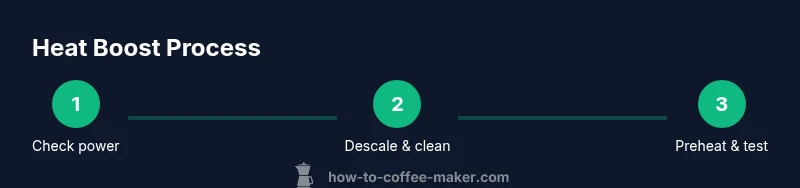
Start with maintenance: clean and descale to remove mineral buildup that impairs heating efficiency. If your machine offers a preinfusion or warming phase, enable it to stabilize heat before brewing. Use preheated water and, if your model allows, run a test cycle with a plain hot water setting to gauge heat delivery. Consider preheating your cupware as well; a cool mug will pull heat away from the brew quickly. Finally, evaluate brew settings such as grind size and extraction time. Finer grinds and longer contact times can raise perceived temperature by altering heat transfer dynamics during extraction. The goal is to reduce heat loss without forcing the heater to work harder than it should. Implement changes gradually and test outcomes before moving to more aggressive tweaks.
Everyday tweaks that can yield hotter brews
Preheating cups and using freshly boiled water for pre-warmth can help maintain a higher initial temperature in the brew. If your machine has multiple brew settings, try a hotter setting or a longer brew time while avoiding overextraction. Upgrading to a carafe with better heat retention or using a thermal carafe can also improve perceived warmth by minimizing heat loss after the brew. Ensure the warming plate (if present) is clean, unobstructed, and functioning; a dirty plate can transfer heat unevenly. Finally, optimize grind size and dose to reduce channeling, which can cause temperature fluctuations in the final cup. These tweaks, taken together, can yield a noticeably hotter cup without compromising safety.
Tools and safety checks you should perform before proceeding
Regular descaling and cleaning are essential first steps. Ensure the machine is unplugged before disassembly, use non-abrasive cleaners, and avoid soaking electrical components. Use a dedicated outlet on a circuit that isn’t shared with heavy appliances to minimize voltage dips that could affect heating performance. If you rely on external heating (like a kettle) to preheat water, do so safely and never bypass built-in protections. When in doubt, consult the manufacturer’s manual for model-specific recommendations. These precautions protect both you and your appliance while you pursue a hotter brew.
Authority sources and practical references
For best practices and safety considerations, refer to reputable sources on appliance safety and energy efficiency. The next section lists foundational resources from government and major publications to support the guidance provided here. These sources help you understand heat transfer, descaling importance, and safe maintenance routines.
Tools & Materials
- Descaling solution(Follow manufacturer instructions; use the product recommended for your machine’s boiler.)
- Soft brush or sponge(For clearing mineral buildup from heating areas and crevices.)
- Measuring cup(Accurate dosing for descaling and cleaning cycles.)
- Kettle or hot-water source(For preheating water before brewing and testing heat transfer.)
- Digital thermometer(Optional for verifying water temperature during tests.)
- Clean cloth(Drying surfaces after cleaning and maintenance.)
- Dedicated outlet or circuit tester(Use on a stable circuit to avoid voltage dips during heating.)
Steps
Estimated time: 60-90 minutes
- 1
Inspect power and safety
Unplug the machine, inspect the power cord for damage, and ensure it’s plugged into a dedicated, stable outlet. A safe power supply reduces voltage fluctuations that can hamper heating performance.
Tip: If the outlet or cord shows wear, stop and replace before testing heat. - 2
Descale and clean heating areas
Prepare a descaling solution following the manufacturer’s directions and run it through a cleaning cycle. Pay special attention to the boiler, heating coil area, and any accessible channels to remove mineral buildup that insulates heat transfer.
Tip: Rinse thoroughly after descaling to avoid flavored residues in the next brew. - 3
Preheat water and cups
Boil water in a kettle or hot-water source and preheat the cupware. This reduces the heat load on the brewer and helps maintain a higher brew temperature from the first drop.
Tip: Always handle hot water with proper insulation to prevent burns. - 4
Adjust grind size and dose for better heat transfer
If your brewer supports variable grind settings, try a slightly finer grind with a balance of dose to promote efficient extraction, which can influence the perceived temperature of the cup.
Tip: Avoid overpacking the basket; excess density can trap heat and cause channelling. - 5
Run a test brew and measure temperature
Brew a test pot using your adjusted settings and observe the result. If possible, verify water temperature with a thermometer near the end of the brew to confirm it remains within your target range.
Tip: Document the result so you can compare over time and gauge improvements.
Questions & Answers
Why isn’t my coffee maker getting hotter?
In many cases, heat loss comes from scale buildup, aging components, or power supply fluctuations. Start with a thorough cleaning and descaling, then verify the machine reaches heat during a test brew. If heat still lags, consult the manual or a service technician.
Most underheating is due to scale or aging parts. Start with cleaning, then test heat; if it still lags, seek professional help.
Can descaling improve brew temperature?
Yes. Mineral buildup can insulate heating elements and reduce heat transfer. Regular descaling restores heat delivery and stabilizes temperature during brewing.
Descaling helps restore heat delivery by removing mineral buildup.
Is preheating water or cups useful for hotter coffee?
Preheating water and cups minimizes heat loss during transfer and helps maintain a hotter initial brew. It’s a simple, safe practice that complements other adjustments.
Preheating helps keep the brew hotter and improves consistency.
When should I replace the heating element or thermostat?
If cleaning and maintenance do not restore heating performance and the machine can’t reach a hot brew, professional evaluation or part replacement may be necessary. Do not attempt DIY repairs beyond basic maintenance.
If it won’t heat after maintenance, get a professional check.
Does using a thermal carafe affect perceived heat?
A thermal carafe helps retain heat after brewing, improving perceived warmth. It does not increase the machine’s initial brew temperature, so address heating in the brewer as well.
A thermal carafe helps keep heat but doesn't change the machine's output.
How can I test brew temperature safely without a thermometer?
Without a thermometer, rely on consistent taste and timing as a proxy for temperature, but for accuracy use a thermometer when possible.
Taste and timing can hint at temperature, but a thermometer is best for accuracy.
Watch Video
Key Takeaways
- Inspect and clean regularly to sustain heat delivery
- Descale to remove heat-insulating mineral buildup
- Preheat water and cups to reduce heat loss
- Use measured adjustments to grind and brew settings
- Test with a thermometer when possible for accuracy