How Long Does a Coffee Maker Take?
Discover typical brew times for drip, single-serve, and espresso machines. Learn factors that affect timing, how to estimate your model's brew speed, and practical tips to speed up brewing without sacrificing flavor. BrewGuide Pro analyzes home coffee timing in 2026.


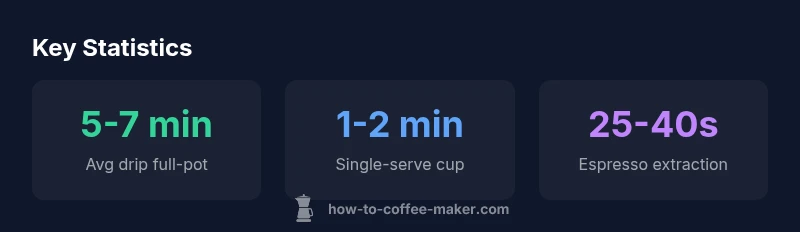
On average, drip coffee makers take about 5-7 minutes to brew a full pot. Smaller single-serve machines often finish in 1-2 minutes, while espresso-style machines typically extract in 25-40 seconds. Variations come from pot size, grind coarseness, water temperature, and the machine’s heating element. For a precise estimate, check your model’s user guide.
What affects brew time
If you’re asking how long does a coffee maker take to brew, several interrelated factors determine the final duration. The most obvious is the machine type—drip brewers, single-serve pods, and espresso machines all operate with different heating methods and water flow rates. Beyond type, batch size matters: a full carafe generally takes longer than a single cup. Grind size is another lever: finer grinds extract faster only when the brew uses pressure; in drip systems, very fine coffee increases contact time and can slow the flow. Filter quality and coffee-to-water ratio also influence flow resistance and extraction efficiency. Water temperature is critical: most drippers perform best around 195-205°F (90-96°C); cooler water yields slower extraction, hotter water risks over-extraction and longer preheating. Remember that the heating element must bring cold water to temperature, which adds warm-up time before the first drop hits the pot. Finally, environmental conditions such as ambient room temperature and household voltage can cause minor timing shifts. According to BrewGuide Pro Analysis, 2026, typical full-pot drip times fall in the 5-7 minute range, but models vary widely.
Brew-time by machine type
Different machine types optimize for speed differently. Drip coffee makers prioritize volume and even extraction; single-serve brewers aim for speed and convenience, often using swift water pulses and pre-warmed carafes; espresso machines rely on pressurized extraction, which is inherently fast but demands precise grind size and dosing. For a quick reference, most home setups fall into these broad ranges: drip: 5-7 minutes for a full pot, single-serve: 1-2 minutes per cup, espresso: 25-40 seconds per shot. When comparing models, consider not only the brew time but also preheat time, warm-up cycles, and whether the machine maintains temperature between brews.
How to estimate timing for your model
To estimate how long your specific model takes, start with the user manual’s stated brew time for your chosen mode. If you’re uncertain, run a timed test: gather clean, room-temperature water, set up a typical batch, and start the timer as you switch the machine on. Stop the timer at the moment the brew completes. Repeat a couple of times to account for small variances. Record the times and look for a consistent pattern. If your results exceed the typical range, inspect for common culprits such as scale buildup, clogged filters, or insufficient preheating. This approach aligns with a data-driven method BrewGuide Pro recommends for home coffee makers in 2026.
Speeding up brew times without sacrificing flavor
There are practical ways to shave minutes off a brew without compromising taste. Start with grind size: a slightly coarser grind can improve flow in drip machines and reduce clogging that slows the brew. Ensure the water temperature stays within the optimal range (195-205°F / 90-96°C) by preheating the carafe and using fresh cold water. Preheating helps reduce the warm-up time for the first cup. Consider using a thermal carafe to keep heat stable, which can shorten perceived wait times in the next rounds. Use the manufacturer-recommended coffee-to-water ratio; too much coffee can slow percolation. Finally, schedule routine descaling and filter changes to prevent mineral buildup that reduces flow rate.
Common misconceptions about brewing speed
A common myth is that faster is always better. In reality, rushing can lead to under-extraction and a flat flavor. Another misperception is that all machines brew at the same speed—various technologies (preheating, pump pressure, flow design) create wide differences. Also, preheating the carafe won’t always reduce total time if the machine already warms efficiently; it primarily reduces the initial cooling of the brew once poured. Understanding your specific model’s warm-up sequence is essential to evaluating true brew speed.
How to troubleshoot slow brew times
If your coffee maker starts to brew slower than usual, begin with a basic maintenance check. Clean the brew basket, nozzle, and carafe area to remove any clogs. Descale with an approved descaling solution to dissolve mineral buildup in the heating element and tubes. Check the water reservoir and tubing for kinks or airlocks. Replace old filters and verify the heater plate is functioning correctly. If the problem persists, consult the manufacturer’s guidance or a trusted service resource. Regular maintenance is the best defense against slower-than-normal brew times.
Typical brew times by machine type
| Machine Type | Typical Brew Time | Notes |
|---|---|---|
| Drip (16-cup) | 5-7 minutes | Standard home brewer |
| Single-serve (pod) | 1-2 minutes | Fast cup, variable quality |
| Espresso machine (home) | 25-40 seconds | Pressure-based extraction |
| French press | 4-5 minutes | Manual timing, slow but rich |
Questions & Answers
What is a typical brew time for drip coffee?
A typical drip brew takes roughly 5-7 minutes for a full pot, depending on capacity and grind. Match grind size and water ratio to your machine’s design for consistent results.
Drip coffee usually takes about five to seven minutes for a full pot.
Why does my coffee maker take longer than usual?
Common causes include mineral buildup from hard water, clogged filters, low water temperature, and old heating elements. Regular descaling and cleaning restore normal timing.
Slow brewers often need a cleaning and descaling to speed up.
Can I speed up brewing without sacrificing flavor?
Yes. Adjust grind size to a slightly coarser level for drip machines, ensure water temperature stays within range, and preheat the carafe. Avoid overloading with coffee.
You can speed up by tweaking grind size and maintaining proper temperature.
Does grinder setting affect brew time?
Yes. Finer grinds require more extraction time and can slow flow in drip systems. Use a grind size appropriate for your brew method to balance speed and flavor.
Grinding finer can slow things down; use the right setting for your brew method.
Does preheating the machine help with speed?
Preheating reduces warm-up time for the first brew but has diminishing returns if the machine already heats efficiently. It mainly improves initial temperature stability.
Preheating helps a bit, but it depends on your machine’s design.
How does altitude affect brew time?
Higher altitudes can change boiling points and heat transfer slightly, altering timing, especially for boxed water gear. Most home machines show minimal altitude-related changes.
Altitude can tweak timing a little, but effects are usually small for home machines.
“Timing is as much about technique as heat; understanding your machine’s warm-up and grind size helps you predict brew time.”
Key Takeaways
- Know your machine type and its typical range
- Optimize grind size and water temperature for faster, better extraction
- Use routine maintenance to prevent slow brew times
- Test and log brew times to track changes over time
- Preheat the carafe to reduce post-brew heat loss