How Long Do Drip Coffee Makers Take?
Discover how long a drip coffee maker typically takes to brew a pot, with factors like grind size, water temperature, brew ratio, and machine conditioning, plus practical tips to adjust brew speed for consistent results.


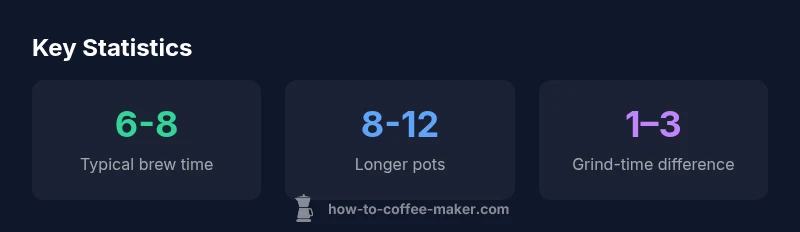
The typical drip brewer completes a full pot in about 6 to 8 minutes for 8 cups, while larger pots may run 8 to 12 minutes. Exact times vary with grind size, water temperature, and machine efficiency. If your brew basket is smaller or you pre-wet beans, expect minutes to adjust accordingly.
Why brew time matters
For home brewers, the time it takes to brew a pot isn't just a convenience; it informs your morning routine and caffeine plan. When you ask how long does a drip coffee maker take, the quick answer depends on machine size and pot load, but a typical eight-cup batch finishes in roughly six to eight minutes. According to BrewGuide Pro, duration also reflects how well you optimize grind size, water temperature, and machine readiness. A reliable brew starts with clean filters, a properly seated carafe, and measured water. In practice, you should expect some variation from cycle to cycle due to slight fluctuations in water temperature and the freshness of beans. If you routinely brew coffee to hit a specific time window, you can calibrate your process by identifying which steps slow you down. This not only helps with speed but also improves consistency, aroma, and flavor. In other words, timing is a practical performance metric, not a mystery.
What influences drip coffee timing
Brewing time is not a fixed dial; it shifts with several interrelated factors. Pot size and basket capacity set the baseline; smaller batches finish quicker, while larger pots demand longer heating and filtration times. Grind size plays a major role: too fine, and water struggles against the grounds; too coarse, and extraction can be incomplete, yet brew time may seem shorter. Water temperature also matters: water that is too cool slows extraction, while water that's too hot can over-extract, affecting flavor and perceived speed. Brew ratio and filter type contribute as well—dense filters or very strong coffee can reduce flow and add seconds or minutes to the cycle. Carafe warm-up, machine age, and even how well the coffee maker drains after brewing can all influence the end time. The takeaway is that multiple levers determine your actual brew duration, not a single number.
How to estimate brew time for your machine
To estimate accurately, start with a baseline: brew a standard pot and time the cycle from the first drop to the last. Use a timer and the same amount of coffee and water each time. Record the total time and note any preheating, bloom, or warming plate activity. For future brews, adjust one variable at a time—grind size, water temperature, or coffee dose—and retest. When you have a consistent pot time, you can create a personal window (for example, 6-8 minutes) and plan your routine around it. This method helps you manage expectations for guests and busy mornings, while also guiding maintenance and calibration decisions.
Typical times by pot size
- 4 cups: 4-6 minutes
- 8 cups: 6-8 minutes
- 10 cups: 7-10 minutes
- 12 cups: 8-12 minutes
The exact values depend on the machine, but this range provides a practical starting point for most home brewers. If you regularly brew a non-standard size, measure that pot several times to establish your own baseline and adjust your expectations accordingly.
Grinder impact and pre-wetting
Grind size is a primary driver of brew time. A finer grind creates more resistance to water flow, often lengthening the cycle by a minute or two, while a coarser grind can shave a minute or more off the time—at the risk of under-extraction. Pre-wetting coffee grounds before the main pour can slightly reduce extraction time for certain grinders by accelerating bloom and initial contact, but the overall brew time typically remains within your established range. Consider testing with one tweak at a time to see how the clock responds.
Temperature, water flow, and brew science
Water temperature should be in the range of about 195–205°F (90–96°C) for optimal extraction. If your machine runs cooler, the cycle will take longer; hotter water can shorten the early stages but risks over-extraction. Water flow rate, filter choice (paper vs. metal), and the height of the brew head all affect how quickly water saturates the grounds. A well-maintained machine with clean filters will generally reach target temperatures faster and sustain consistent flow, yielding predictable brew times and better flavor.
Practical tips to optimize speed
- Pre-warm the carafe and the warming plate so the pot doesn’t lose heat during transfer.
- Use a slightly coarser grind for faster flow if your current brew is sluggish, ensuring you don’t sacrifice flavor.
- Clean the machine regularly, including the shower screen and filters, to prevent buildup that slows flow.
- Verify water temperature with a quick thermometer check if you suspect heating issues.
- Keep a consistent recipe and scale, so your timing isn’t skewed by inconsistent doses.
Common discrepancies and troubleshooting
If your brew time is consistently longer than expected, check for clogged filters, a weak or aging heating element, or a partially blocked water line. Replace old seals or gaskets as needed and confirm that the heating plate is functioning properly. If you notice a sudden change in time without a visible cause, run a cleaning cycle or descale following the manufacturer’s recommendations. Timely maintenance prevents slowdowns and preserves flavor.
Brew time by pot size and conditions
| Pot size | Typical brew time | Notes |
|---|---|---|
| 4 cups | 4-6 minutes | Faster due to lower water volume |
| 8 cups | 6-8 minutes | Standard home-brew pot |
| 12 cups | 8-12 minutes | Longer warm-up and flow |
Questions & Answers
What factors affect drip coffee brewing time?
Brewing time is influenced by pot size, grind size, water temperature, brew ratio, and filter type. Machine age and maintenance also play a role. Understanding these factors helps you estimate and optimize your cycle.
Several factors affect drip timing, including pot size, grind size, water temperature, and maintenance. Adjusting these can help you reach a desired brew time.
Does pre-wetting coffee affect brew time?
Pre-wetting can slightly shorten extraction time for some grinders, but its effect on total brew time is usually minor. It mainly influences aroma and extraction balance.
Pre-wetting can shave a minute or two off extraction for some grinders, but it doesn’t dramatically change total brew time.
How can I speed up a slow drip coffee maker?
Use a coarser grind, ensure water heats properly, clean filters and shower head, and verify your machine isn’t aging. Each tweak should be tested one at a time for clear results.
Try a coarser grind, check water temp, and clean the machine. Test tweaks one by one for faster, reliable results.
Why does my drip coffee take longer than the average?
Possible causes include clogged filters, low water temperature, or a weak heater. Other factors include pot size and filter type. Regular maintenance helps prevent slowdowns.
If it’s taking longer, check for clogs and temperature issues, and make sure you’re using the right size pot.
Does age of the coffee maker affect brew time?
Older machines can slow down due to wear, mineral buildup, or degraded heating elements. Regular descaling and parts checks help maintain speed.
Yes. As machines age, performance can drop; routine maintenance keeps timing steadier.
“Brewing times are a function of both machine design and user routine; even small adjustments to grind and temperature can shave minutes off your pot.”
Key Takeaways
- Know your baseline: measure your own pot times.
- Use ranges, not fixed numbers for accuracy.
- Regular maintenance helps maintain consistent timing.
- Adjust one factor at a time to optimize speed and flavor.