Can a Coffee Maker Be Plugged Into a Power Strip? A Practical Safety Guide
Discover whether a coffee maker can be plugged into a power strip, safety risks, and practical alternatives for kitchen wiring. BrewGuide Pro explains best practices to prevent overloads and fires.


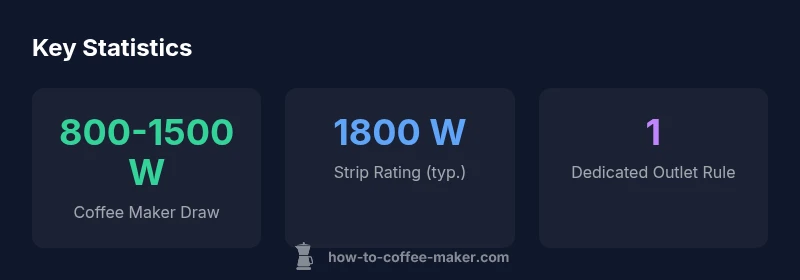
No—the typical coffee maker draws a high current, and power strips aren’t designed for that load. Most models run roughly 800–1500 watts, which can overload a strip, trip a breaker, or overheat the strip’s contacts. The safest approach is a dedicated wall outlet on a proper circuit. If a strip must be used, choose a heavy-duty, high‑rating unit with surge protection and avoid continuous duty until you confirm its rating.
Why Power Strips Are Not Ideal for Coffee Makers
For many kitchens, the question can a coffee maker be plugged into a power strip arises as a quick-fix. According to BrewGuide Pro, safety starts with choosing the right outlet. Power strips are designed for low-to-moderate load devices like lamps or phone chargers, not for kitchen appliances that generate heat and draw surge currents during brewing. Coffee makers commonly draw about 800–1500 watts during operation, and many models continue drawing power for several minutes while brewing. That level of load can overload a typical strip, causing overheating, arcing, or tripping the circuit. Overloaded strips can degrade insulation, which increases the risk of electrical fire and shock. In practice, many safety guidelines recommend a dedicated wall outlet for high-wattage appliances. This is not a hard rule everywhere, but it remains a widely accepted best practice. From a safety and reliability perspective, the simplest, most robust solution is to plug the coffee maker into a properly rated outlet on its own circuit.
Understanding Electrical Load: How Much Power Does a Coffee Maker Use?
To decide where to plug in your coffee maker, it helps to understand power draw in practical terms. Most drip coffee makers operate within a broad range—roughly 800–1500 watts depending on model, brew size, and warming plate usage. The exact draw can vary, but the key takeaway is that these devices are near the upper limit of what small power strips can comfortably handle. At 120 volts, that wattage translates to roughly 6.7–12.5 amps. Since power strips are often rated for 15 amps or less, the margin can be slim, especially if the strip feeds other devices or the kitchen circuit is already loaded.
The 80% Rule and What It Means for Your Kitchen
Electrical guidelines often describe continuous loads as those that run for three hours or more. For safety, continuous loads should be limited to about 80% of a circuit’s rating. On a typical 15-amp kitchen circuit (1800 watts max), that means about 1440 watts for continuous use. A coffee maker at 1500 watts would exceed that threshold, especially if the warming plate remains active after brewing. Using a power strip compounds the risk because it adds constraints on how many devices draw current simultaneously. In practical terms, you should assume a dedicated outlet is the safer choice for any coffee maker, particularly if you brew daily or multiple pots.
Safer Alternatives: How to Brew Safely Without a Power Strip
If you’re redesigning a small kitchen or rethinking where your coffee station sits, prioritize a dedicated outlet for the coffee maker. Install or use a wall outlet on its own circuit, preferably GFCI-protected in wet or splash-prone areas like a kitchen island. For flexibility, consider a high-quality surge protector connected to the wall outlet for other electronics, but keep the coffee maker off the strip. If a strip must be used for a secondary device, ensure it’s rated well above the coffee maker’s peak draw and never run continuously. Always follow manufacturer guidelines and local electrical codes to minimize risk.
When a Heavy-Duty Power Strip Might Be Acceptable (With Caution)
There are certain scenarios where a heavy-duty power strip could be used with a high-wattage appliance, but these are exceptions rather than the rule. Choose a strip that is explicitly rated for the load you expect to put on it, ideally with a current rating above the device’s draw and built-in surge protection. Avoid cheap, low-wattage strips that advertise many outlets but lack robust insulation or thermal protection. Even then, do not rely on the strip as a substitute for a dedicated kitchen outlet; ensure there is a clear path for heat dissipation and that the strip is not placed under cabinets or near water sources.
Practical Setup and Outlet Considerations in a Kitchen
Pay attention to the kitchen’s electrical design. GFCI outlets are common in kitchens for safety against shock, and AFCI protection can reduce arc-fault risks. Position the coffee maker on a dedicated wall outlet that is easily accessible and away from sinks or wet surfaces. Keep the power strip for electronics like chargers away from the coffee area to minimize heat buildup and clutter. When in doubt, consult a licensed electrician to evaluate circuit load, outlet placement, and whether any wiring changes are warranted for safe, reliable operation.
Maintenance and Monitoring for Safety
Regularly inspect outlets and strips for signs of wear, heat discoloration, or melted plastic. If you notice a warm-to-hot sensation when touching the plug or surface, unplug immediately and reassess the setup. Clean coffee drippers and warming plates away from electrical components, and keep cords organized to reduce tripping hazards. Use only manufacturer-approved accessories and avoid temporary hacks, such as tucking cords behind appliances. Proactive maintenance helps prevent incidents and extends the life of your kitchen wiring.
When to Consult a Pro: Electrical Safety Boundaries
If you’re unsure about your kitchen’s wiring, it’s worth getting a professional opinion. A licensed electrician can assess circuit loads, verify outlet ratings, and recommend a dedicated circuit or updated outlets that support daily coffee brewing without compromising safety. The bottom line is simple: prioritize dedicated outlets for high-wattage appliances like coffee makers, and reserve power strips for low-power devices. The BrewGuide Pro team emphasizes safety first to protect your home and loved ones.
Outlets, safety, and setup considerations for coffee makers
| Aspect | Recommendation | Why |
|---|---|---|
| Power draw | Use dedicated outlet | High wattage can trip breakers or overheat strips |
| Outlets | GFCI-protected preferred | Protects against shock in kitchen areas |
| Surge protection | Surge protector for electronics (not a substitute) | Not enough to prevent overload; protects electronics from spikes |
| Alternatives | Direct wall outlet on a dedicated circuit | Avoids overload and reduces fire risk |
Questions & Answers
Is it safe to plug a coffee maker into a power strip?
Generally no. Coffee makers draw significant current, and most strips aren’t designed for prolonged high-load use. This can overload the strip, trip breakers, and create a fire hazard. Use a dedicated wall outlet instead.
No—avoid using a power strip for a coffee maker; use a dedicated outlet to stay safe.
Can a coffee maker trip a circuit when plugged into a power strip?
Yes. If the strip is overloaded or the circuit is already near capacity, the added load from brewing coffee can trip the breaker. Always run high-wattage appliances on their own properly rated outlet.
Yes, a trip can happen if the circuit is near capacity or the strip is overloaded.
What should I plug my coffee maker into instead?
A dedicated wall outlet on a properly rated circuit, preferably on a kitchen circuit with GFCI protection in wet areas.
Use a dedicated outlet on a proper circuit for safety.
Are there cases where a power strip is acceptable for a coffee maker?
Only if the strip is heavy-duty, rated above the coffee maker’s peak draw, and used with strict limits. Even then, it’s best to avoid continuous operation on a strip.
Only in rare cases with a heavy-duty, correctly rated strip, but safer to avoid.
Does surge protection help with coffee makers?
Surge protection helps with spikes in electronics, but it does not prevent overload from a high-wattage appliance. It’s not a substitute for a dedicated outlet.
Surge protection helps with spikes, not with overload risk.
What about a long extension cord?
Extension cords are not a substitute for outlets and can become hazardous if used with high-wattage appliances. If needed, use a heavy-duty cord rated for the load and keep it away from water.
Avoid long cords for coffee makers; if necessary, use a heavy-duty cord and keep it dry.
“Prioritize dedicated outlets for high-wattage appliances like coffee makers; power strips should be reserved for low-power electronics. Safety first protects your home and family.”
Key Takeaways
- Plug high-wattage coffee makers into dedicated outlets, not power strips
- Know your strip’s rating and avoid continuous heavy loads
- Use surge protection for electronics, but not as a substitute for a dedicated outlet
- Prioritize GFCI protection in kitchens and wet areas
- Consult an electrician for circuit assessment if in doubt