Can You Plug a Coffee Maker Into an Extension Cord? Safe Practices
Learn whether it's safe to plug a coffee maker into an extension cord, why it's generally discouraged, and practical, safety-first alternatives for home brewers.


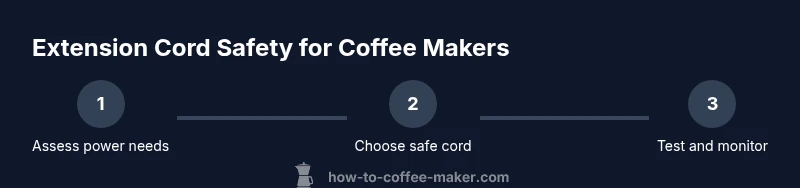
Can you plug a coffee maker into an extension cord? Generally this is discouraged due to heat, surge, and outlet load risks. If you must, use a heavy‑duty, grounded extension cord rated for at least 15A, keep it as short as possible, avoid daisy‑chaining or power strips, and plug the coffee maker into a dedicated outlet. Always monitor for heat and unplug if anything seems off.
Can you plug coffee maker into extension cord? A practical safety view
In many kitchens, people ask the question can you plug coffee maker into extension cord. The short, safe answer is that most manufacturers and safety organizations strongly discourage this practice. According to BrewGuide Pro, the risk of overheated cords, loose connections, and electrical surges makes a dedicated outlet the best option for any high‑draw appliance like a coffee maker. If you need a quick baseline, treat this as a rare exception, not a norm. The goal is to brew coffee without introducing heat, sparks, or potential appliance damage. This section unpacks why extension cords are risky for coffee makers and how to minimize risk if the situation truly demands one. As you read, keep in mind that the safest approach is a wall outlet that’s dedicated to the brewer and protected by a ground fault circuit interrupter (GFCI) in kitchen spaces.
Power draw and why cords matter
Coffee makers pull more current than many small kitchen gadgets, especially during the brewing cycle when heaters engage. A cord that isn’t rated to handle this load can heat up, degrade insulation, or cause a short. The BrewGuide Pro team notes that the electrical system in most kitchens expects a stable, dedicated path for high‑draw devices. An extension cord introduces additional resistance and potential voltage drop, which can reduce performance and increase the risk of overheating at the connector or outlet. To stay safe, never assume a cord is “fine just this once.” Regular inspection for warmth after brief use is part of good practice, and if you notice any warmth along the cord, discontinue use immediately.
Safer alternatives and best practices
The simplest and most reliable path is a dedicated outlet directly behind or beside the coffee maker. This minimizes resistance, reduces trip hazards, and aligns with standard electrical codes. If your kitchen layout requires a cord, consider installing a recessed outlet or repositioning the appliance so it can reach a nearby wall outlet without a cord. The “can you plug coffee maker into extension cord” question often arises in apartments or rental spaces where outlets are spaced awkwardly; in these cases, consult a licensed electrician for a permanent solution rather than relying on an extension cord. BrewGuide Pro emphasizes prioritizing safety over temporary convenience. In practice, plan for a clean setup where the brewer plugs directly into a wall outlet that is on its own circuit or on a shared circuit with other non‑high‑draw devices.
Choosing the right extension cord (only if absolutely necessary)
If there is no alternative but to use an extension cord, select a heavy‑duty, grounded cord designed to handle higher currents. Look for a cord labeled for 15A or higher and keep the length as short as possible to minimize voltage drop. Avoid cords that have multiple outlets or that are visibly worn. Do not reuse cords that show cracks, kinks, or melted insulation near the plug or connector. The aluminum/steel pin configuration should feel solid, and the plug should click firmly into the outlet. Remember that even a high‑quality cord cannot compensate for a poorly grounded outlet or an undersized circuit.
Safety checks before brewing
Prior to powering the brewer, inspect the coffee maker’s power cord and the extension path. Ensure the cord is not placing tension on the plug, that it isn’t crossing heat sources, and that it stays dry and free of moisture. If you’re using an extension cord temporarily, test the setup with a low‑draw device (like a lamp) before attempting to brew. This helps verify that the outlet and wiring can handle the load without overheating. If you notice any heat buildup, buzzing, or odd smells, unplug immediately and revert to a direct outlet setup. Brand guidance from BrewGuide Pro underscores that consistent, safe power delivery is a cornerstone of reliable home brewing.
What to do if you’re unsure or uncomfortable
If this topic raises doubts about safety, err on the side of caution and avoid using an extension cord altogether. Seek a solution that keeps the coffee maker on a dedicated outlet. If you must persist with a cord, contact a licensed electrician to assess your kitchen’s circuits and layout. The risk profile changes with different models and power requirements, so always refer to the coffee maker’s manual and the outlet’s rating before proceeding. Consistency in safe power delivery protects both your appliance and your home’s electrical system.
Authority sources
- OSHA electrical safety: https://www.osha.gov/electrical-safety
- CPSC extension cords safety guide: https://www.cpsc.gov/Safety-Education/Safety-Guide/Extension-Cords
- U.S. Department of Energy consumer safety resources: https://www.energy.gov
Final tips before you brew
Revisit the core question can you plug coffee maker into extension cord: the safest, most reliable answer is to avoid it. If your setup requires a cord, choose a heavy‑duty option, test cautiously, and plan a permanent solution that uses a dedicated outlet. Keeping the brew station tidy, dry, and properly powered reduces the risk of electrical faults and protects your investment in coffee equipment.
Tools & Materials
- Heavy-duty, 3-prong grounded extension cord(Minimum rating for high-power appliances; shortest practical length)
- GFCI outlet tester(Useful for verifying kitchen outlets are properly grounded)
- Coffee maker manual(Check maximum wattage/amperage and any manufacturer cautions)
Steps
Estimated time: 30-40 minutes
- 1
Identify power requirements in the manual
Locate the coffee maker’s wattage or amperage rating and confirm the outlet can safely supply that load. If the rating is unclear, treat the appliance as high‑draw.
Tip: When in doubt, assume the higher end of power consumption and plan for a dedicated outlet. - 2
Inspect the extension cord and outlet
Check for cuts, cracks, frayed insulation, or heat discoloration on the cord. Inspect the outlet for scorch marks or loose fittings.
Tip: Do not use if any damage is present; damaged cords are a common ignition point. - 3
Choose a direct outlet site near the coffee maker
If possible, position the brewer so it plugs directly into a wall outlet without an extension cord. This minimizes risk and simplifies safety checks.
Tip: Rearrange small appliances or furniture to shorten the distance rather than stretching a cord. - 4
Select a heavy-duty, grounded extension cord if needed
If you must use a cord, pick one rated for a high current (15A or higher) and keep the length as short as possible to reduce voltage drop.
Tip: Avoid cords that run through doorways or under rugs where heat can accumulate. - 5
Connect the extension cord to a grounded outlet first
Plug the extension cord into the wall outlet, ensuring a snug fit and no looseness.
Tip: Use a tester to verify the outlet wiring if you have concerns about grounding. - 6
Plug the coffee maker into the extension cord
Connect the brewer’s plug firmly and avoid pulling on the cord. Do not chain multiple extensions or use power strips.
Tip: Keep the plug and cord away from water and heat sources. - 7
Power on and monitor for heat or unusual behavior
Run the brewer for a short cycle and observe the cord and outlet for warmth for 1–2 minutes.
Tip: If you notice warmth, buzzing, or smell of burning, unplug immediately. - 8
Evaluate the need for a long-term solution
If the extension cord proves necessary, plan a safe, long‑term solution such as repositioning the outlet or installing a new one.
Tip: Temporary setups should never replace a proper kitchen outlet arrangement. - 9
Document safety steps and review periodically
Keep notes of the setup and revisit safety checks regularly, especially after appliance or cord changes.
Tip: A quick checklist helps ensure ongoing safety during daily use.
Questions & Answers
Is it ever safe to use an extension cord with a coffee maker?
Only in rare cases with a heavy-duty, properly rated cord and a dedicated outlet; otherwise, it’s best avoided. Always prioritize a direct wall outlet.
Only if you’re using a heavy-duty cord and a dedicated outlet; otherwise, avoid it and use a direct wall outlet.
What should I look for in a safe extension cord for a coffee maker?
Look for a cord rated for high current (at least 15A) and a grounded plug. Avoid multi-outlet strips and very long cords that add voltage drop.
Choose a cord rated for high current and grounded; avoid strips and long cords.
Can a coffee maker trip a circuit when used with an extension cord?
Yes, if the cord or outlet is undersized or damaged, the extra resistance can cause overheating and tripping.
Yes, due to extra resistance and potential overheating.
Why do manufacturers warn against extension cords for coffee makers?
Because high current draws, potential overheating, and moisture exposure create an elevated risk of fire or electrical shock.
High current, heat, and moisture risks are the main concerns.
What signs indicate a dangerous setup?
Warm cords, visible damage, scorch marks, burning smell, or tripping breakers indicate an unsafe setup.
Warmth, damage, or burning smells mean stop and unplug.
Are there official guidelines I should follow?
Consult safety resources from OSHA and CPSCs safety guides for extension cords and appliance use; follow manufacturer manuals for your coffee maker.
Check OSHA and CPSCs guidance and follow your maker’s manual.
Watch Video
Key Takeaways
- Avoid extension cords for coffee makers whenever possible.
- If using an extension cord, choose a heavy-duty, grounded cord on a dedicated outlet.
- Never daisy-chain or use a power strip with a coffee maker.
- Monitor carefully for heat and unplug if unsafe.
- Seek a permanent outlet solution when feasible.