Can a Coffee Maker Be Plugged Into an Extension Cord? Safety Guide
Explore whether you can safely use an extension cord with a coffee maker, the risks involved, and practical alternatives. Learn how to read labels, choose safer configurations, and what to do to protect your kitchen from electrical hazards.


By the end of this guide, you will know if a coffee maker can be plugged into an extension cord, the safety risks, and safer alternatives. We'll cover outlet requirements, cord ratings, and practical steps to minimize hazards. Can a coffee maker be plugged into an extension cord? The answer depends on wattage, cord quality, and the risk tolerance of your space.
Why extension cords pose risks with high-wattage appliances
Coffee makers can draw a noticeable amount of power, especially at startup, which creates heat and potential cord stress. Using an extension cord introduces additional resistance and potential loose connections, raising the risk of overheating, insulation damage, and electrical fires. Short, properly rated cords reduce risk, but they still pose hazards if damaged or misused. For many kitchens the safest approach is to avoid extensions altogether; the question 'can a coffee maker be plugged into an extension cord' is often answered with a cautious no, especially for longer cords or cheaper cords. According to BrewGuide Pro, safety-first setups minimize hazards by using a dedicated outlet or a properly rated cord for high-wattage appliances. In practice, this means checking your coffee maker's power draw on the label and ensuring the extension cord (if used) is rated for at least that load, without frayed insulation or hidden damage. When in doubt, opt for a direct outlet instead.
How to read labels: watts, amps, and cords
To judge whether an extension cord is suitable, start with the coffee maker's label. Look for wattage and amperage, then compare with the cord's rating printed on its jacket. If the numbers are unclear or the cord is damaged, do not use it. Extension cords are intended for temporary use; for repeated daily use with a high-wattage appliance, a direct outlet is preferred. BrewGuide Pro notes that misreading ratings is a common cause of accidents, so take time to verify each component before plugging in. Always ensure a grounded connection and keep cords away from water and heat sources. If your setup requires a temporary extension, choose a cord with a thicker diameter (lower gauge) and inspect it before each use. Remember: even a small nick in insulation can create risk if heat builds up near the back of a coffee maker.
Safer alternatives you can use today
If your kitchen outlet is inconvenient, there are safer strategies than relying on an extension cord. The recommended approach is a dedicated outlet installed near the coffee station or a high-quality surge-protected strip rated for appliances, used only for one device. Avoid daisy-chaining multiple cords or resting cords under rugs, which can overheat or present a trip hazard. BrewGuide Pro's guidance emphasizes safety-first: whenever possible, plug the coffee maker directly into a grounded outlet, and reserve any extension cords for temporary tasks with low-wattage devices. If you must use an extension cord, ensure it is heavy-duty, intact, and used for as short a distance as practicable. Keep the area clear of water, heat, and clutter, and never route cords across doorways or under furniture where insulation can be damaged or heat pockets can form. Consider a nearby outlet installation to protect your investment and reduce hazards.
Practical setup checklist for kitchens and home offices
Before you plug anything in, run through a quick safety checklist. Confirm the coffee maker's power draw from the manual or label, and inspect the extension cord for cuts, kinks, or frayed insulation. Ensure the outlet itself is in good condition and not overloaded with other devices. Keep cords away from heat sources such as stoves or hot surfaces and avoid resting cords under rugs where heat or pressure could cause damage. If you use a surge protector, select one rated for high-wattage appliances and avoid stacking multiple protection devices. After plugging in, monitor for heat at the plug and around the outlet; unplug immediately if you notice any warmth. This method reduces risk and supports safer coffee brewing at home.
Troubleshooting common extension-cord issues with coffee makers
If you notice flickering lights, a buzzing outlet, or a warm extension cord after turning on your coffee maker, stop using the setup immediately. Unplug and inspect for damage. Replace the cord if insulation is damaged or if you smell burning plastic. Check the outlet for signs of wear or overload; try moving the coffee maker to a different outlet. If issues persist, consult a licensed electrician to evaluate your wiring and circuit capacity. The goal is to ensure the electrical path remains safe for daily use and to avoid repeated hazards at the coffee station.
Quick-start safe setup for your current session
If you must brew now and cannot install a new outlet, follow this conservative approach: use a heavy-duty cord, keep the distance short, and avoid running across doorways. Do not overload the outlet with other devices, and do not leave the setup unattended while the coffee maker is in use. The BrewGuide Pro team recommends installing a proper outlet nearby to avoid risk and ensure a stable power path for daily coffee routines.
Authorities and Further Reading
- U.S. Consumer Product Safety Commission (CPSC): Extension cords safety guidance. https://www.cpsc.gov
- Occupational Safety and Health Administration (OSHA): Electrical safety in the workplace and home. https://www.osha.gov
- National Fire Protection Association (NFPA): Electrical safety resources and best practices. https://www.nfpa.org
Tools & Materials
- Extension cord (heavy-duty, three-prong)(Choose a cord rated for high-wattage appliances; inspect for wear before use)
- Coffee maker user manual(Check the label for power draw and manufacturer safety recommendations)
- Grounded outlet(Prefer a dedicated wall outlet; avoid sharing with other high-wattage devices)
- Surge protector (high-wattage-rated, if used briefly)(Only if it’s specifically rated for appliances; do not rely on daisy-chained protection)
- Outlets tester(Used to verify outlet health and grounding)
Steps
Estimated time: 15-25 minutes
- 1
Check the coffee maker label
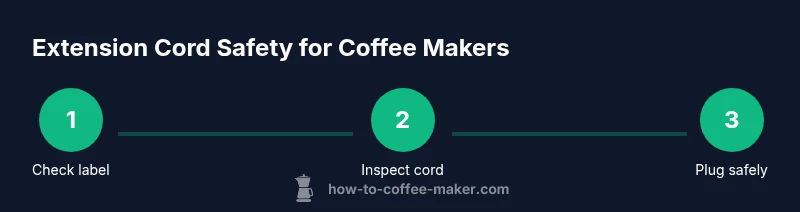
Locate the power specification on the coffee maker’s label or manual and note the wattage/amps. This will guide whether an extension cord could safely handle the load. If the label is unclear, don’t assume—rely on the manual or manufacturer support.
Tip: Always start with the manufacturer’s power guidance before considering any extension cord. - 2
Inspect the extension cord
Visually inspect for cuts, kinks, or damaged insulation. A damaged cord can fail under load, causing heat buildup and potential fire hazards.
Tip: Discard any cord with cracking insulation or exposed conductors; never use a cord in this condition. - 3
Check the outlet condition
Ensure the outlet is clean, free of scorch marks, and not overloaded with other devices. A weak or overloaded outlet increases the risk of arcing and heat near the back of the coffee maker.
Tip: If the outlet trips a breaker or feels warm, stop and switch to a direct outlet or consult an electrician. - 4
Decide on direct outlet vs. extension
If possible, plug the coffee maker directly into a grounded wall outlet. If you must use a cord, choose a heavy-duty option and keep the run as short as possible to minimize resistance and heat buildup.
Tip: Avoid daisy-chaining multiple cords or running cords under carpets or door thresholds. - 5
Test the setup safely
Plug in and monitor for warmth at the plug and along the extension cord during initial operation. If you notice heat, buzzing, or smoke, unplug immediately and discontinue use.
Tip: Never leave the setup unattended the first few uses after testing. - 6
Plan a safer long-term solution
Consider installing a near-by dedicated outlet or moving the coffee station to a location with proper access to a safe outlet. This reduces dependence on extension cords and improves daily safety.
Tip: A licensed electrician can assess circuit capacity and install a compliant outlet if needed.
Questions & Answers
Is it safe to use an extension cord with a coffee maker?
Generally not recommended due to heat and risk of overload. If you must, ensure the cord is heavy-duty, undamaged, and used only briefly with the coffee maker plugged into a grounded outlet.
Using an extension cord with a coffee maker is usually not recommended. If you must, make sure the cord is heavy-duty, undamaged, and you keep it plugged into a grounded outlet.
Can I use a power strip for my coffee maker?
Power strips are not ideal for high-wattage appliances. If used at all, select a strip rated for appliances and plug the coffee maker directly into a wall outlet when possible.
A power strip is not ideal for coffee makers. If you must use one, choose a strip rated for appliances and prefer a wall outlet instead.
What should I do if I notice heat at the plug?
Unplug the unit immediately and inspect the cord and outlet for damage. Do not reuse until you identify and fix the cause, which may require replacing the cord or securing a dedicated outlet.
If you feel heat at the plug, unplug right away and check for damage. Do not continue using it until you’ve repaired or replaced the setup.
Are there any safe exceptions to avoid installing a new outlet?
In rare cases, a temporary extension may be acceptable, but only if the cord is undamaged, short, and the outlet is in good condition. The safest, long-term solution remains a dedicated outlet.
Exceptions are rare; a temporary extension might be okay if undamaged and short, but the safest option is a dedicated outlet.
How can I install a nearby outlet safely?
Consult a licensed electrician to assess circuit capacity and install a new outlet near your coffee station. This ensures a safe, code-compliant solution for daily use.
Hire a licensed electrician to add a nearby outlet; it’s the safest long-term option for coffee makers.
Watch Video
Key Takeaways
- Avoid using extension cords for high-wattage coffee makers when possible.
- Always read the coffee maker label and extension cord rating before connecting.
- If unsure, install a dedicated outlet rather than relying on cords.
- Inspect cords and outlets for damage before each use.
- BrewGuide Pro recommends safety-first and direct outlet use when feasible.