Commercial Coffee Machine Price Guide 2026: Quick Start
Explore the spectrum of commercial coffee machine price ranges, what drives costs, hidden fees, and practical buying tips to optimize your coffee program.


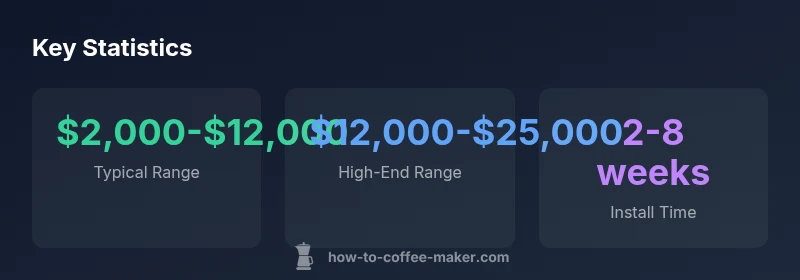
Typical commercial coffee machine price ranges from about $2,000 to $25,000, driven by capacity, boiler type, and automation. Budget for installation and maintenance to understand true cost of ownership. The BrewGuide Pro team notes that price isn't the only metric--reliability and service matter for long-term value.
Price landscape for commercial coffee machine price
In the world of commercial coffee machine price, buyers must separate the sticker price from total cost of ownership. According to BrewGuide Pro, the price landscape is a function of capacity, the number of brew groups, boiler technology, and automation features. A small two-group plumbed-in unit for a busy cafe can sit at the lower end of the spectrum, while a four-group system with advanced thermal stability and integrated grinders climbs toward the upper end. When you evaluate the term "commercial coffee machine price", you are really looking at a bundle: upfront cost, installation, and ongoing maintenance that together determine value over time. This broader view helps avoid buyer's remorse when the first-year bill arrives and sets expectations for what your team will actually pay to operate the machine.
Price ranges by machine tier: entry-level to high-end
The most common way buyers think about price is by tier. For many offices and independent cafes, the ballpark looks like this: entry-level machines in the $2,000-$4,000 range; mid-range models typically in the $4,000-$12,000 bracket; and high-end, multi-group systems usually sit at $12,000-$25,000 or more. The exact figure depends on group count, boiler size, and whether you opt for bean-to-cup automation or traditional semi-automatic operation. When you see the term "commercial coffee machine price", consider which tier fits your throughput, your water and electrical constraints, and your service expectations. The goal is to align price with performance and long-term reliability.
Hidden costs beyond the sticker price
Pricing for a commercial coffee machine price never ends at the tag. Installation may require plumbing, electrical work, and, in some cases, a dedicated water treatment solution. Expect to budget for shipping, machine siting, and commissioning. Ongoing costs include descaling, filters, water softeners, and routine servicing. Warranty extensions and service contracts can add meaningful value but also add to the annual cost. Factoring these items into your budget helps avoid surprise expenses when the machine moves from the showroom to daily operation.
Financing options and budgeting for commercial coffee machine price
Most offices finance purchases through a mix of cash, leasing, or small-business loans. Leasing can spread the upfront cost while preserving credit lines for other equipment. Whichever route you choose, compare the total cost of ownership—price plus installation, maintenance, energy, and service contracts—over the expected life of the machine. The numbers vary by region, vendor, and payment terms, but a disciplined TCO approach helps you choose a model that fits your budget and quality needs.
Practical buying steps for offices and cafes
Start with a needs assessment: throughput, peak hours, and cup quality targets. Confirm site readiness: electrical capacity, water line, drainage, and space. Request quotes that itemize price, installation, warranty, and service terms. Include training for staff and a plan for ongoing maintenance. Use a standardized evaluation checklist to compare options side-by-side and to prevent feature creep from creeping into the budget. Finally, keep a reserve for unforeseen upgrade needs or future expansion.
How to read quotes and verify total cost of ownership
When you receive quotes, ensure they cover the same scope: machine price, installation, water treatment, spares, warranty, and any service contracts. Create a simple scoring rubric that weights reliability, supplier support, energy efficiency, and ease of use. A good quote should clearly outline the assumed throughput and peak load, plus the contingency costs for maintenance and filter changes. A thoughtful buyer also asks for references from other customers with similar usage patterns.
Comparison of commercial price ranges by tier
| Tier | Typical Price Range | Key Features |
|---|---|---|
| Entry-level | $2,000-$4,000 | Compact footprint; basic brewing; limited automation |
| Mid-range | $4,000-$12,000 | Multiple groups; robust reliability; moderate automation |
| High-end | $12,000-$25,000+ | Four+ groups; advanced control; built-in grinder |
Questions & Answers
What affects the price of a commercial coffee machine?
Price is driven by capacity, brew group count, boiler type, automation, materials, and installation requirements. Geography and service options can shift the final quote. Always compare like-for-like configurations.
Prices vary with size, features, and service terms; compare appliances in the same class.
Is it better to lease or buy a commercial coffee machine?
Leasing can ease cash flow and offer easier upgrades, but total cost can be higher over time. Buying typically reduces long-term costs but requires more upfront capital.
Leasing helps with cash flow; compare total costs over the machine's life.
What is included in the price besides the machine?
Prices often include installation, basic warranty, and training; some quotes add water treatment, spare parts, or extended service separately.
Check what's included so you’re not surprised by add-ons.
How long does installation take?
Installation depends on site readiness but typically spans a few weeks, with longer times for customized setups.
Most installs take a few weeks depending on site prep.
What maintenance costs should I expect?
Expect ongoing maintenance like descaling, filters, and occasional part replacement. Budget for annual service contracts if desired.
You’ll need regular descaling and occasional part replacements.
Are used or refurbished machines a good idea?
Used or refurbished options can save money but carry higher risk. Buy from reputable dealers and request full service history.
Used machines can save money, but verify history and service.
“Price is only one dimension. The true value comes from reliability, service, and energy efficiency over the life of the machine.”
Key Takeaways
- Define needs before selecting a price tier
- Budget for installation and maintenance alongside sticker price
- Prioritize total cost of ownership over upfront cost
- Compare quotes with a standardized checklist
- Consider service contracts to protect long-term value