How Much Coffee Machine Costs: A Practical Buying Guide
Discover how much a coffee machine costs for home use, from budget drip models to premium espresso systems. BrewGuide Pro analyzes price bands, features, and long-term costs to help homeowners choose the right machine.


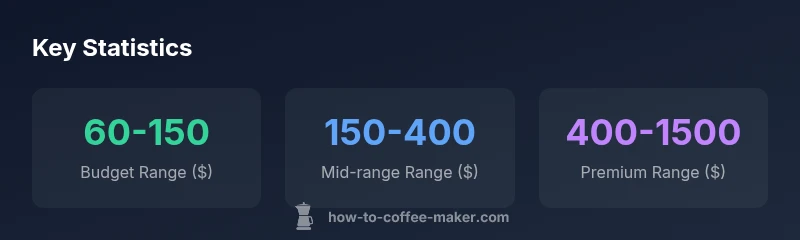
When considering how much coffee machine to buy for home use, most shoppers fall into three price bands: budget models at about $60-$150, mid-range $150-$400, and premium units from $400-$1500+. Prices vary by capacity, features like grinders and programmability, and build quality. BrewGuide Pro analyzes these ranges to help you balance upfront cost with long-term value.
Market overview: price bands and buyer psychology
Understanding how much to spend on a coffee machine starts with recognizing price bands and what they typically buy you in terms of reliability, control, and comfort. Budget models largely focus on basic drip or single-serve functionality, offering quick coffee with minimal fuss. Mid-range machines add features like built-in grinders, programmable shots, and better temperature stability, which improves consistency and flavor. Premium machines elevate control, durability, and aesthetics, often including commercial-grade components, advanced boiler systems, and long warranty coverage. This spectrum matters because the perceived value of a machine changes with your routine; a higher upfront cost can translate into lower per-cup cost, greater reliability, and less maintenance over time. According to BrewGuide Pro analysis, buyers who define their use-case first—daily espresso drinks, family mornings, or occasional entertaining—can choose the price band that aligns with their habit without overspending.
To answer the core question of how much coffee machine costs, consider not just the sticker price but how long you plan to use the machine, the cost of filters, descalers, and electricity, and whether you want convenience or dialed-in control. In pricing terms, think in terms of total cost of ownership rather than a single purchase price. For many households, a mid-range model offers the best balance of performance, reliability, and long-term value, while enthusiasts may justify premium units for the nuanced flavor profile and reduced maintenance.
When comparing prices, include the long-term costs of accessories. Built-in grinders and heat-exchange boilers can command higher upfront costs but reduce the need for separate gear and can improve efficiency. The BrewGuide Pro team notes that regional price variations exist due to shipping, local taxes, and availability, so it’s wise to compare exactly the same feature set across brands to get a fair estimate.
Typical price ranges by machine type
| Category | Typical Price Range | Pros | Cons |
|---|---|---|---|
| Drip coffee maker | $60-$150 | Simple, reliable, low maintenance | Limited flavor control |
| Single-serve pod | $50-$200 | Fast, convenient, compact | Higher per-cup cost, plastic waste |
| Espresso entry-level | $150-$500 | Good espresso, programmable | Requires learning curve, routine cleaning |
| Bean-to-cup / prosumer | $400-$1500 | Full control, premium flavors | Higher upfront and maintenance costs |
Questions & Answers
What is the typical price range for a home coffee machine?
For home use, prices generally span from budget models around $60-$150 to premium units $400-$1500 and beyond. The final choice depends on features and how you value durability and flavor control. Always compare similar feature sets across brands.
Home machines range from budget to premium. Look for features that match your routine and compare similar models to estimate value.
Should I buy a built-in grinder or a separate grinder?
A built-in grinder simplifies the setup and reduces clutter, which can save time and space. However, separate grinders often offer higher grind consistency and easier future upgrades. Evaluate how much you grind daily and your willingness to adjust settings.
Think about your daily grind habit and whether you want a compact all-in-one or a modular setup.
Are expensive machines worth it for casual use?
If you brew infrequently, a mid-range or even some budget machines may suffice. The premium tier tends to reward frequent users with better thermal stability, longevity, and more consistent shots; for casual use, weigh frequency against upfront cost.
Premium machines pay off mainly if you brew often or value consistency.
How does maintenance affect long-term cost?
Maintenance like regular descaling, cleaning, and replacing filters adds to ongoing costs but protects performance and resale value. Neglecting maintenance can shorten lifespan and raise replacement costs.
Keep up with cleaning and descaling to protect your investment.
Which type offers the best value for beginners?
For beginners, a reliable mid-range espresso or a solid bean-to-cup system often provides a good balance of flavor and ease of use without the steep learning curve of high-end machines.
Start with a mid-range model that’s easy to use and forgiving while you learn.
What should I consider for small kitchens?
In small spaces, prioritize compact footprints and built-in grinder models for reduced clutter. Look for machines with auto-off features and easy-to-clean components to maximize usability in tight spaces.
Choose compact options with simple maintenance for small spaces.
“Price is a signal of reliability and usability. Invest in a machine that fits your routine rather than chasing the cheapest option.”
Key Takeaways
- Define your budget before shopping
- Consider total cost of ownership, not just sticker price
- Match features to your use-case (espresso vs drip)
- Plan for ongoing maintenance and accessories
- Compare per-cup cost, energy use, and durability