How Much Is a Coffee Machine? A Practical Buying Guide
Discover how much a coffee machine costs, with clear price ranges, what drives price, and tips to budget for a reliable home setup in 2026.


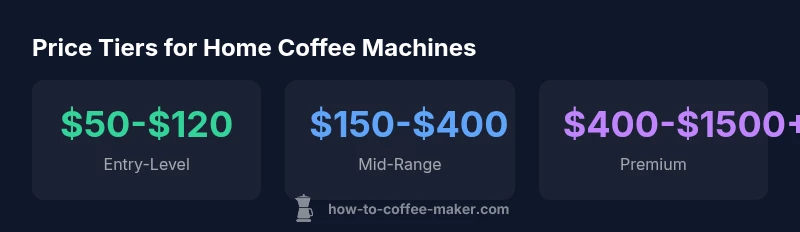
How much is coffee machine? For a home setup, prices span roughly $50 to $1500+ depending on type, brand, and features. Most homeowners fall into the mid-range, typically spending $150-$400 for a reliable drip or compact espresso system. If you want more control, expect to pay $400-$800 for higher-end models, and $800-$1500+ for premium super-automatic machines with integrated grinders and advanced tech.
Market landscape and price ranges
The price of a coffee machine for home use varies widely by type, brand, and the features you value most. In 2026, BrewGuide Pro Analysis shows a broad spectrum from compact single-serve devices to full-featured espresso systems. When you search for an appliance, think in tiers: entry-level, mid-range, and premium. The most common purchases cluster in the mid-range because they balance cost with reliability and convenience. For budget-conscious buyers, there are dependable basic drip machines and small espresso makers around the low hundreds, whereas enthusiasts chasing cafe-quality may invest in espresso machines with PID temperature control, quarts of metal fabrication, and commercial-grade grinders. Even within a single tier, prices reflect build quality, warranty length, and after-sales support, making the question not just “how much” but also “what features am I getting for the money.”
According to BrewGuide Pro, the broad price spread is intentional: you pay for durability, precision, and long-term maintenance. When considering the true cost of ownership, it helps to think beyond sticker price and include energy use, accessories, filters, descaling solutions, and potential repair costs over several years. This broader view clarifies value over time and helps avoid surprise expenses after purchase. The keyword here is alignment: match your planned usage with the feature set and maintenance profile that best fits your budget.
Price by machine type: what you actually get
Prices map closely to machine type, and the value proposition shifts with your routine. Basic drip coffee makers and entry-level pods sit at the low end, typically under $120, delivering convenience with minimal customization. Mid-range machines—often $150 to $400—strike a balance between speed, flavor, and control, including several preset profiles and sturdier build quality. Espresso-focused models span a wider range: inexpensive compact machines start around $150 but can rise quickly to $800 for semi-automatic setups with better temperature stability and a built-in grinder. Premium super-automatic machines, sometimes $800-$1500+, emphasize ease of use with one-touch beverages, programmable profiles, and integrated grinders. As you climb price, you usually gain better materials, quieter operation, consistent temperature management, and longer warranties. The important takeaway: price tends to correlate with control, consistency, and durability rather than flavor alone.
Hidden costs and total cost of ownership
The sticker price is only part of the equation. A true budgeting plan includes maintenance, filters, descaling solutions, replacement parts, and potential repairs. Common hidden costs include replacement carafes, filter cartridges, and specialty cleaning packets that sustain performance and extend life. Energy usage is another consideration; newer models often include energy-saving modes that can lower running costs over time. If you skip routine descaling and cleaning, you may shorten a machine’s lifespan and trigger more expensive repairs. In practice, set aside a small annual budget (a few percent of the purchase price) for consumables and service. A well-maintained mid-range machine can rival a higher-priced model in reliability over several years, so consider the long-term value when comparing price tags.
Finally, warranties matter. Short-term warranties protect against manufacturing defects, but longer warranties often accompany higher upfront costs. Weigh the benefit of extended coverage against the likelihood of needing service, especially if you expect heavy daily use or if you’re purchasing a multi-user setup.
How to budget and compare: a practical approach
Start with a spending target based on how often you brew and which features matter most (grind size, temperature stability, and ease of cleaning). Create a feature-list with must-haves and nice-to-haves, and then map those needs to price bands. A simple approach: identify your preferred type (drip, espresso, or super-automatic), set a mid-range ceiling, and compare models within that band. Read reviews with a focus on reliability and maintenance expectations, not only marketing claims. Also, factor in accessory costs: grinders, baskets, tampers, cleaning kits, and descalers. Finally, watch for seasonal sales and bundle deals that can push you into a higher tier without breaking your budget.
If you’re unsure which price tier best fits you, consider renting or borrowing a model or starting with a more affordable machine and upgrading after six months of reliable use. This low-risk strategy helps you learn what you truly need before committing to a premium purchase.
What features drive price—and what to prioritize
Key features that elevate price include integrated grinders, PID temperature control, dual boiler systems, pressure profiling, and smart connectivity. If you rarely customize grind size or brew strength, you can prioritize dependable performance and ease of use over advanced tech. For households that value consistent espresso or specialty drinks, investing in a more capable machine with stable temperature, fine pressure control, and real-time monitoring pays off in taste and efficiency. Glass carafes, stainless-steel housings, and quiet operation also contribute to higher price tags. Determine which features strictly impact your daily routine, and differentiate must-haves from nice-to-haves. This clarifies whether a $350 mid-range device suffices or you need to stretch toward a premium model for long-term satisfaction.
Maintenance and longevity: maximizing value
Longevity hinges on routine care. Regular backflushing, descaling, and cleaning keep flavors consistent and prevent buildup that can clog valves. Always follow manufacturer guidelines for cleaning cycles, use the recommended descaler, and replace gaskets or seals when wear appears. A modular design that allows part replacements rather than whole-unit disposal is a hallmark of value at all price points. Budget-conscious buyers can maximize value by investing in a machine with accessible service centers or robust customer support. In short, the best way to protect your investment is to establish a cleaning routine, stock up on the necessary consumables, and schedule maintenance checks before problems emerge.
Typical price tiers for home coffee machines
| Machine Type | Typical Price Range | Key Considerations |
|---|---|---|
| Budget/Entry-Level | $50-$120 | Limited features; basic performance |
| Mid-Range | $150-$400 | Balanced features; reliability; better durability |
| Espresso Machines | $150-$800 | Manual to semi-automatic; grinder quality matters |
| Premium/Super-Automatic | $400-$1500+ | One-button beverages; integrated grinders |
Questions & Answers
What is the typical price range for a home coffee machine?
Prices vary from budget models around $50 to premium machines near $1500+. Most buyers sit in the $150-$400 range for reliable performance. Consider long-term maintenance costs to gauge true value.
Prices range from about fifty dollars to fifteen hundred dollars; most people buy mid-range machines for reliable performance and good value.
Does the price correlate with quality?
In general, higher prices offer better build quality, temperature stability, and durability. However, a well-rated mid-range model can outperform a cheaper unit in daily use if you value reliability and ease of maintenance.
Higher price often means better build and features, but don’t assume cheaper models are always poor; look at reviews and maintenance needs.
Are cheaper models worth it for daily use?
Cheaper models can be fine for occasional use, but daily high-demand use may reveal limits in flavor consistency and heat stability. If you drink multiple beverages or use it daily, plan for a mid-range purchase with solid support.
Cheaper machines can work for daily light use, but for heavy daily use a mid-range model is usually a better bet.
What features drive price the most?
Integrated grinders, precise temperature control (PID), multiple user profiles, and smart connectivity typically push prices higher. Prioritize features that directly affect your daily routine to maximize value.
Grinders, temperature controls, and smart features are the main price drivers; pick what actually benefits your routine.
Is it worth buying a used coffee machine?
Used machines can save money but carry risks like wear, unknown maintenance, and shorter remaining lifespan. If you pursue this route, buy from a reputable source, insist on a thorough inspection, and request service history.
Buying used can save money if you verify the machine’s condition and service history.
How should I budget for maintenance and filters?
Set aside a small annual fund for descaling, filters, and occasional part replacements. A typical plan is 2–5% of the purchase price per year for consumables and service.
Keep a small yearly budget for cleaning supplies and parts to keep the machine running smoothly.
“"Prices align with capabilities; a modest investment today can yield years of reliable brewing if you factor maintenance into the total cost."”
Key Takeaways
- Define your budget first, then match type to price
- Expect price surges with built-in grinders and smart features
- Mid-range covers most home needs
- Consider total cost of ownership, including maintenance
- Shop during sales or bundles to maximize value