What to Clean Ninja Coffee Maker With: A Practical Guide
Learn safe, simple methods for cleaning your Ninja coffee maker. This BrewGuide Pro guide covers recommended cleaners, step-by-step routines, cautions, and maintenance tips to keep flavor bright and your appliance lasting.


To clean a Ninja coffee maker, start with basic, non-abrasive cleaners: mild dish soap and water for removable parts, and a white vinegar-water descale solution for the brew path. Rinse thoroughly after cleaning with clean water. Wipe the exterior with a damp cloth and allow all parts to dry completely before reassembly. Avoid bleach or harsh solvents.
Why regular cleaning matters for Ninja coffee makers
Regular cleaning extends the life of your Ninja coffee maker, preserves flavor, and prevents mineral buildup in the brewing path. A clean machine operates more efficiently and helps avoid stale odors that can transfer to your coffee. According to BrewGuide Pro, neglecting routine cleaning can lead to slower brewing, uneven saturation, and off-flavors. If you’re wondering what to clean ninja coffee maker with, the answer is straightforward: use mild dish soap for the exterior and removable parts, and a vinegar-water solution for descaling the internal passages. The carafe, lid, and filter basket are the most common spots for buildup, but scale can form inside the tubing and boiler, especially in hard-water areas. By establishing a simple routine—quick wipe-down after use, periodic deep cleaning, and a thorough rinse after any descaling—you’ll extend the life of your machine and maintain optimal flavor. This section also highlights safety considerations and how to approach cleaning without damaging seals or electronics. BrewGuide Pro’s guidance emphasizes patience, gentleness, and using the right tools.
Safe cleaners and what to avoid
Not all cleaners are safe for coffee makers. For Ninja machines, stick to mild, non-abrasive agents. The most widely recommended option is a simple combination of mild dish soap and warm water for daily cleaning, plus a vinegar-water solution for descaling. Never use bleach, abrasive pads, or solvent-based cleaners on plastic components or the exterior; these can degrade surfaces and leave harmful residues. Commercial descalers designed for coffee makers are acceptable if you follow the manufacturer’s instructions, and some users prefer lemon or citric acid-based cleaners as an alternative to vinegar. If you choose alternatives, always perform a thorough rinse cycle afterward to ensure no residue remains in the brew path. This block also discusses how to test cleaners in an inconspicuous area first and how to avoid corroding metal parts or plastic gaskets. Remember: safety first protects your investment and your coffee flavor.
How to prep your Ninja for cleaning
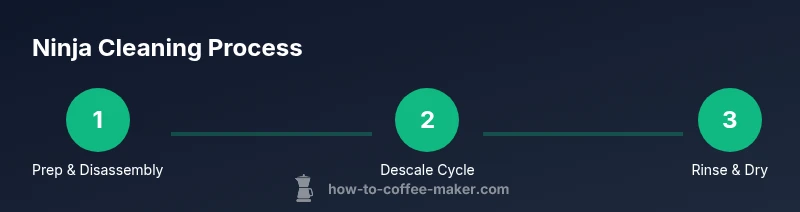
Start with a plan before you begin. Unplug the unit, remove the carafe, lid, filter basket, and any removable parts, and wipe the exterior to remove coffee splatters. Set up your cleaning station with soap, vinegar, a sponge, and a cloth. Empty the water reservoir and rinse it with clean water to reduce dust or mineral particles. If your Ninja model has a manual cleaning cycle, review it to understand recommended steps and cycle durations. Label the parts so you don’t mix up pieces during reassembly. Finally, prepare the vinegar solution if you plan to descale; remember to mix in a well-ventilated area and avoid inhaling vapor.
Cleaning the removable parts (carafe, filter basket, lid)
Removable parts accumulate coffee oils and mineral residues quickly. Wash the carafe, lid, and filter basket with warm soapy water using a non-abrasive sponge. Soak stubborn stains for a few minutes, then scrub gently with a soft brush. Rinse thoroughly to remove any soap residue. Inspect seals and gaskets for wear and replace if necessary. Dry each piece completely before reassembling to prevent mold. If the carafe has scorch marks or stubborn stains, a paste of baking soda and water can be used sparingly as a light scrub, then rinse well. Remember to dry the carafe lid seals to ensure a proper seal. A clean set of removable parts ensures safe and effective brewing every time.
Descaling the brew path safely
Descaling removes mineral buildup inside the brew path where hot water travels during coffee extraction. For Ninja machines, a vinegar-water solution (1:1) can be poured into the reservoir and run through a brewing cycle. If your model supports a dedicated descaling cycle, use it. Pause the cycle after a few minutes to allow the solution to soak; this helps dissolve tough scale. After the cycle completes, run at least two full cycles with clean water to flush residue. Do not overfill the reservoir, and avoid letting the solution come into contact with the control panel. If you prefer a commercial descaler, follow the product directions closely and perform a final rinse with plain water. This step is crucial for maintaining optimal flavor and preventing mineral buildup that can affect extraction.
Freshening the water reservoir and seals
Water quality affects taste as much as grind and temperature. Rinse and wipe the water reservoir with mild soap and water, then rinse again with clean water. Check the rubber seals around the lid and inlet for cracks or wear, and replace if necessary. Wipe the exterior with a damp cloth to remove fingerprints and coffee oils. After cleaning, run a few cycles with fresh water to clear any lingering detergent or vinegar odors. Dry the reservoir thoroughly before reattaching it to the unit. Regularly inspecting seals helps prevent leaks and maintains pressure for optimal extraction.
Maintenance habits to keep flavor bright
Establish a simple maintenance rhythm that fits your usage. A daily rinse after making coffee helps remove oils; a deeper descale should be performed when mineral buildup is noticeable or after using hard water. If your area has very hard water, you may need to descale more frequently. Keeping a small calendar or reminder helps you stay consistent. Use quality water and replace filters if your Ninja model uses them. Store all cleaning supplies out of the reach of children and pets. By integrating these habits, you’ll preserve the machine’s performance and protect your coffee’s flavor profile over time.
Troubleshooting post-cleaning issues and FAQs
If you notice an off-taste or lingering odor after cleaning, re-run the rinse cycles with fresh water and consider a second pass with a commercial descaler. Check that all parts are completely dry before reassembly to prevent mold. If leaks occur after cleaning, recheck seals and ensure all gaskets are seated correctly. For persistent problems, contact Ninja customer support or consult the manufacturer’s manual for model-specific guidance. This section helps users anticipate common issues and provides actionable remedies to keep your Ninja coffee maker in peak condition.
Tools & Materials
- Mild dish soap(dilute in warm water; avoid abrasive cleaners)
- Distilled white vinegar(use 1:1 with water for descaling; avoid direct application to electronics)
- Water (distilled preferred)(for rinsing and mixing solutions)
- Soft sponge(non-abrasive, gentle on plastics)
- Microfiber cloth(for drying and polishing surfaces)
- Small brush or toothbrush(for crevices in carafe lid and filter basket)
- Measuring cup(for accurate vinegar/water mix if preferred)
Steps
Estimated time: Total time: 30-45 minutes
- 1
Unplug and remove removable parts
Unplug the machine and take out the carafe, lid, brew basket, and any removable filters. Rinse these parts under warm water to loosen residue. This prep prevents soap from lingering in the brewing path.
Tip: Have a towel handy to catch drips during disassembly. - 2
Wash removable parts with soap and water
Wash all removable parts with mild dish soap and warm water. Use a soft sponge to scrub away coffee oils and mineral buildup. Rinse thoroughly to remove all soap residues.
Tip: Dry each part completely before reassembling to prevent mold. - 3
Prepare vinegar-water descale solution
Mix equal parts distilled white vinegar and water in the reservoir or a separate cup. Pour the solution into the reservoir if your Ninja model supports direct brewing; otherwise run the solution through the brew cycle.
Tip: Do not mix vinegar with other cleaning agents in the reservoir. - 4
Run a cleaning/descale cycle
Run a full brew cycle with the vinegar solution to flush internal pathways. If your model has a cleaning cycle, use it. If not, run the brew cycle and stop it mid-way to let the solution sit for 10 minutes.
Tip: If you stop mid-cycle, avoid letting the solution sit longer than 15 minutes. - 5
Rinse with fresh water cycles
Fill the reservoir with fresh water and run 2-3 empty brew cycles to rinse out any vinegar taste. This step is crucial to remove lingering odor and taste.
Tip: Add a few cycles of plain hot water until the taste is neutral. - 6
Wipe exterior and reassemble
Wipe the exterior casing with a damp cloth and reassemble carafe, lid, and basket. Ensure seals are dry and in place.
Tip: Check the seals after reassembly to prevent leaks. - 7
Final wipe and test brew
Wipe once more, run a test brew with plain water, and inspect for any soap or vinegar odor. If clean, your Ninja is ready to use.
Tip: Store cleaning materials out of reach of children. - 8
Establish a maintenance rhythm
Set a cadence for regular cleaning: rinse daily, do a deeper descale every few months depending on water hardness and usage.
Tip: Keep a simple cleaning calendar to stay on track.
Questions & Answers
Can I use vinegar to descale my Ninja coffee maker?
Yes, a vinegar-water solution can descale many Ninja models. Rinse thoroughly afterward to remove any vinegar taste. Always avoid mixing with other cleaners.
Vinegar works for descaling, but rinse well to remove taste.
Is lemon juice a good alternative to vinegar for descaling?
Lemon juice can act as a natural cleaner, but it may leave a residue or sticky surface. Use it with caution and rinse thoroughly.
Lemon juice can work, but rinse well to remove residue.
How often should I clean my Ninja coffee maker?
Clean the machine regularly: rinse daily after use and descale when you notice mineral buildup or odor. Frequency depends on water hardness and usage.
Clean daily rinse; descale as buildup appears.
Can I put the carafe in the dishwasher?
Most Ninja carafes are dishwasher-safe, but always verify your model’s manual. Use top-rack if possible to avoid warping.
Check the manual; if dishwasher-safe, use top rack.
Should I run a cleaning cycle with hot water only?
A hot water rinse helps finish the cleaning, but a vinegar or descaler cycle is more effective for mineral buildup.
Hot water helps, but descaling does more for buildup.
What should I do if the taste or odor persists after cleaning?
If odor persists, run another thorough rinse cycle with fresh water and consider a commercial descaler. Contact support if problems continue.
If odor lingers, rinse again and try a descaler.
Watch Video
Key Takeaways
- Unplug before cleaning and disassemble removable parts.
- Use safe cleaners and thorough rinses to prevent odor.
- Descale with vinegar solution or approved descaler, then rinse completely.
- Avoid submerging the base; never use bleach.
- Establish a regular cleaning cadence based on water hardness.