Coffee Maker and Espresso Combo: A Practical Buying Guide
Compare coffee maker and espresso combo units—space, cost, and performance for home baristas, helping you choose the setup that best fits your daily routine.


For most home users, a coffee maker and espresso machine combo is a space-saving, budget-friendly option that handles everyday coffee and espresso in one unit. If you primarily drink regular coffee and occasionally want espresso, a combo is convenient; if you chase barista-level espresso, a dedicated machine with a separate grinder often delivers higher quality.
What is a coffee maker and espresso machine combo?
A coffee maker and espresso machine combo is a single appliance that can brew drip coffee or filter coffee while also producing espresso or espresso-style shots. These units are popular in compact kitchens because they consolidate two essential functions into one footprint. In some cases, they include an integrated grinder, pre-measured pods, or steam wand for milk frothing. When evaluating a coffee maker and espresso machine combo, look for thermal stability, brew temperature range, and pump pressure consistency. For many households, this kind of all-in-one device offers a practical balance between convenience and performance, especially if you don’t want to manage multiple machines or cables on the counter. According to BrewGuide Pro, choosing a well-made combo can simplify daily routines without sacrificing basic beverage quality for everyday use.
Key differences between combo units and separate machines
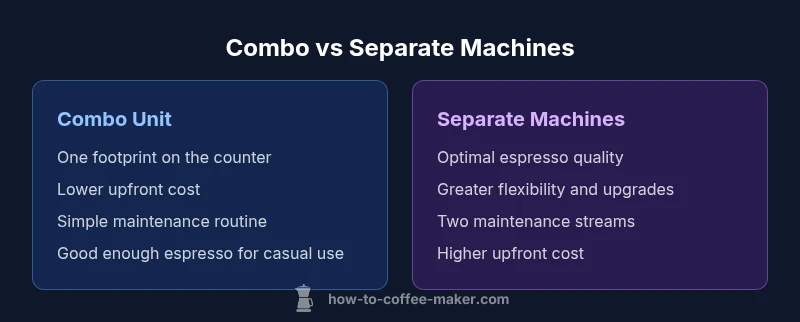
When comparing a coffee maker and espresso machine combo to separate devices, key differentiators include space requirements, cost, and performance ceilings. A true espresso machine typically relies on a dedicated boiler for stable pressure and temperature control, delivering richer crema and more consistent shots. A combo unit may compromise on pressure consistency or steam power but compensates with simpler operation and a smaller footprint. Weigh how often you want espresso versus plain coffee, and consider whether you value speed, warmth retention, or hands-on control. For a quick daily routine, a well-designed combo can meet expectations; for exacting barista-level espresso, separate devices often win on quality and customization.
Common layouts and features
Combo units vary in design, but several common layouts emerge. Some models include a single brew group that handles both coffee and espresso functions, with a heat exchanger system or dual boiler rarely present in budget options. Integrated grinders, if present, tend to be coarse or medium quality and may limit polish compared with dedicated grinders. Milk frothing capabilities differ widely—some units offer a modest steam wand, others provide a robust frothing option suitable for lattes and cappuccinos. In choosing, consider water reservoir size, ease of cleaning, and whether cartridges or filters are used for convenience. Brands that balance performance and value often offer consistent temperature control and intuitive interfaces, which help maintain quality with daily use.
How to choose the right combo for your home
To select the best coffee maker and espresso machine combo for your home, start with a needs assessment. How many cups do you brew daily? Do you prefer automatic settings or manual control? What is your budget, and is counter space a premium? If your routine centers on coffee with occasional espresso, prioritize models with reliable temperature stability and a straightforward milk frothing option. If espresso is a daily ritual, target combos with better pressure control, a true espresso function, and a more capable steam wand. Read warranty terms and service options; some brands offer machine-and-grinder bundles or easy-replace components that extend the device’s life. Finally, evaluate maintenance requirements—descaling and cleaning should be manageable without extensive disassembly.
Real-world scenarios: when a combo makes sense vs when to buy separate
If your kitchen is small and you value simplicity, a coffee maker and espresso machine combo can be a strong fit. It reduces clutter, simplifies maintenance, and often lowers total upfront cost compared with two dedicated machines. For households that drink a lot of espresso or require precise control over extraction, two devices may yield better results: a higher-end espresso machine paired with a dedicated, quality grinder and a separate drip coffee maker. If you anticipate growth in your needs over time, choose a flexible model with upgrade options (e.g., an external grinder compatibility) or plan for a future two-machine setup.
Maintenance and care for combo units
Maintenance is a critical factor with any combo unit. Regular descaling, cleaning of the group head, and backflushing (where applicable) help preserve flavor and longevity. Rinse the brew circuits after heavy daily use, and use filtered water to reduce mineral buildup. Wipe the steam wand after each use to prevent milk residue from hardening, which can compromise performance. If your unit includes an integrated grinder, clean the burrs at recommended intervals to maintain consistent grind size. Follow manufacturer guidelines for cartridge replacements, gasket checks, and seal inspection to prevent leaks and ensure reliability.
Common pitfalls to avoid
Avoid oversized units that dwarf your counter space or models with overly complex interfaces that hinder daily use. Do not assume a low price equals high value; many budget combos underperform in espresso quality or milk frothing. Beware models with proprietary pods or restricted water reservoirs that complicate maintenance. Finally, check the availability of spare parts and local service options; a robust support network can significantly extend the life of a combo unit.
Energy use, water, and waste considerations
Combo units generally use less space and energy than two separate devices, but energy efficiency varies by model. Consider the idle power consumption and peak power during brewing and frothing. Water waste may also be a concern with repeated steaming and high-output brewing; look for features like auto shut-off and programmable sleep modes. If you routinely make milk-based drinks, the concurrent use of water and steam can increase energy usage, so factor this into your long-term operating costs.
Budget ranges and value considerations
Prices for coffee maker and espresso machine combos span a broad range. Entry-level models tend to emphasize convenience over ultimate espresso quality, typically priced lower than two separate devices. Mid-range units balance performance and value, offering better stability and easier maintenance. High-end combos ship with stronger build quality, more reliable temperature control, and advanced milk-frothing options, but at a premium. When evaluating value, consider not only upfront cost but also long-term maintenance, filter and descaler costs, and the potential resale value of the unit.
Comparison
| Feature | Coffee Maker & Espresso Combo Unit | Two Separate Machines (Espresso + Drip) |
|---|---|---|
| Space on Counter | One-unit footprint | Two units occupy more space |
| Initial Cost | Lower upfront for a single unit | Higher upfront for two devices |
| Maintenance | Single maintenance routine | Two separate maintenance schedules |
| Espresso Quality | Good for casual espresso | Often best with dedicated espresso machine |
| Flexibility | All-in-one convenience | More customization with separate units |
| Repair & Parts | Unified parts for one device | Separate parts for each device |
Strengths
- Space-saving design ideal for small kitchens
- Lower upfront cost than buying two devices
- Faster setup and simpler maintenance compared to two separate machines
- Compact footprint fits counter space
Downsides
- Espresso quality may not match a dedicated espresso machine
- Milk frothing performance can be limited
- Limited upgrade path; fewer grinder options
- Descaling and cleaning can be more involved due to mixed systems
Combo units deliver convenience and value for smaller kitchens; dedicated setups edge ahead on espresso quality and customization.
Choose a combo if space and budget matter most. If espresso is your main priority, plan for a separate espresso machine plus grinder.
Questions & Answers
What exactly is a coffee maker and espresso machine combo?
A coffee maker and espresso machine combo is a single appliance that can brew drip coffee and espresso. It’s designed for compact kitchens and simpler maintenance, though the espresso performance may lag behind dedicated machines. This setup is ideal for households seeking convenience without a big equipment footprint.
A single appliance that makes both coffee and espresso, great for small spaces, with a caveat on peak espresso performance.
Are combos suitable for beginners?
Yes, many combos offer straightforward controls and preset options that help beginners get consistent results. Look for intuitive interfaces and clear troubleshooting guidance. If you want full manual control from day one, a dedicated setup may feel more approachable later.
Generally beginner-friendly, especially models with presets and simple dials.
Do combo units come with built-in grinders?
Some combos include an integrated grinder, but performance varies. Built-in grinders are convenient but often less precise than separate, high-quality grinders. If you plan to drink espresso daily, you may prefer a separate grinder for best results.
Integrated grinders exist but aren’t always top-tier; separate grinders can improve espresso quality.
How do I descale a coffee maker and espresso combo?
Descaling should follow the manufacturer’s schedule, typically every 1-3 months depending on water hardness. Use a recommended descaling solution, run through cycles, and rinse thoroughly. Regular descaling prevents mineral buildup that can affect flavor and efficiency.
Descale regularly using the brand’s solution, then rinse and run a couple of clean cycles.
Is a combo more expensive in the long run?
Total cost depends on usage and maintenance. A combo may be cheaper upfront but can incur higher maintenance if the integrated components wear unevenly. Two separate devices may incur higher initial cost but can offer better longevity if well maintained and serviced.
Long-term cost varies; combos save upfront but may balance out with maintenance needs.
Which scenario is best for a coffee maker and espresso combo?
Best for small kitchens, casual espresso drinkers, and households seeking a simple, space-saving solution. If espresso is a daily priority or if you value peak brew control, separate devices may be preferable.
Ideal for small spaces and casual espresso; choose separate devices for maximum espresso control.
Key Takeaways
- Assess space and budget before buying
- Expect trade-offs in espresso quality vs convenience
- Prioritize models with reliable temperature control
- Check warranty and service options
- Plan maintenance around descaling and cleaning