Why Is My Coffee Maker Leaking Out the Bottom? A Practical Troubleshooting Guide
Diagnose and fix a coffee maker leaking from the bottom with practical, step-by-step guidance, safety tips, and prevention for homeowners.


Most leaks from the bottom come from a worn gasket, a loose reservoir connection, or a misaligned brew head. Start by unplugging the unit and inspecting the reservoir-to-machine seal, then reseat the carafe and drip tray. If drips persist, check the drip tray for cracks and run a test brew with minimal water to observe where the leak originates.
Why leaks happen and what it means for your coffee routine
When a coffee maker starts leaking from the bottom, it’s a signal that one or more seals or joints has a fault or is poorly aligned. In many home brewers, leaks originate at easily accessible points like the water reservoir connector, the gasket around the brew head, or the drip tray area. The good news is that most leaks are repairable with common tools and basic maintenance. According to BrewGuide Pro, routine inspection and gentle reseating of seals can prevent most bottom leaks and extend the life of your machine. If you’re asking yourself why is my coffee maker leaking out the bottom, you’re not alone—this guide walks you through safe checks, practical fixes, and preventive care so you can keep your mornings drip-free.
In this guide we’ll cover what to inspect first, how to differentiate between fast fixes and longer-term fixes, and when it’s time to replace parts or call a professional. You’ll also learn how to test the machine after each fix to confirm the leak is resolved. This approach is designed for homeowners and coffee enthusiasts who want hands-on, actionable steps without voiding warranties.
Common culprits: quick visual checks that fix most leaks
Leaks at the bottom often point to three main culprits: loose connections, worn gaskets, and misaligned parts. A loose reservoir connection is the easiest fix—simply unplug, remove the reservoir, re-seat the gasket, and tighten the connection until it seats snugly. A worn or cracked gasket around the brew head or water inlet can allow water to seep where it shouldn’t. Inspect the gasket for visible cracks or flattening; replace it if you notice signs of wear. Finally, check the drip tray and carafe alignment. A misaligned carafe can allow hot liquid to splash into the base, creating a spreading leak. If you see mineral buildup around joints, scale buildup can also force water out through seams. Brushing away the buildup with a soft brush and following manufacturer-directed descaling steps can help.
While these checks are straightforward, note that certain brands place seals inside housings that require disassembly. If you’re uncomfortable with that step, skip ahead to the safety checks and call a professional to avoid damage. The goal is to identify whether the leak is from an external seal or an internal component.
Safety-first: unplug, drain, and inspect without risk
Before you touch any wiring or internal parts, unplug the unit and remove the power cord from the outlet to prevent shocks. Then, carefully drain any water remaining in the reservoir, drip tray, and internal pathways by tilting the machine over a sink. Use a clean, dry towel to blot around the base and seals to identify where water is actively escaping. Keep a small bowl handy to catch drips when you disconnect hoses or reseat components. If the unit is on a high shelf or heavy counter, enlist help to avoid accidents.
Safety tips:
- Never operate a machine that leaks while plugged in.
- Avoid using harsh chemicals near electrical components.
- If you see exposed wiring or scorch marks, stop and seek professional service immediately.
Quick checks you can perform now (no tools required)
- Inspect the reservoir connection: remove and reseat the reservoir, then run a short test brew with only water to see if the leak reappears.
- Check the brew head gasket: look for cracks, flattening, or obvious wear. If you can access the gasket, replace it with a compatible spare.
- Examine the drip tray and carafe alignment: ensure the carafe is centered and that the drip tray is securely seated with no cracks.
- Review the user manual: confirm you’re using compatible filters or baskets and that you haven’t overfilled the reservoir, which can push water into seams.
If the leak continues after these checks, the issue is likely more complex—descale buildup, a damaged internal tube, or a cracked housing could be the culprit. In that case, proceed to the diagnostic flow and step-by-step fixes below.
When to call a professional and what to ask
If basic checks don’t resolve the leak, it’s prudent to contact the manufacturer’s service line or a qualified appliance technician. Leaks from internal tubes or seals may require specialized tools or replacement parts that aren’t available to consumers. When you call, be ready with your model number, purchase date, and a short description of when the leak occurs (brewing or after). Ask whether the leak is covered under warranty and whether an in-home diagnostic visit is recommended. A professional can confirm whether the issue is a gasket failure, tube crack, or a more serious structural problem, and they can provide a safe, lasting repair.
Preventive care: keep leaks away with simple maintenance
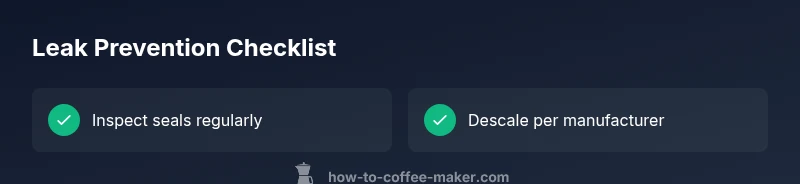
Regular maintenance is your best defense against bottom leaks. Descale every 1–3 months, depending on water hardness and usage, to prevent mineral buildup that can force water through seals. Wipe the base and underside monthly to catch loose connections early. Inspect hoses and connections every few weeks if your machine has removable lines. Use manufacturer-approved descalers and replacement parts; avoid using household cleaners that can degrade seals. Store your machine in a dry, stable location away from heat sources, and avoid placing it on unlevel surfaces, which can stress seals over time.
Steps
Estimated time: 45-60 minutes
- 1
Power down and prepare
Unplug the machine and remove the water reservoir. Place a towel under the unit. This initial step prevents shocks and helps you observe where water is escaping during the next actions.
Tip: Keep the unit on a dry, non-slip mat to prevent accidents. - 2
Inspect reservoir connection
Carefully detach the reservoir and inspect the gasket for wear or cracks. Clean the mating surfaces and reseat the gasket firmly before reattaching the reservoir.
Tip: If the gasket is brittle, replace it with a manufacturer-approved part. - 3
Check brew head gasket
With the reservoir removed, inspect the gasket around the brew head for cracks or deformation. If you see damage, replace it and reassemble according to the manual.
Tip: Take a photo before disassembly to ensure correct reassembly. - 4
Evaluate drip tray and carafe alignment
Reinsert the drip tray and ensure the carafe sits centered under the brew head. Run a short test cycle with clean water to observe for leaks.
Tip: A misaligned carafe is a common source of leaks despite intact seals. - 5
Descale and test again
If leaks persist, descale using the manufacturer’s recommended solution. Run a test brew with a small amount of water to verify the leak has stopped.
Tip: Never mix descaler solutions with ordinary cleaners. - 6
Call for professional service if needed
If you still see water pooling near the base after these steps, schedule service. Internal tubes or seals may require professional replacement.
Tip: Document what you observed and share model info with the technician.
Diagnosis: Coffee maker leaks from the bottom during or after brewing
Possible Causes
- highLoose or cracked water reservoir connection
- highWorn or displaced gasket around the brew head
- mediumDamaged drip tray or misaligned carafe
- mediumMineral buildup forcing water through seals
- lowInternal tube or seal failure (less common)
Fixes
- easyUnplug, remove reservoir, reseat gasket, and tighten reservoir connection
- mediumInspect and replace any cracked or compressed gasket around the brew head
- easyClean and reseat drip tray and verify carafe alignment; test with a small amount of water
- easyDescale with manufacturer-recommended products to remove mineral buildup; run a test cycle
- easyIf leak persists, schedule professional service to inspect internal tubes and seals
Questions & Answers
What is the most common cause of a coffee maker leaking from the bottom?
The top culprits are loose connections at the water reservoir, worn gaskets, or misaligned parts. Start by inspecting these areas and reseating as needed.
Most leaks usually come from loose parts or worn seals—check the reservoir and gaskets first.
Can descaling fix a leak?
Descaling can reduce leaks caused by mineral buildup that forces water through seals. It won’t fix a cracked housing, but it can resolve many mineral-related leaks.
Descaling helps if mineral buildup is the culprit, but it won’t fix cracked parts.
Is it safe to use the machine if it leaks?
No. Unplug the machine immediately, place it on a dry surface, and avoid using it until sources of leakage are identified and repaired.
No—unplug and don’t use it until you’ve identified and fixed the leak.
How do I replace a gasket?
Purchase a model-specific gasket, disconnect power, and follow the manual to remove the old gasket and install the new one. Check for even seating to prevent future leaks.
Get the right gasket for your model and follow the manual to replace it.
When should I replace the coffee maker instead of repairing?
If multiple repairs fail to stop the leak or the unit is old and prone to further issues, replacement can be more cost-effective in the long run.
If leaks persist after fixes and the machine is aging, replacement may be wiser.
Watch Video
Key Takeaways
- Unplug and inspect seals before use.
- Loose reservoir connections cause many bottom leaks.
- Regular descaling prevents mineral-related leaks.
- Carafe alignment matters for drip-free operation.
- Call a pro if leaks persist after fixes.