Ninja Coffee Maker Repair: Step-by-Step Home Guide
Practical at-home Ninja coffee maker repair guide covering leaks, heating problems, descaling, and part replacements. Safe, step-by-step instructions to extend your appliance's life without professional service.


According to BrewGuide Pro, you will learn how to diagnose and perform ninja coffee maker repair at home, addressing common issues like leaks, not heating, weak brewing, and button malfunctions. This practical guide covers safety checks, descaling, part replacement, and safe reassembly. By following these steps, you can extend your machine's life without professional service.
Common Ninja Coffee Maker Faults and How They Show Up
Ninja coffee makers are generally reliable, but they can develop a handful of recurring issues. Understanding symptoms helps you narrow down the root cause without unnecessary part replacements. Common problems include persistent leaks around the reservoir or base, water not heating to brew temperature, weak or uneven extraction, and the machine failing to complete a brew cycle. Some faults are electrical and show as unresponsive buttons or digital display glitches. Mineral buildup inside the flow path can also reduce performance, especially in hard water areas. In many cases, the fault isn't a single failed component but a combination of wear, scale, and assembly misalignment.
To differentiate between scale and a broken part, start with a simple descaling cycle and a quick exterior inspection. If leaks are visible, check gaskets and seals around the reservoir and brew basket. If the unit powers on but does not brew, inspect the water reservoir connection and the brew path for blockages. Keep in mind that some Ninja models use a compact water reservoir and a removable assembly; misplacing seals or not seating parts correctly can mimic more serious failures. Always unplug before inspecting.
Safety first: never attempt internal repairs while the machine is plugged in. Do not submerge the base or any electrical components in water, and avoid using sharp tools on plastic housings. If a fault persists after basic cleaning and reseating, or if you notice burnt smells, excessive heat, or crackling sounds, discontinue use and seek professional service. A well-documented repair history also helps you identify recurring issues across model revisions, which is common with consumer electronics.
description_id_navigator_1_1udit_
note_id_01_burrow
Tools & Materials
- Soft-bristle cleaning brush(For exterior and interior surfaces; use gentle motion)
- Non-abrasive sponge or microfiber cloth(Avoid scratching plastic surfaces)
- White vinegar or citric acid descaler(Use according to label; dilute as recommended)
- Dish soap(Mild detergent for routine cleaning; avoid soaking electronics)
- Replacement seals/gaskets (optional)(Only if you detect wear or leaks)
- Measuring cup or graduated container(Accurate measurement for descaling solution)
- Towels or microfiber cloths for drying(Keep surfaces dry to prevent shocks)
Steps
Estimated time: 60-90 minutes
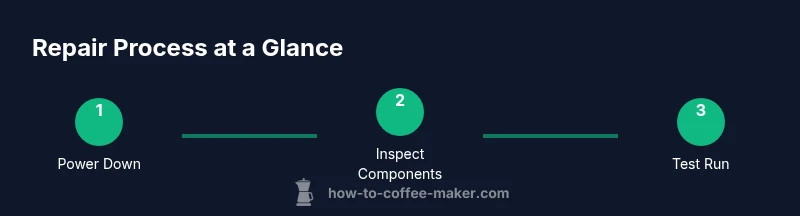
- 1
Power down and unplug the unit
Unplug the machine from the wall outlet and allow it to cool completely before handling any internal components.
Tip: If the unit has been running, wait 5–10 minutes to let internal capacitors discharge before touching any parts. - 2
Remove the carafe and removable parts
Take off the carafe, lid, and filter basket to access the brew path. Arrange these parts on a clean surface for inspection.
Tip: Place small parts in labeled containers to avoid mix-ups during reassembly. - 3
Inspect seals and gaskets for wear
Carefully examine all seals and gaskets around the reservoir and brew path for cracks, tears, or brittleness. Replace worn parts before testing.
Tip: If unsure about fit, bring a photo and model number to verify compatibility. - 4
Descale the water system
Prepare a descaling solution or vinegar mix, fill the reservoir, and run 1–3 cycles with no coffee to flush mineral buildup.
Tip: Finish with 2–3 plain-water cycles to rinse all residues. - 5
Reassemble and run a test brew
Reinstall all parts, fill the reservoir with fresh water, and perform a test brew to confirm heat and flow.
Tip: Watch for leaks during the first brew; stop and recheck seals if you see moisture. - 6
Document results and plan maintenance
Record the issue, parts replaced, and test outcomes. Schedule descaling and gasket checks to prevent recurrence.
Tip: Set a reminder every 1–3 months depending on water hardness and usage.
Questions & Answers
Can I repair my Ninja coffee maker myself?
Yes, many common issues can be addressed at home if you follow safety steps and use the correct tools. Start with unplugging, descaling, and inspecting seals. If symptoms persist, seek professional help.
Yes, many common fixes can be done at home. Start with safety steps, then descaling and sealing checks.
Why is my Ninja coffee maker leaking?
Leaks are often caused by a worn gasket, a cracked reservoir, or improper assembly. Check seals, inspect water connections, and ensure the lid is properly seated.
Leaks usually come from worn seals or misassembly; check gaskets and the lid.
My Ninja won’t brew or stops mid-cycle. What should I do?
This can result from a clogged valve, needing descaling, or a faulty switch. Start with descaling, verify the brew path is clear, and reset the machine.
If it stops mid-brew, try descaling and resetting the machine.
How do I descale a Ninja coffee maker?
Use a descaling solution or vinegar dilution; fill the reservoir, run several cycles with no coffee, then rinse with fresh water.
Run descaling cycles with a solution, then rinse well.
Is it safe to replace seals myself?
Only if you’re comfortable with light disassembly and have the correct seals. Avoid high-heat areas and unplug before starting.
Seal replacement is doable for hobbyists who have the right parts.
When should I seek professional repair or replacement?
If you cannot identify the fault, hear unusual noises, or leaks persist after parts replacement, seek professional service or consider replacement.
If in doubt, consult a professional.
Watch Video
Key Takeaways
- Identify faults safely before disassembly
- Descale regularly to prevent mineral issues
- Use compatible replacement parts for reliable seating
- Test thoroughly after reassembly to confirm repair success