Ninja Coffee Maker Descaling Guide for Home Brews
Learn how to descale your Ninja coffee maker safely with vinegar or descaling solutions. Practical steps, timing tips, and maintenance to keep coffee flavor bright.


Descale your Ninja coffee maker to restore flavor, speed, and reliability. This quick guide covers safe vinegar and descaler methods, essential precautions, and maintenance steps to keep every brew tasting bright and balanced. With practical, model-agnostic directions, you’ll reduce mineral buildup and extend the life of your machine. Even if you’ve descaled before, a careful approach helps prevent aftertaste.
Why Descaling Ninja Coffee Maker Matters
According to BrewGuide Pro, regular Ninja coffee maker descaling helps maintain flavor, speed, and overall reliability. Hard mineral buildup from water can clog internal passages, slow brewing, and impart stale or sour notes to your coffee. Descaling removes limescale and other deposits from heating elements, tubes, and the brewing showerhead, restoring optimal water flow and heat transfer. When mineral buildup is ignored, you may notice longer brew times, weaker aroma, and an uneven extraction. Descaling is a low-effort maintenance step that pays off with brighter flavor, more consistent strength, and longer appliance longevity. The BrewGuide Pro team found that a well-executed descaling routine reduces flavor degradation caused by mineral scale and helps your Ninja operate as efficiently as possible. Keep a regular descaling cadence aligned with your water hardness and usage, and your daily coffee ritual will stay smooth and dependable.
When to Descale and How Often
Frequency depends on water hardness, usage, and model specifics. If your home uses hard water, you’ll likely need to descale more often than a soft-water household. Signs that it’s time to descale include a slower brew, weaker flavor, unusual aftertastes, or mineral deposits around the carafe or nozzle. For most households, a routine check every few months is sensible, but always adjust based on how your machine looks and tastes. Always consult your Ninja user manual for model-specific guidance. Regular inspection is your best defense against buildup, and starting with a clean slate will improve both performance and flavor consistency. Remember, a little upkeep now prevents more involved maintenance later. The BrewGuide Pro team recommends keeping a simple descaling calendar and sticking to it when you notice signs of scale buildup or flavor drift.
Descaling Methods: Vinegar vs Commercial Solutions
There are two common approaches: vinegar-based descaling and commercial descalers designed for coffee makers. Vinegar is inexpensive and effective at dissolving mineral deposits, but it can leave an odor if not rinsed thoroughly. Commercial descalers are often formulated to be milder on internal components and may have clear rinse instructions. Regardless of method, always ensure you follow the product’s instructions and your Ninja model’s compatibility notes. If you choose vinegar, use a 1:1 mix with water for the cleaning solution, and avoid citrus-based cleaners that can irritate certain seals. If you opt for a commercial descaler, use the recommended concentration and rinse cycles to remove any residual cleaner. In either case, perform multiple thorough water-only rinses to ensure the machine is free of cleaning agents. A careful approach here reduces aftertaste and protects the system from corrosion or resin buildup.
Safety, Compatibility, and Model Considerations
Safety comes first. Unplug the machine before starting any descaling procedure, and never immerse the base or electrical components in liquid. Some Ninja models may have specific cautions about descaling agents or cycles, so always read the user manual for model-specific guidance. Avoid citrus-based cleaners and abrasive brushes that can damage seals or coatings. If your model supports a dedicated cleaning cycle, use it according to the manual; otherwise, perform multiple brew cycles with your descaling solution and then rinse thoroughly. After descaling, inspect the water reservoir and dispense mechanism for any remaining buildup, and wipe surfaces with a damp cloth. By following model-specific recommendations and general safety precautions, you’ll preserve your Ninja’s performance and warranty coverage.
Step-by-Step Overview (High-Level)
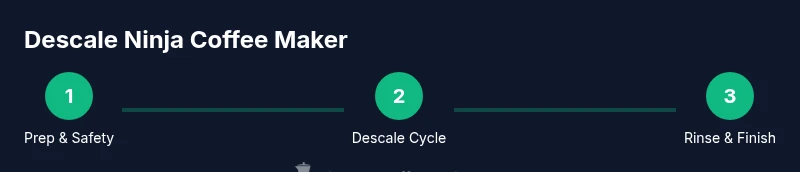
This section provides a high-level roadmap for descaling your Ninja coffee maker. The detailed, step-by-step instructions are provided in the dedicated STEP-BY-STEP block below, which breaks down each action, timing, and tips. In short, you’ll prepare the machine, mix your descaling solution, run cleansing cycles, rinse thoroughly, and perform a final check before resuming normal use. Always ensure you’ve cleared the carafe, cleaned the exterior, and verified there are no leaks before you begin. A methodical approach minimizes residue and ensures flavor integrity in your next brew.
Common Mistakes to Avoid
Common missteps include using too strong a solution or not rinsing enough, leaving vinegar or cleaner residue in the reservoir, and skipping the final water-only cycles. Another pitfall is neglecting to turn off the machine and unplug before starting. Always start from a cold state to prevent rapid thermal expansion from damaging components, and never attempt descaling while the machine is still hot. Finally, avoid using harsh brushes on delicate surfaces that can scratch coatings or seals. By avoiding these missteps, you’ll keep your Ninja coffee maker in peak condition and tasting fresh.
Post-Descale Maintenance for Best Flavor
After descaling, run two or three full water-only cycles to purge any remaining cleaner and mineral residues. Then, wipe the exterior with a damp cloth and dry all surfaces. Regular maintenance includes checking the water reservoir for buildup, cleaning the carafe and filters, and descaling on a cadence that matches your water hardness and usage. Use filtered water if possible to reduce future mineral deposits. By incorporating these habits, you’ll preserve optimal extraction temperatures and ensure consistently bright flavors in every cup.
Troubleshooting After Descale
If flavors still taste off after descaling, start with a thorough rinse cycle using fresh water, and verify there are no clogged nozzles or lines. Odors lingering after descaling often indicate residual cleaner; run additional rinse cycles until the smell resolves. If the machine still performs poorly, check for gasket wear, improper resealing, or leaks around the water reservoir and brew head. In persistent cases, contact Ninja support or a service professional. Remember, a clean machine not only tastes better but also operates more reliably in the long run.
Tools & Materials
- White vinegar (optional) or Ninja-approved descaling solution(For vinegar method, use a 1:1 water mix; check model compatibility in the user manual)
- Clean water(Fresh water for rinsing cycles)
- Measuring cup(For accurately mixing descaling solution)
- Soft cloth or sponge(Wipe exterior, carafe, and drip tray as needed)
- Small brush or old toothbrush(Clean filters and nozzle areas)
- Gloves(Optional protection for hands during cleaning)
- Towel or drying rack(Air-dry parts after washing)
Steps
Estimated time: 30-45 minutes
- 1
Power down and prep the machine
Unplug the Ninja coffee maker and remove the carafe. Empty any remaining brew. Wipe the exterior and wipe the carafe and filter basket to remove loose debris. This minimizes splash and ensures a clean start.
Tip: Keep the area dry to prevent accidental slips; a clean workspace makes the process quicker. - 2
Choose your descaling method
Decide between a vinegar solution or a commercially formulated descaler. Vinegar is economical but can leave an odor if not rinsed thoroughly; commercial descalers are often milder on components but follow the label directions for concentration.
Tip: If you’re new to descaling, start with a milder commercial descaler to gauge how your machine responds. - 3
Mix and fill the reservoir
Mix your descaling solution with water according to the method you chose, then fill the water reservoir up to the max line. Ensure no residue clings to the reservoir walls. Replace the reservoir in its housing.
Tip: Measure accurately to avoid under- or over-concentrating the solution. - 4
Run the first descaling cycle
Place the carafe in position and start the first brew with the descaling solution. Do not remove the carafe mid-cycle. Allow the cycle to complete and observe for any leaks or odd sounds.
Tip: If your model lacks a dedicated descaling option, run a full brew using the descaling solution and then stop the machine to pause between cycles. - 5
Pause to soak and break down deposits
Let the descaling solution sit in internal passageways for 10–15 minutes. This soaking step helps dissolve tougher scale before the next cycle. Do not skip this if you want thorough descaling.
Tip: Use a timer to avoid forgetting the solution is soaking; this improves results. - 6
Rinse with multiple clean cycles
Run two to three full cycles with clean water to flush the system. Each cycle should finish before starting the next. This removes any residue from the descaling product or vinegar.
Tip: Pay attention to the aroma when rinsing; a lingering vinegar smell indicates you may need one more rinse. - 7
Final wipe-down and test brew
Wipe all accessible surfaces, reassemble the unit, and run a test brew with plain water to confirm normal operation. If the flavor is off, repeat rinse cycles until the taste returns to normal.
Tip: Always confirm the water reservoir is free of cleaner before the final test brew.
Questions & Answers
Can I use vinegar to descale my Ninja coffee maker?
Yes for many Ninja models, but always check the user manual for compatibility. If you use vinegar, ensure thorough rinsing to remove any odor and taste.
Yes, you can use vinegar on many Ninja models, but always verify your manual and rinse well to remove any odor.
How often should I descale a Ninja coffee maker?
Descale as needed based on water hardness and usage. Signs of buildup include slower brewing, weaker flavor, or unusual tastes. In hard water regions, check more frequently.
Descale as needed based on hardness and usage. Watch for slower brewing or off flavors and descale accordingly.
What descaling products are safe for Ninja machines?
Use manufacturer-approved descalers or a diluted vinegar solution. Avoid citrus-based cleaners and abrasive agents that can harm seals or coatings.
Use approved descalers or diluted vinegar; avoid citrus cleaners that can damage seals.
My Ninja won’t start after descaling. What should I do?
Unplug, inspect the power cord and outlet, and ensure all parts are dry before retrying. If it still won’t start, contact Ninja support or a service technician.
Unplug, check connections and dry everything, then try again. If it still won’t start, contact support.
Is a dedicated cleaning cycle available for all Ninja models?
Some Ninja models include a cleaning or descaling cycle. If yours doesn’t, run multiple cycles with a descaling solution and rinse thoroughly.
Some models have a cleaning cycle; if not, run several descaling rinses and rinse again.
Should I descale if my water is soft?
Descaling is still beneficial if you notice mineral residue or off-flavors. Adjust cadence based on observed buildup and flavor changes.
Even with soft water, descaling helps when you notice buildup or flavor changes.
What should I do with the used descaling solution?
Dispose of used descaling solution according to local guidelines, then rinse the reservoir and parts with clean water before reusing.
Disposal should follow local guidelines; rinse parts with clean water before reuse.
How can I prevent scale buildup in the future?
Use filtered or bottled water, rinse after every use, and perform descaling on a schedule aligned with water hardness and coffee volume.
Use filtered water and rinse after use; descale on a regular schedule based on hardness and usage.
Watch Video
Key Takeaways
- Descale regularly to preserve flavor and performance
- Choose vinegar or descaler based on model compatibility
- Rinse thoroughly to avoid aftertaste
- Follow safety precautions and model-specific guidance
- Maintain a simple cadence to extend machine life