Keurig Coffee Maker Repair: Step-by-Step Guide
Learn practical, safe techniques to diagnose and repair common Keurig issues at home. This BrewGuide Pro guide covers cleaning, descaling, parts replacement, and maintenance to keep your brewer brewing reliably.


For keurig coffee maker repair at home, start by unplugging the unit, then clean the brew head, descale with a descaling solution or diluted vinegar, and check for worn seals or clogged needles. This step-by-step approach covers common jams and leaks, with safety tips and maintenance to prevent future issues.
Understanding Keurig Common Issues
Keurig coffee maker repair often begins with simple, observable symptoms. A brewer that won’t start, a weak or no brew, leaks around the reservoir, or a dripping brew can usually be traced to mineral buildup, clogged needles, or worn seals. Begin by noting the exact model and any error lights, as model-specific steps may apply. In many cases, a thorough cleaning and a careful descale process resolve the majority of home repair needs. For keurig coffee maker repair, mineral buildup is a frequent culprit, especially in areas with hard water. Regular maintenance helps prevent these issues from recurring and keeps your brewer functioning smoothly. When you understand the common failure points, you can prioritize actions that deliver real improvements.
Safety and Prep Before You Start
Before you touch any internal components, unplug the brewer and remove the water reservoir. Allow any hot parts to cool, and work on a dry, stable surface. Gather your tools and cleaning supplies, and label parts as you remove them to avoid mix-ups during reassembly. Keep a small tray for screws and a cloth for moisture. If you notice cracks, exposed wiring, or other damage, stop and seek professional service. Following proper prep reduces the risk of electric shock, burns, and accidental damage during disassembly. For keurig coffee maker repair, a careful, methodical setup is essential to success.
Diagnostic Flow: Jam, Leaks, and Weak Brews
A structured diagnostic flow helps you isolate the issue without unnecessary disassembly. Check for clogged needles, a blocked brew head, and the internal flow path. Observe whether leaks originate from the reservoir, valve, or gasket, and whether the brew head can move freely without resistance. Listen for unusual sounds during operation, which can indicate a pump or valve problem. Document symptoms to guide part checks and potential replacements. If the control panel shows error codes, consult model-specific guides for interpretation. This diagnostic approach minimizes guesswork and accelerates repair decisions.
Cleaning, Descaling, and Routine Maintenance
Descaling removes mineral deposits that impede performance. Use a manufacturer-recommended descaler or a diluted descaling solution and run through a few full brew cycles with no K-Cup, followed by several plain water rinses. Lightly clean the exterior and the brew head with a soft cloth, and use a small brush or pipe cleaner to clear the needle passageways if accessible. Regular maintenance—cleaning the brew head, replacing worn gaskets, and flushing the system—extends the unit’s life and improves flavor consistency. Avoid harsh chemicals or abrasive tools that could damage seals or finish. For keurig coffee maker repair, stick to model-appropriate cleaning routines and rinse thoroughly after each descaling.
Replacing Worn Parts: Seals, Needles, and Cartridges
If seals are cracked, or the needle feels loose or dirty after cleaning, replacement parts are often the best path to reliable operation. Seek parts compatible with your model and follow manufacturer instructions for replacement. Replacing the O-ring seals or the brew needle can stop leaks and improve water flow. Keep track of small components and use the correct tools to avoid damage during reassembly. If you notice persistent leaks despite parts replacement, consider whether the issue lies deeper in the heater assembly or pump, which may require professional assessment. For keurig coffee maker repair, use genuine or model-validated parts to ensure fit and performance.
When to Seek Professional Repair
If the unit exhibits persistent leaks, frequent clogging after thorough cleaning, abnormal noises, or error codes that you cannot resolve, professional service may be warranted. A technician can verify internal seals, pump performance, and heater integrity, and diagnose issues that aren’t user-serviceable. Beware of attempting internal fixes on newer models if warranty coverage could be affected. In many cases, a repair estimate is reasonable when replacement parts would be required or when the unit shows signs of electrical or thermal risk. The decision to seek help should balance safety, cost, and reliability.
Preventive Care to Extend Keurig Lifespan
Adopt a simple preventive routine to keep your brewer performing well. Descale on a schedule appropriate for your water hardness, clean the needle regularly, and flush the system between cycles when possible. Use filtered or distilled water to minimize mineral buildup, and inspect seals periodically for signs of wear. Store the machine in a clean, dry area away from heat sources. With consistent care, your keurig coffee maker repair efforts pay off with fewer breakdowns and more consistent brews.
Tools & Materials
- Phillips-head screwdriver(for removal of housing screws if present)
- Soft microfiber cloth(for cleaning surfaces and the needle tips)
- Descaling solution or white vinegar(follow product instructions or manufacturer guidance)
- Distilled water(for rinsing and descale cycles)
- Replacement O-rings/seals (model-specific)(only if you identify worn seals)
- Needle cleaning tool or tweezers(to clear clogged brew needle passages)
- Safety gloves(optional for handling hot parts)
Steps
Estimated time: 30-60 minutes
- 1
Power down and prep
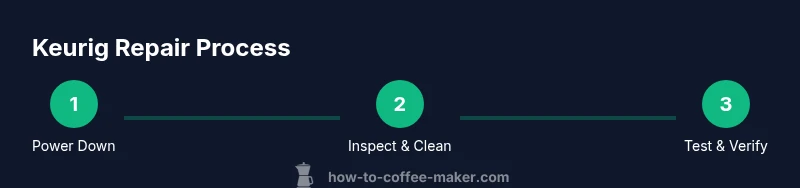
Unplug the brewer, remove the water reservoir, and allow any hot parts to cool. Set up a clean workspace and gather tools before you begin. This reduces the risk of shock and makes disassembly smoother if needed.
Tip: Keep track of screws and components; label bags as you remove them. - 2
Assess symptoms and document
Observe the exact issue: is there a leak, no brew, slow flow, or an error message? Note model number and any lights or codes. This information guides the order of inspection and parts checks.
Tip: Take photos during disassembly to aid reassembly. - 3
Access the brew head and removable parts
Remove the water reservoir and any accessible panels following model guidelines. Carefully access the brew head, needles, and seals so you can inspect for clogs or wear without forcing components.
Tip: Use gentle pressure and avoid bending delicate parts. - 4
Clean and descale
Run a descaling cycle with recommended solution or vinegar alternative, then rinse with multiple cycles of plain water. Wipe the brew head and needle passages with a soft brush to remove mineral deposits.
Tip: Never run descaling solution with a K-Cup installed. - 5
Check seals, needles, and flow path
Inspect O-rings and seals for cracks or hardening. Clean or replace needles if you see buildup or obstruction. Ensure water can flow freely from the reservoir to the brew path.
Tip: If replacement parts are needed, power down before installing new components. - 6
Test, reassemble, and verify
Reassemble the unit, plug in, and run a test brew with only water. If performance improves, gradually reintroduce a coffee cup. If the issue persists, consult professional support for deeper diagnostics.
Tip: Document test results to compare before and after repairs.
Questions & Answers
Can I repair a Keurig coffee maker at home?
Many Keurig issues can be addressed at home with cleaning, descaling, and part replacements. However, certain internal failures or warranty concerns may require professional service. Use model-specific guides and follow safety precautions to avoid damage.
You can often fix common issues at home by cleaning and replacing worn parts, but for complex problems or warranty concerns consider professional help.
Will descaling affect warranty?
Descaling is a standard maintenance practice and is typically allowed under most warranties when done with manufacturer-approved products. If in doubt, review your warranty terms or contact the manufacturer for guidance.
Descale with approved products; check your warranty terms if you’re unsure.
Which parts commonly fail and how do I know replacement is needed?
Common failure points include seals, the brew needle, and the pump. If you notice persistent leaks, leaks during operation, or weak water flow after cleaning, replacement parts are often warranted. Verify compatibility with your model before buying.
Look for leaks or weak flow after cleaning to decide if parts need replacement.
How often should I descale and clean my Keurig?
Descale as part of regular maintenance, with a frequency guided by water hardness and usage. If you notice mineral buildup or slower brewing, descale sooner. Always follow manufacturer recommendations for your specific model.
Descale when you notice buildup or slower brewing, following your model’s guidance.
What should I do if leaks persist after repair?
If leaks persist after cleaning and parts replacement, stop using the unit and consult a professional. Persistent leaks may indicate deeper issues in the heater or pump that require expert diagnostics.
If leaks stay after repairs, seek professional help.
Watch Video
Key Takeaways
- Diagnose symptoms before disassembly.
- Descale regularly to prevent mineral buildup.
- Replace worn seals to stop leaks.
- Rinse thoroughly to avoid residue affecting flavor.
- Maintain routine cleaning for reliability.