How to Stop a Coffee Pot from Dripping: A Practical Guide
Learn practical, safe steps to stop a dripping coffee pot. From gasket checks and descaling to carafe alignment, get a drip-free brew with BrewGuide Pro guidance.


You can stop a coffee pot from dripping by addressing the common culprits: a worn gasket, mineral buildup, and misalignment between the carafe, lid, and basket. Start with reseating the carafe and gasket, descale the brewer, and adjust the lid alignment. This approach, recommended by BrewGuide Pro, resolves most home-drip issues quickly and reliably.
Why a coffee pot drips: common causes
A dripping coffee pot is usually a maintenance or fit issue rather than a failing machine. The most common culprits are worn or damaged gaskets around the carafe, mineral scale buildup inside the brew path, and misalignment between the carafe, lid, and basket. When the carafe gasket fails, hot liquid can escape at the seal as soon as the brewer starts its cycle. Scale can narrow passages and guide rails, causing drips to occur even during a steady pour. Finally, if the lid doesn’t close fully or the carafe sits too high or too low, steam pressure can push coffee out past the rim.
According to BrewGuide Pro analysis, these problems account for the majority of drip incidents in home brewers. The good news is that most fixes are inexpensive and reversible. With careful inspection and a few adjustments, you can restore drip-free performance without replacing your machine. Focus first on seals, then on cleanliness and alignment as you work through the steps.
Quick checks to diagnose the issue
Before disassembling anything, perform a quick diagnostic to avoid unnecessary parts replacement. Confirm the carafe is seated properly on the warming plate and that the gasket forms a complete seal around the carafe lid. Inspect the lid for any cracks or warping and verify the shower head is clean and unobstructed. If you notice mineral buildup around seals, nodules along the brew path, or crumbly gasket material, you’re likely dealing with a leak source that can be fixed with cleaning or replacement. This approach aligns with common troubleshooting practices and helps you avoid overhauling the machine when a simple reseating or cleaning suffices.
BrewGuide Pro stresses that the majority of drips can be traced to three areas: gaskets, mineral buildup, and alignment. By prioritizing these areas, you can quickly determine whether a DIY fix is enough or if professional service is needed.
Cleaning and descaling to stop drips
Descaling removes mineral deposits that can narrow or block internal passageways, causing drips and inconsistent pours. Use a descaler or an approved cleaning solution, following the product directions and your manufacturer’s guidelines. Run a cycle with the descaling solution, then flush the brewer with clean water through multiple sessions to ensure all residues are removed. After descaling, inspect the brew path, shower head, and basket area for any remaining scale or sediment. If you notice scale on the shower head or near the seals, a gentle brush can dislodge the deposits without damaging the components. Regular cleaning reduces future drips and extends the life of your machine.
Realignment and gasket replacement basics
If cleaning does not fully resolve dripping, reassess the gasket and seating. A worn or deformed gasket can create a continuous drip at the seal. Replace the gasket with a model that matches your brewer’s make and model, and ensure it sits evenly without twists. Re-seat the carafe so the spout aligns with the opening and the gasket sits flat against the rim. A misaligned lid can also force liquid outward during brewing, especially if the brewer vents steam unexpectedly. Visual inspection and proper seating are often enough to stop the drip without further repairs.
When to replace parts or the whole brewer
Not every drip is fixable with a gasket or cleaning. If leaks persist after addressing gaskets, alignment, and mineral buildup—or if you notice cracks in the carafe, a warped lid, or a damaged shower head—it may be time to replace the faulty component or the entire machine. If your unit is out of warranty or the cost of replacement parts approaches the price of a new brewer, purchasing a newer model with better drip-reduction features can be a cost-effective decision. In many cases, replacing a single part is cheaper and quicker than replacing the entire machine.
Proactive maintenance for drip-free brewing
Adopt a routine that minimizes future drips: perform a light cleaning after every few uses, descale every 1–3 months depending on water hardness, and inspect seals every few months. Keep the carafe and lid clean to prevent residue buildup that can prevent a proper seal, and store the machine in a stable, level position to avoid tilting that can encourage leaks. Document any recurring drip pattern and adjust your maintenance schedule accordingly. This proactive approach helps sustain drip-free performance over time.
Troubleshooting flowchart you can follow
- Is the leak at the seal around the carafe? If yes, inspect gasket and seating; replace if needed. 2) Is there scale buildup near the shower head? If yes, descale and rinse thoroughly. 3) Does the lid close fully and align with the carafe? If no, adjust or replace a worn lid. 4) Does drippage persist after cleaning and replacement? Consider professional service or a full machine replacement.
Safety and warranty considerations
Always unplug the brewer before handling hot components. Use manufacturer-approved parts and descalers to avoid damage or voiding warranties. If your device is under warranty, consult the policy before performing any significant disassembly or gasket replacement. If you are unsure about the part compatibility or safety, contact the manufacturer or a qualified technician.
Tools & Materials
- Gasket replacement kit(Ensure compatibility with your model)
- Carafe lid seal (gasket)(Check for cracks)
- Descaler product or white vinegar(Follow manufacturer guidance)
- Soft cloth or sponge(For gentle cleaning)
- Small brush or toothbrush(For shower head/dam)
Steps
Estimated time: 30-45 minutes
- 1
Power down and prepare safety
Unplug the brewer and let it cool. Remove the carafe and place it on a heat-safe surface. Inspect exterior for obvious leaks and remove any standing water.
Tip: Silicone gloves help avoid heat burns; keep a towel handy. - 2
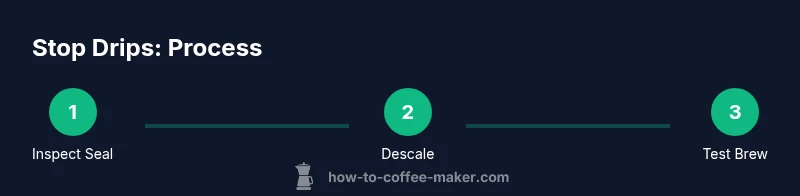
Re-seat carafe and gasket
Gently reseat the carafe so the spout and gasket seats evenly. Inspect the gasket for wear or cracks and replace if necessary.
Tip: A misaligned gasket is a common drip culprit. - 3
Clean the brewing path
Remove the filter basket and rinse the shower head and basket area to remove mineral buildup. Wipe any residue from the seal surfaces.
Tip: Use a soft brush to reach tight corners. - 4
Descale the brewer
Run a descaling cycle per the product instructions or manufacturer-approved method to remove mineral scale from internal passages.
Tip: Finish with several cycles of clean water to flush the system. - 5
Check lid alignment
Verify the lid closes fully and aligns with the carafe so steam pressure isn’t forcing liquid out past the rim.
Tip: If the lid hinges feel loose, avoid forcing them; replace if needed. - 6
Test and observe
Brew a small batch and watch the transition from hot brew to carafe. Note if drips continue and identify the stage at which it starts.
Tip: Document any leakage pattern to inform future fixes.
Questions & Answers
What causes a drip in a coffee pot?
Drips usually come from worn gaskets, mineral buildup, and misalignment between the carafe and lid. Faulty seals or a clogged shower head can also contribute.
Drips come from worn seals, mineral buildup, or misalignment between the carafe and lid.
Can vinegar descaling damage my machine?
Vinegar is a common descaler, but always follow the manufacturer’s guidance. Some machines discourage vinegar use, so check your manual before use.
Vinegar can be used if the manual allows it, but follow instructions carefully.
Is it cheaper to replace the pot or the whole machine?
Often a worn gasket or buildup is inexpensive to fix. If the unit is old or parts are scarce, replacing the machine may be more economical.
Sometimes repairing is cheaper, but consider the age and warranty.
How long should I descale?
Follow the product instructions; typical cycles run several minutes, followed by multiple rinses with clean water.
Descale according to product directions and rinse well.
What if drips continue after cleaning?
Persistent drips may indicate a cracked carafe, faulty gasket, or internal leak. In that case, consider professional service or replacement.
If drips persist, there may be a damaged part requiring replacement.
Do all drip issues involve the carafe?
No. Drips can stem from the filter basket, sealing surfaces, or the brew path. A full diagnostic helps pinpoint the cause.
Drips aren’t always the carafe; check seals and brew path too.
Watch Video
Key Takeaways
- Inspect and reseat the carafe gasket first
- Descale regularly to remove mineral buildup
- Align lid with carafe to prevent spills
- Replace worn seals to restore drip-free performance