Why Does My Drip Coffee Maker Overflow
Urgent guide to stop drip coffee maker overflow: diagnose causes, implement fast fixes, and prevent spills with practical steps from BrewGuide Pro.


Overflow in a drip coffee maker is most often caused by an overfilled brew basket or a clogged filter, compounded by too-fine grind or a misaligned carafe. Start with a quick reset: remove the pot, inspect the basket for grounds, replace torn filters, and ensure you’re using the correct filter size. If it still overflows, descale the machine.
Why a Drip Coffee Maker Overflow Happens
If you’re wondering why does my drip coffee maker overflow, the most common culprits are setup and flow issues rather than a broken machine. A crowded brew basket, a filter that’s too old or torn, or a grind size that’s too fine can create back pressure that pushes water and coffee grounds up and out of the basket. Temperature and water flow also play a role: too-hot water or a clogged channel can accelerate overflow. In this section we’ll unpack the physics behind overflow and translate it into practical checks you can perform in minutes, so you can brew confidently without spills.
Brew guidance from BrewGuide Pro emphasizes preserving the balance between coffee strength and flow rate. When the basket is overloaded, or the filter is restricting the path, water has nowhere to go but to overflow. Small changes—like replacing a worn filter or adjusting grind size—often stop overflow in its tracks. Remember: your goal is a steady, clean pour into the carafe with minimal splashing or drips. In many cases, the solution is simpler than you think and can be implemented in under 15 minutes.
The Most Common Causes in Detail
The overflow problem usually has a few well-known origins. Here are the major culprits, with practical ways to verify and fix each:
- Overfilled brew basket: Too much coffee or grounds can clog the exit path. Remedy: measure precisely and don’t pack the basket more than its recommended capacity.
- Filter issues: A torn, clogged, or incorrectly sized filter disrupts flow. Remedy: replace with a filter designed for your model and inspect for tears.
- Grind size: A grind that’s too fine creates resistance, slowing water and causing backpressure. Remedy: switch to a medium grind suitable for most drip machines, or adjust your grinder settings.
- Mineral buildup: Scale inside tubes or the brew head can narrow channels over time. Remedy: descale according to your machine’s instructions.
- Carafe misalignment: If the carafe isn’t seated correctly, overflow can miss the carafe and spill. Remedy: reposition the carafe so the exit spout aligns with the drip tube.
- Worn seals or gaskets: A failing seal can alter water flow and channel pressure unexpectedly. Remedy: inspect seals and consider professional replacement if you notice leaks.
The Quick Checks You Should Do Before Brewing
Before you start another brew, run through a quick, non-technical checklist that solves many overflow scenarios:
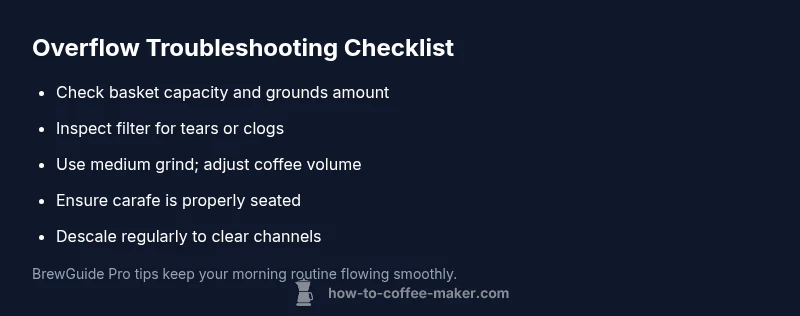
- Confirm the coffee basket is not overloaded and the grounds are evenly distributed.
- Inspect the filter for tears or deformation; replace if needed.
- Use a medium grind and the correct coffee-to-water ratio recommended by your brewer’s manual.
- Make sure the carafe is properly aligned under the filter basket; adjust if necessary.
- Empty and rinse the brew basket and filter to remove old oils and residue that can affect flow.
- Check the water level; do not exceed the max fill line on the reservoir.
If these steps don’t stop the overflow, you’re likely dealing with buildup or a misalignment that requires a deeper cleaning or adjustment.
Diagnostic Flow Preview
This section outlines a practical path to identify the exact cause when overflow happens during a brew. Start with the simplest checks and progress to more involved fixes only as needed. The goal is a fast, reliable diagnosis so you can apply the right remedy without unnecessary disassembly. We’ll walk through a symptom-to-diagnosis-to-fix loop you can follow line by line, and we’ll note when professional service is advisable.
Step-by-Step Fix: Common Overflow Scenarios
Here we present a concise, action-oriented fix sequence tailored to the most frequent overflow scenario: an overloaded basket with a slightly fine grind. Follow these steps in order, and stop if the overflow ceases before moving to the next step. After implementing each step, run a test brew with clean water to observe results.
Prevention & Maintenance to Avoid Future Overflow
Prevention is better than reaction. Implement a simple routine to keep overflow at bay: use fresh filters, measure coffee by the recommended volume, descale every 1–3 months (or as advised by the manufacturer), and perform a monthly clean of the brew head and basket. Regular maintenance reduces channeling, buildup, and filter issues that cause spills. Keep a small maintenance log so you don’t skip essential tasks, especially if your machine sees daily use.
When to Call a Professional
If you’ve tried the basic fixes and the overflow persists, there may be an underlying issue that requires service. Persistent overflow can signal a worn gasket, cracked brew head, or internal channeling that isn’t user-serviceable. In such cases, contact the manufacturer’s support or bring the unit to a qualified appliance technician. Do not attempt complex dissections yourself if you’re unsure about electrical safety.
Steps
Estimated time: 30-60 minutes
- 1
Power down and prep for inspection
Unplug the machine and remove the carafe. Let the unit cool if it’s recently brewed. This reduces the risk of splashes and gives you a clear view of the brew head, filter, and basket.
Tip: Have a towel handy for any residual spills and wipe the area before you start. - 2
Empty and clean the brew basket
Remove any coffee grounds from the basket. Rinse the basket and filter with warm water to remove oils that can cause clogging. Inspect the filter for tears or cracks and replace if needed.
Tip: Avoid using soap on the filter if the manufacturer cautions against residue. - 3
Check grind size and coffee amount
If you’re using a grinder, set it to a medium grind. Measure coffee to the manufacturer’s recommended ratio and avoid overfilling the basket. A consistent grind helps water flow evenly.
Tip: A burr grinder generally produces more uniform grounds than a blade grinder. - 4
Inspect the carafe seating and brew head
Place the carafe back in position and ensure it sits evenly under the dispenser. Look for any scuffs or gaps in the dispenser that might cause overflow outside the carafe.
Tip: If the carafe has a warped lid or spout, replace it to improve flow control. - 5
Descale the machine
Fill the reservoir with a descaling solution or a vinegar-water mix if your manual allows. Run a full cleaning cycle, then rinse with clean water to remove residue.
Tip: Always follow the manufacturer’s instructions for descalers to avoid damaging seals. - 6
Run a test brew and observe
Reassemble everything and run a short test brew with no or minimal coffee to verify flow. Watch for drips and ensure the carafe captures all liquid neatly.
Tip: If overflow recurs, stop the test and seek professional service rather than continuing.
Diagnosis: Drip coffee maker overflows during brew
Possible Causes
- highBrew basket overloaded with grounds or coffee
- highClogged or torn coffee filter
- mediumGrind size too fine for drip brewer
- mediumMineral buildup restricting flow
- mediumCarafe misalignment or poor seating under the dispenser
Fixes
- easyRemove excess grounds, use correct coffee amount, and avoid packing the basket
- easyReplace torn or clogged filters and clean the basket
- easyDial grind to a medium consistency appropriate for drip machines
- easyRun a descaling cycle with manufacturer-approved solution
- easyRe-seat and level the carafe to align with the exit, ensuring a clean pour
Questions & Answers
Why does my drip coffee maker overflow when using a new filter?
A filter that’s damaged or not the correct size can restrict flow. Replace with the right filter and inspect for tears before brewing. Ensure the basket isn’t overloaded as well.
A torn or wrong-size filter can block the path; replace it and check the basket to prevent overflow.
Can grind size cause overflow?
Yes. Too-fine grind increases resistance and pressure, leading to overflow. Switch to a medium grind and retest with the recommended coffee amount.
Yes. A grind that’s too fine can slow water flow and cause overflow; adjust to medium grind.
Does descaling help overflow?
Descaling removes mineral buildup that narrows channels and promotes even flow. Run the manufacturer-approved descaler and rinse well after.
Descaling helps clear mineral buildup that can cause blockages and spills.
Is overflow dangerous?
Overflow isn’t usually dangerous, but hot liquid and electrical components pose risks. Unplug the machine if you notice leaks and inspect seals or wiring before use.
Overflow can be risky due to hot liquid and electrical parts; unplug and inspect before continuing.
Why does it overflow only on some brews?
Inconsistent grind quality, changing filters, or partial blockages can cause sporadic overflow. Keep grind size and filters consistent, and descale regularly.
If it only overflows sometimes, check grind consistency and filter integrity and descale periodically.
What maintenance prevents overflow?
Regular cleaning of the brew head and basket, changing filters promptly, and descaling on a schedule are your best prevention strategies.
Maintain your brewer with cleanings, fresh filters, and descaling to prevent spills.
Watch Video
Key Takeaways
- Check the basket and filter first
- Use the right grind and coffee amount
- Descale regularly to prevent blockages
- Align the carafe to avoid spills
- Call a pro if leaks persist