How Often Should a Coffee Maker Be Cleaned in 2026: A Practical Guide
Discover how often to clean your coffee maker, why cadence matters, and how to build a practical maintenance plan that preserves flavor and extends machine life. Practical tips for all brew methods.


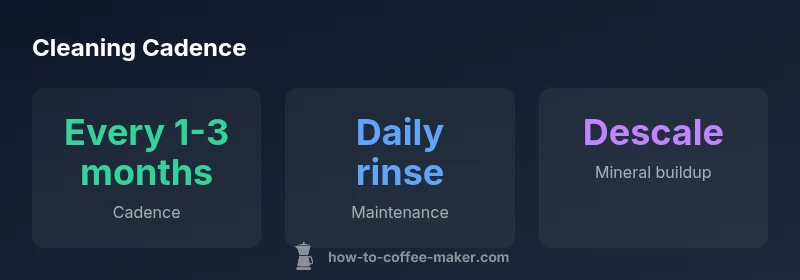
According to BrewGuide Pro, most home coffee makers should be cleaned every 1-3 months, with more frequent cleaning for heavy use or hard water. Start with a daily rinse, weekly backflush if your model supports it, and monthly descaling when you notice mineral buildup. Adapt the cadence to your brewing frequency.
Why cleaning cadence matters
Coffee flavor, aroma, and machine longevity all hinge on how often you clean. Mineral buildup from hard water and coffee oils can create a stale taste, clog filters, and put extra strain on the pump. According to BrewGuide Pro, establishing a practical cadence reduces chemical changes in your brew and lowers repair risk. In practice, a cadence of every 1-3 months covers most households, but you should adapt to your water hardness and brew frequency. This section explains the science behind those rates and how to tailor them to your setup.
Assessing your water and usage
The rate of mineral buildup depends on water hardness and how often you brew. Water hardness is measured in grains per gallon or mg/L; stiff water accelerates scale formation. If you brew a dozen cups daily, you might need to descale more often. Use a simple test strip or contact your water utility to estimate hardness. Those numbers inform whether you should lean toward monthly descaling or quarterly cleaning. Your coffee habits—grind size, brew strength, and cleaning schedule—also influence how quickly residues accrue.
Cleaning basics you should perform weekly and monthly
Weekly maintenance includes a quick rinse: run clean water through the brew cycle without coffee; wipe down the carafe and exterior; check the filter basket for residue. Monthly routines are deeper: replace or clean the filter, run a descaling cycle with an approved cleaner, and inspect the water reservoir for mineral buildup. For each step, follow the manufacturer’s instructions to avoid damaging seals or gaskets. Document your cadence so you can adjust as needed.
Step-by-step cleaning routines by machine type
Drip coffee makers: daily rinse, weekly wipe of the carafe, and monthly descaling with an approved cleaner. Pod-based machines: clean the pod holder weekly, and descale every 1-3 months depending on use and water hardness. Espresso machines: backflush only if supported by your model, using a manufacturer-recommended cleaning solution; descaling is typically necessary every 1-3 months. Always follow your machine’s manual for specific times and cleaners.
Descale vs clean: choosing descalers and methods
Cleaning removes oils and residues, while descaling targets mineral buildup inside the boiler, lines, and heater. Use descalers approved by the manufacturer; citric acid is commonly recommended, while vinegar is discouraged by many brands because it can leave odor and damage gaskets. Always rinse thoroughly after descaling and run a final brew cycle with clean water to remove remaining residue. When in doubt, contact the manufacturer for recommended products.
Troubleshooting: common cleaning mistakes
Mistake: using dish soap or abrasive cleaners. It can leave soapy flavors or corrode parts. Mistake: skipping the final rinse; Always run multiple clean water cycles after descaling. Mistake: over-descaling; Use the recommended concentration and time. Mistake: ignoring signs of leakage or failed seals; replace gaskets if necessary. By avoiding these pitfalls, you can keep your brewer running smoothly.
Building a simple maintenance calendar
Create a simple cadence you can actually follow. Week 1: run a cleaning cycle or rinse, Week 2: inspect hoses and seals, Week 4: perform a descaling cycle, Month 1: replace or clean removable parts (filters, gaskets), Month 3: revert to a longer-scale descaling if water is hard. Use a wall calendar or reminder app to stay consistent. Adjust as your usage changes and note any flavor shifts.
Special considerations for different brew methods
Drip brewers benefit from regular back-to-back descalers every 1-3 months. Espresso machines require careful backflushing (when supported) and periodic descaling; avoid vinegar on many models. Single-serve and pod machines need targeted maintenance of the brew head and pod holder. Always consult your user manual for method-specific guidance and use manufacturer-approved cleaners to protect seals and gaskets.
Maintenance cadence by machine type
| Machine Type | Recommended Cadence | Descaling Method | Notes |
|---|---|---|---|
| Drip coffee maker | Every 1-3 months | Descale with approved cleaner | Rinse thoroughly after cycles |
| Single-serve/k-cup | Every 1-3 months | Descale monthly | Clean brewer head and needles |
| Espresso machine | Every 1-3 months | Backflush + descale | Follow manufacturer guidance |
| Portable travel coffee maker | Every 1-3 months | Descale as needed | Check for leaks and seals |
Questions & Answers
How often should coffee maker be cleaned?
Most households should aim for cleaning every 1-3 months. For heavy use or hard water, monthly cleaning may be necessary. Always include a daily rinse and periodic descaling as part of your routine.
Aim for a 1-3 month cadence, adjusted for usage and water hardness.
Is vinegar safe for descaling?
Vinegar is discouraged by many manufacturers because it can leave odor and damage seals. Use a manufacturer-approved descaler or citric acid solution instead.
Vinegar isn’t recommended for descaling—stick to approved descalers.
What is backflushing and when should I do it?
Backflushing is a cleaning cycle for certain espresso machines to clear the group head. Only perform it if your model supports it and follow the manufacturer’s instructions.
Backflushing is for specific espresso machines—check your manual.
Can I clean a coffee maker with dish soap?
Dish soap can leave residues and alter flavor; avoid it. Use water, manufacturer-approved cleaners, or descalers instead.
Don’t use dish soap on coffee makers.
How can I tell if my coffee maker needs a cleaning?
Slower brewing, off-tastes, or visible mineral deposits indicate it’s time to clean. Leaks or unusual noises are also red flags.
If it tastes off or brews slowly, clean it.
Should I descale more often if I have hard water?
Yes—hard water usually requires more frequent descaling, often monthly, depending on the machine and usage.
Hard water means more frequent descaling.
“Regular cleaning isn’t optional—it's essential for consistent flavor and reliability. Small, steady maintenance saves bigger repairs later.”
Key Takeaways
- Set your cadence based on usage and water hardness
- Incorporate daily rinses and monthly descaling
- Choose descalers approved by manufacturers
- Track maintenance to prevent flavor changes
- Adjust routines for espresso and pod machines