How Often to Clean Your Coffee Maker: A Practical Guide
Learn how often to clean your coffee maker to keep flavors bright and extend the life of your machine. This guide covers daily rinses, weekly deep cleans, and descaling schedules tailored to water hardness and usage.


By establishing a simple cleaning cadence, you can keep your coffee tasting bright and your machine lasting longer. For most home setups, start with a daily rinse after each brew, a thorough weekly clean, and a descaling interval based on mineral content and usage. According to BrewGuide Pro, tailoring frequency to how hard your water is yields the best balance between effort and performance.
Why frequency matters for coffee maker care
Regular cleaning prevents mineral buildup, mold growth, and stale flavors that accumulate with every brew. The frequency you choose should reflect your water hardness, how often you use the machine, and the type of brewer. According to BrewGuide Pro Analysis, lighter mineral content means you can space out descaling slightly, while hard water calls for more frequent attention. A consistent cadence keeps the brew temperature stable and prolongs gasket life, reducing the risk of leaks and malfunction. By aligning cleaning with usage, you optimize flavor, reliability, and the machine's lifespan.
Daily, weekly, and monthly cleaning cadence
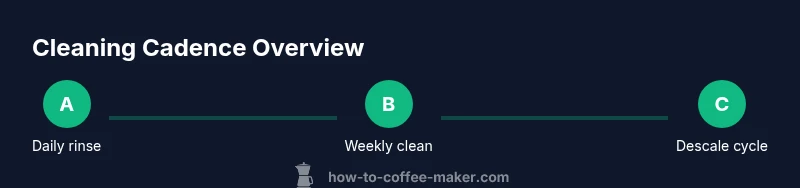
A simple cadence helps you stay consistent without guesswork. After each brew, quickly rinse the carafe and filter basket with warm water, wipe the exterior, and dry. This daily step prevents residue from drying onto surfaces and minimizes sour notes in your coffee. At the end of each week, perform a deeper clean: run a rinse with warm water, wash removable parts with mild soap, and scrub any mineral rings from the water reservoir lid. On a monthly or quarterly basis (depending on hardness and usage), descale your machine using a vinegar solution or a commercially approved descaler. Always finish with several fresh water rinses to remove any cleaner scent.
Cleaning by coffee maker type
Drip coffee makers: Remove the filter basket and carafe; wash with warm soapy water, then run a full hot-water cycle after descaling to rinse. Single-serve/pod machines: Remove the pod holder and drip tray; wipe with damp cloth; avoid harsh scrubs to prevent damage. Espresso machines with a steam wand: Back-flush according to manufacturer guidance; wipe steam wand after use to prevent milk residue; descale only with approved descalers. Tailor the cadence to your machine’s design and your water quality; some models require more frequent maintenance, others less.
Descale and mineral buildup
Descaling dissolves calcium and magnesium salts that reduce heat transfer and speed. Use either white vinegar or a commercial descaler following the product directions. Do not overdo it; excessive descaling can wear gaskets. After descaling, run 2-3 clean water cycles to flush residues and restore neutral flavor. If your flavor recurs quickly, reassess mineral content and adjust your cadence accordingly.
Safety, water quality, and maintenance best practices
Before you start, unplug the machine and allow it to cool. Use safe cleaning products; never use bleach or abrasive cleaners on any coffee-maker surfaces. Use filtered water to limit mineral intake and minimize buildup over time. Keep spare parts in good condition; inspect gaskets and seals for wear and replace them if needed. Store cleaning tools out of reach of children and animals to prevent accidents.
Authority sources
Authoritative guidance on appliance cleaning and water quality:
- https://www.epa.gov/saferchoice
- https://extension.illinois.edu
- https://www.nist.gov
Practical tips to simplify your routine
- Pro_tip: Set calendar reminders for weekly deep cleans and monthly descales so you stay consistent.
- warning: Never mix vinegar with commercial descalers or use bleach; this can damage seals and impart harmful residues.
- pro_tip: Use filtered or softened water to reduce mineral buildup and extend clean intervals.
- note: If your machine has a removable water reservoir, wash it separately in warm soapy water to avoid residue transfer.
Tools & Materials
- White vinegar or descaling solution(Distilled white vinegar or a commercially approved descaler suitable for coffee makers.)
- Water(Tap or filtered water for rinsing and cycles.)
- Clean cloth or microfiber towel(For wiping surfaces and drying parts.)
- Soft-bristled brush or old toothbrush(Scrub removable parts and crevices gently.)
- Measuring cup(Helpful for accurate descaler mixtures; optional.)
- Citric acid descaler (optional)(Alternative descaler if recommended by manufacturer.)
- Paper towels(Useful for quick cleanup and drying.)
Steps
Estimated time: 60-75 minutes
- 1
Prepare cleaning solution
Choose your cleaning agent: vinegar solution or a commercial descaler. Follow product directions and measure accurately. Prepare a clean container for mixing and ensure good ventilation during the cleaning process.
Tip: If using vinegar, dilute as recommended and avoid using metal containers that could react. - 2
Empty and prep the machine
Unplug the machine and remove any accessories (filters, baskets, carafe). Rinse removable parts with warm, soapy water and set aside to dry. Wipe the exterior to remove dust or coffee oils.
Tip: Wash the carafe and filter basket separately to prevent cross-contamination of flavors. - 3
Run a cleaning cycle
Fill the reservoir with the cleaning solution and start a brew cycle. If your machine allows, pause mid-cycle to let the solution soak for 5–10 minutes, then resume brewing to complete the cycle.
Tip: Do not run a cleaning cycle with hot water only if the manufacturer specifies a different approach. - 4
Rinse with fresh water
After the cleaning cycle, run 2–3 full cycles with clean water to flush out any cleaner residues and odors. Wipe down the exterior again as you go.
Tip: Final rinse should be odor-free and flavor-neutral. - 5
Deep clean removable parts
Soak removable pieces in warm, mild soap water for 10–15 minutes, scrub gently, rinse thoroughly, and air-dry. Inspect gaskets and seals for wear and replace if needed.
Tip: Don’t soak exposed electronics; avoid getting water into any motor areas. - 6
Set a maintenance cadence
Record your cleaning schedule and adjust based on water hardness and usage. Use reminders or a calendar to maintain consistency.
Tip: Consistency beats intensity; better to clean a little more often than to skip for months.
Questions & Answers
How often should I descale my coffee maker?
Descale based on water hardness and usage. For hard water, plan monthly to quarterly descales; for softer water, every 2–4 months may suffice. If you notice mineral films or off flavors, descale sooner.
Descale according to water hardness and how often you brew. If you have hard water, plan monthly or quarterly descales; otherwise, every few months is often enough.
Is vinegar safe for all coffee makers?
Vinegar is effective for descaling, but some manufacturers advise against it for certain seals or grinders. Always check your user manual before using vinegar and use it in the recommended dilution if permitted.
Vinegar can work for descaling, but check your manual. Some machines shouldn’t use vinegar on seals or coatings.
Can using filtered water replace descaling?
Filtered water reduces mineral buildup but does not eliminate the need to descale over time. Descaling remains important if you use your machine frequently or have hard water.
Filtered water helps, but it doesn’t remove the need to descale over time.
What are signs that my coffee maker needs cleaning?
Off flavors, slower brewing, frequent clogs, and visible residue around the carafe or reservoir indicate cleaning is due. If you notice mold or sour smells, clean immediately.
Look for off flavors, slow brew, or visible residue—that means it’s time to clean.
Should I clean while the machine is hot or cold?
Always follow the manufacturer’s safety instructions. In general, allow the appliance to cool before deep cleaning; some components can be cleaned while warm, but avoid hot-water exposure to electronics.
Let it cool before deep cleaning, unless your manual says otherwise.
Key Takeaways
- Rinse after every brew to prevent surface buildup
- Establish daily, weekly, and monthly cleaning cadences
- Descale based on mineral content and usage
- Use safe descalers and avoid harsh chemicals
- Keep a running maintenance log for consistency