How to Clean a Coffee Maker: A Practical Home Guide
Learn how to clean a coffee maker effectively, remove mineral buildup, sanitize components, and maintain flavor. This step-by-step guide from BrewGuide Pro helps home brewers extend machine life and ensure consistently great coffee.


By following this guide, you will learn how to clean a coffee maker to remove mineral buildup, sanitize internal components, and restore optimal brewing flavor. The process includes descaling options, proper rinsing, and routine maintenance to prevent future clogging. Gather basic tools and safe cleaners, then tackle each step with confidence.
Why Regular Cleaning Matters
According to BrewGuide Pro, regular cleaning of your coffee maker is essential to preserve flavor, extend the machine's life, and reduce the risk of mold or bacterial growth in damp components. Mineral buildup from water—calcium and magnesium—creates a cloudy taste and can clog internal pathways, leading to slower brewing and uneven extraction. A clean machine also performs more consistently, requiring less energy to run and producing warmer, more aroma-rich coffee. In practice, a simple weekly routine can prevent most problems, while a deeper descale every 1-3 months (depending on water hardness) keeps the system performing at peak. Homeowners with hard tap water may notice deposits forming faster, so the BrewGuide Pro team recommends adjusting your cleaning cadence to local water quality. Pair this habit with a brief monthly check of gaskets and seals to catch leaks early and protect your investment.
Signs Your Coffee Maker Needs Cleaning
Over time, even a well-used coffee maker will show signs that it needs attention. Clues include a slower brewing cycle, weak or sour-tasting coffee, and a cloudy carafe with visible mineral spots. You may also notice a stale odor around the spout or a dry brewer tray with dried residue. If you frequently brew with hard water, scale buildup around the heating element and tubing is common. Regularly inspecting the exterior for mold or slimy film is also important, especially in machines with sealed lids or wide water reservoirs. Addressing early symptoms saves you from bigger, costlier fixes later.
Descale Options: Vinegar vs Descaling Solutions
There are two common paths to descaling: a homemade vinegar solution or a manufacturer-approved descaling product. A 1:1 water-vinegar mixture is a traditional choice, effective for mineral removal but may require extra rinsing to avoid vinegar aftertaste. Descaling solutions, sold by manufacturers, are formulated to be gentler on seals and gaskets and often require fewer cycles. BrewGuide Pro Analysis, 2026, shows that the effectiveness of either method depends on water hardness and machine design. For light buildup, a vinegar rinse followed by thorough rinsing is usually sufficient; for heavy mineral deposits or sensitive components, a commercial descaler can be safer and faster. Always follow the machine’s manufacturer guidelines when choosing a method.
Cleaning Detachable Parts and Carafe
Removable parts like the carafe, filter basket, and scoop are the easiest to clean. Begin by discarding used coffee grounds and washing these parts in warm soapy water. A soft brush or non-abrasive sponge helps remove stubborn residue without scratching surfaces. Rinse thoroughly to prevent soap residues from affecting flavor in the next brew. Dry parts with a lint-free towel before reassembly. Regularly inspecting gaskets and seals on removable parts helps prevent leaks and keeps the system tight.
The Step-by-Step Cleaning Process
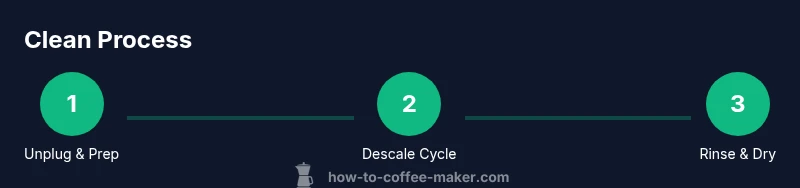
A structured cleaning routine minimizes guesswork and guards against missed spots. Start with safety steps, then tackle descaling, rinsing, and final checks. The steps below align with the quick answer and provide a practical, repeatable pattern you can adapt to your model. Proper execution reduces downtime and preserves coffee quality over the machine’s lifespan. Consistency matters as much as thoroughness; set a reminder to perform the routine on a predictable schedule to maintain peak performance.
Maintenance Schedule and Long-Term Care
Create a simple calendar that tracks when you descale, rinse, and inspect seals. For most households, a light cleaning every week and a deep descaling every 1-3 months is sufficient, depending on water hardness and usage. If you use a water filter, replace it as recommended to reduce mineral load. Always dry the interior after rinsing to prevent musty odors. Keeping the coffee maker’s exterior clean with a damp cloth prevents buildup around the lid and control panel. A consistent routine minimizes surprises and helps maintain flavor consistency over time.
Common Mistakes and Safety Warnings
Never immerse the base or electrical components in water. Always unplug the machine before cleaning, and avoid abrasive cleaners that can scratch surfaces or degrade seals. Do not reuse leftover cleaning solutions; ensure thorough rinsing to avoid any taste transfer. If your machine shows persistent leaks after cleaning, power down and contact the manufacturer or a professional for service. A cautious approach protects you and your investment.
Authority Sources & Further Reading
For broader guidance on cleaning and maintenance, see reputable sources such as the FDA, CDC, and university extension programs. These references provide general safety principles that apply to household appliances and water quality considerations:
- https://www.fda.gov
- https://www.cdc.gov
- https://www.cornell.edu
Troubleshooting After Cleaning
If flavors still seem off after cleaning, revisit your descaling routine and verify that you used the correct solution and rinsed adequately. Check the water reservoir for residual odors and ensure there is no mold in the carafe seal. If issues persist beyond routine maintenance, it may indicate wear on internal components or a need for gasket replacement. Regular maintenance reduces the likelihood of these problems and keeps your coffee tasting fresh.
Tools & Materials
- Mild dish soap(for cleaning removable parts and carafe)
- White vinegar(or 1:1 water-vinegar solution for descaling (optional))
- Descaling solution(manufacturer-recommended product for hard water)
- Soft brush(to scrub crevices and filter basket without scratching)
- Non-abrasive sponge(for exterior surfaces like the housing and lid)
- Measuring cup(to mix descaling solutions accurately)
- Clean, lint-free towel(for drying and buffing surfaces)
- Access to clean water(for rinsing and flushing the system)
- Microfiber cloth(to wipe down and polish exterior surfaces)
Steps
Estimated time: 60-75 minutes
- 1
Unplug and prep
Ensure the coffee maker is unplugged and cool before you start. Empty the carafe and remove any detachable parts to begin the cleaning process. This initial step reduces the risk of electrical shock and gives you clear access to all areas that need cleaning.
Tip: Unplug the unit before handling any removable components. - 2
Remove detachable parts
Take out the carafe, filter basket, and any removable lids. Rinse these parts with warm, soapy water and scrub away any coffee oils. Dry thoroughly before reassembling to prevent moisture buildup.
Tip: Take a quick photo of disassembly to simplify reassembly. - 3
Prepare descaling solution
Mix your chosen descaling method according to the product label or use a 1:1 vinegar solution if appropriate for your model. Fill the reservoir with this cleaning solution until the max fill line, ensuring the internal pathways are exposed to the descale mixture.
Tip: If you’re unsure about vinegar compatibility, use a manufacturer-approved descaler. - 4
Run the descale cycle
Run a brew cycle as if making coffee, but with the cleaning solution instead of water. Pause the cycle halfway if your machine allows it to allow the solution to contact interior surfaces. Then complete the cycle to flush the system.
Tip: Stop if you smell strong vinegar or cleaner—this means you need more rinsing cycles. - 5
Rinse thoroughly
Refill the reservoir with clean water and run 2-3 full brew cycles to flush any remaining cleaning solution from the system. Repeat with fresh water if the odor or taste persists. This step is critical to prevent any cleaning residue affecting flavor.
Tip: Use hot water for rinsing for better residue removal. - 6
Clean exterior and carafe
Wash the exterior housing and carafe with warm, soapy water. Dry with a lint-free towel to remove any streaks. Wipe the control panel gently to avoid moisture in electronics.
Tip: Avoid harsh abrasives on the display or buttons. - 7
Reassemble and test brew
Reassemble all parts and run a test brew with clean water to confirm there’s no lingering taste. Inspect seals and gaskets for wear and replace if needed. Store the machine with an open lid for a few minutes to air out any remaining moisture.
Tip: A quick test brew confirms everything is back to normal. - 8
Schedule routine maintenance
Set a calendar reminder for regular cleaning and descaling based on your water hardness and usage. A simple cadence—weekly light cleaning and monthly deep cleaning—helps prevent buildup and keeps coffee quality high.
Tip: Keep a log of cleaning dates to track your cadence.
Questions & Answers
How often should I clean my coffee maker?
Most households should perform a light cleaning weekly and a deep descale every 1-3 months, depending on water hardness and usage. Adjust cadence if you notice changes in taste or brewing speed.
Clean weekly, descale every 1-3 months, and adjust based on water hardness and flavor changes.
Can I use vinegar to descale my coffee maker?
Vinegar is a common descaling option, but you should confirm compatibility with your machine’s manual. If using vinegar, rinse thoroughly with clean water after the descale cycle.
Yes, vinegar can be used if your manufacturer allows it, but rinse well afterwards.
Is it safe to put coffee maker parts in the dishwasher?
Most removable parts like the carafe and filter basket are dishwasher-safe on a gentle cycle, but always check the manual. Glass carafes can tolerate dishwashers, while plastic parts may degrade over time.
Check the manual, as some parts may be dishwasher-safe while others aren’t.
What if the coffee maker still tastes off after cleaning?
If taste persists, repeat the descaling and rinsing steps, ensuring all residues are flushed. Consider replacing worn gaskets or seals if the issue continues.
If the flavor is off, repeat cleaning steps and check seals for wear.
How can I prevent mineral buildup in the future?
Use filtered water, replace any water filters as recommended, and perform quick weekly rinses to prevent buildup. Regular maintenance is key to flavor and performance.
Use filtered water and keep up with quick weekly rinses.
My coffee maker leaks after cleaning—what should I do?
Leaks after cleaning may indicate a gasket or seal issue or improper reassembly. Stop using the machine and inspect seals; replace if necessary. If leaks persist, seek professional service.
Leaks can mean worn seals or a bad reassembly; check seals and seek service if needed.
Watch Video
Key Takeaways
- Clean regularly to preserve flavor and extend machine life
- Choose a descaling method based on water hardness and model
- Rinse thoroughly to prevent aftertaste from cleaning agents
- Create a simple maintenance schedule to stay on track