How to Clean a Keurig Coffee Maker: A Practical Guide
Discover the best way to clean a Keurig coffee maker with practical, safe descaling, weekly rinses, and maintenance tips for ongoing performance from BrewGuide Pro.


The best way to clean a Keurig coffee maker is to follow a simple, repeatable routine: flush the system with water, descale using a vinegar or commercial descaler if needed, clean the removable parts, and run several fresh-water rinse cycles. This approach minimizes mineral buildup, preserves flavor, and protects internal seals. Schedule regular cleanings to keep your brewer performing at its best.
Why cleaning a Keurig matters
The best way to clean a keurig coffee maker begins with understanding what happens inside your brewer. Mineral deposits from hard water, coffee oils, and spent grounds accumulate in the water path, around the needle, and under the drip tray. When this buildup grows, water flow slows, flavors dull, and the device strains to brew. Regular cleaning keeps your Keurig efficient, protects the internal seals, and preserves flavor consistency from cup to cup. In this BrewGuide Pro guide, you’ll learn a practical, repeatable cleaning routine you can customize to your usage. By sticking to a simple schedule and using common descaling options, you reduce the risk of clogs, leaks, and sour-tasting coffee. The approach outlined here favors safety, minimal disruption to your routine, and long-term reliability.
Whether you own a single-serve model or a newer brewer, the basic principles apply: flush, descale when needed, and clean removable parts. We’ll cover what to do, how often to do it, and which products to prefer. The goal is to give you confidence that taking 30 to 60 minutes a few times a year yields better tasting coffee and a healthier machine.
According to BrewGuide Pro, a proactive cleaning cadence helps prevent scale buildup and flavor-changing residues, especially in areas with hard water. With a clear plan, you’ll protect your investment and ensure every cup tastes fresh.
Quick safety notes and planning
Before you reach for cleaners, unplug the machine and remove the water reservoir. This protects you from electric shock and makes handling easier. Consult your model’s manual for any model-specific cautions. Gather your supplies and set the work area on a towel or tray to catch drips. The goal of this prep is to create a safe, predictable workflow that you can repeat without guessing. BrewGuide Pro’s approach emphasizes using gentle cleaning options and transparent rinses, so your next cup remains pure and free of off-flavors.
If your water is very hard, plan for a deeper descale every few months. Keep a maintenance log to track when you cleaned last and when you’re due for the next cleaning session. This preparation minimizes surprises and makes the process feel routine rather than overwhelming.
Tools, materials, and pitfalls to avoid
Two main pathways exist for Keurig cleaning: a water-only rinse to clear residues, and a descaling pass using vinegar or a commercial descaler. The decision often depends on how frequently you brew, the hardness of your water, and the age of your machine. Avoid using abrasive cleaners, bleach, or anything that could corrode seals. Always perform a thorough rinse after using descalers to ensure no cleaner remains in contact with brewed beverages. If you notice persistent off-flavors or slow flow after cleaning, schedule a deeper maintenance cycle and consider checking the needle for clogs.
Remember: never mix vinegar with commercial descalers in the same cleaning cycle, and never operate the brewer while the reservoir is empty. These practices help protect seals and prevent accidental damage. A calm, methodical approach will yield consistent results without risking the device.
Step-by-step guide: core cleaning workflow
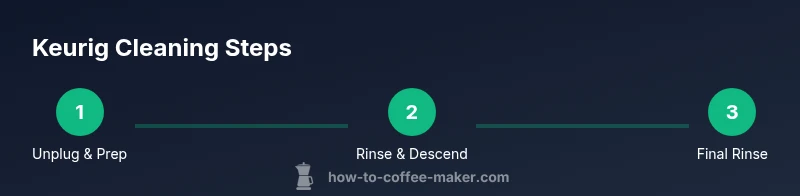
Cleaning a Keurig effectively involves a repeatable sequence that covers rinse cycles, descaling, and part cleaning. Below we outline the core actions you’ll perform, along with practical cues to help you stay on track. The emphasis is on keeping things simple, using readily available supplies, and ensuring every component is refreshed. By following these steps, you’ll minimize mineral buildup, reduce off-flavors, and extend the life of your brewer. Keep a timer handy and document when you last cleaned to support a predictable maintenance rhythm.
Descale options: vinegar vs descaling solutions
Descaling is a pivotal part of keeping a Keurig in top condition. White vinegar can effectively dissolve mineral deposits, but it may leave a faint odor if not rinsed thoroughly. Manufacturer-recommended descaling solutions are designed to minimize odor and residue while preserving machine integrity. When choosing between vinegar and descalers, weigh odor tolerance, cost, and your model’s guidance. Regardless of the option, rinse the system multiple times with clean water after descale to ensure your coffee tastes as intended and no residues linger in the brew path.
A practical rule: if you’re new to descaling, start with a manufacturer-recommended descaler. If you prefer a budget-friendly approach, use white vinegar with an extra rinse cycle. In either case, you’re aiming for clear water output and neutral-tasting coffee after the final rinse.
Cleaning the nozzle and removable parts
The spray head and needle at the heart of each cup can accumulate coffee oils and mineral deposits. Remove the reservoir, drip tray, and pod holder as your model allows. Rinse removable parts with warm, soapy water or run a distanced cleaning cycle with clean water to flush out debris. Use a soft brush to clear the spray head opening and the needle area; a small, non-metallic tool can help dislodge any stubborn particles without damaging delicate components. Dry thoroughly before reassembly to prevent moisture-related mold growth.
Maintenance cadence and troubleshooting
Establishing a maintenance cadence is essential for long-term Keurig health. A monthly quick rinse plus a deeper descale every 3–6 months (adjust for water hardness) is a common baseline. If your brewer tastes off or brews slowly, revisit the cleaning steps and consider additional descale cycles. Leaks, unusual noises, or persistent clogging beyond routine cleaning may indicate worn seals or more advanced issues. In that case, consult manufacturer guidance or reach out to professional service channels. Keeping a simple log helps you stay consistent and reduces the guesswork during busy weeks.
Tools & Materials
- White vinegar (optional) or manufacturer-approved descaler(Use as directed; do not mix cleaners in the same cycle.)
- Fresh water for rinsing(Fill reservoir with clean water for multiple rinse cycles.)
- Mild dish soap(Only for washing removable parts; avoid cleaning the internal water path with soap.)
- Soft cloth or microfiber towel(For wiping surfaces and drying components.)
- Soft-bristled brush or needle-cleaning tool(Use to clear the spray head and needle; be gentle to avoid damage.)
- Paper towels(Useful for drying and quick cleanups.)
Steps
Estimated time: 60-75 minutes
- 1
Unplug and prepare
Unplug the Keurig and remove the water reservoir. Take note of any detachable parts you’ll clean later. Place the machine on a towel or tray to catch spills and protect surfaces.
Tip: Have all cleaning supplies within reach before you start. - 2
Empty and rinse reservoir
Empty the reservoir, then rinse with warm water. If you’ll use soap for removable parts, wash the reservoir separately and rinse until no suds remain.
Tip: Rinse thoroughly to prevent soapy taste from reaching your coffee. - 3
Prepare cleaning cycle
If using vinegar, mix with water as directed or open a descaler product. If using a descaler, follow the product’s dilution instructions. Do not brew coffee during this step.
Tip: Check your model’s manual for any cautions about descaling cycles. - 4
Run a water-only cleaning cycle
Fill the reservoir with clean water and run 1–2 cycles without a coffee pod to purge the internal paths.
Tip: If you detect an odor, run additional rinse cycles with plain water. - 5
Descale if needed
If you see mineral buildup or slower flow, perform a descale using vinegar or descaler according to the chosen method. Do not run coffee cycles with cleaner present.
Tip: Never mix vinegar with descaler in the same cycle. - 6
Rinse thoroughly after descale
Flush the system with several cycles of fresh water until the output is odorless and clear.
Tip: This step is critical to avoid lingering tastes in coffee. - 7
Clean removable parts
Wash the drip tray, pod holder, and spray head with warm, soapy water. Use the brush to clear crevices, then rinse and dry completely.
Tip: Dry all parts thoroughly to prevent mold growth. - 8
Reassemble and test
Reattach all parts, fill the reservoir with fresh water, and run a final water-only cycle to ensure everything operates smoothly.
Tip: Brew a test cup of hot water to confirm clean taste. - 9
Set a maintenance cadence
Record the cleaning date and schedule the next descaling based on water hardness and usage.
Tip: Keep a simple log to stay consistent.
Questions & Answers
What is the best cleaner for Keurig machines?
White vinegar can be effective for descaling, but many users prefer manufacturer-approved descalers. Always rinse thoroughly after any cleaning cycle.
White vinegar or a descaler work, but be sure to rinse well after cleaning.
Can I use vinegar in my Keurig?
Yes, vinegar can be used for descaling, followed by multiple rinse cycles to remove any scent or residue.
You can use vinegar for descaling, then rinse well.
How often should I descale a Keurig?
Descale based on usage and water hardness; hard water may require more frequent cycles, typically every 1–3 months.
Descale every month or two if you have hard water, otherwise every few months.
Why is my Keurig leaking after cleaning?
Leaks usually point to a loose reservoir, worn seals, or a clogged nozzle; reseat parts and clean the needle if needed.
Leaks can mean a loose part or clog; check seals and the needle.
What should I do if the Keurig still tastes off after cleaning?
Re-run several rinse cycles with fresh water and inspect for residue in the brew path. If the issue persists, consult support.
If it still tastes off, rinse again and consider support.
Watch Video
Key Takeaways
- Schedule regular cleanings to prevent buildup.
- Use water-only cycles to flush cleaners and residues.
- Always rinse thoroughly after using descalers.
- Clean the nozzle and removable parts to prevent clogs.