Philips 2200 Espresso Machine Review: A Balanced Home Barista Experience
A thorough BrewGuide Pro evaluation of the Philips 2200 espresso machine, covering flavor quality, ease of use, maintenance, and overall value for home coffee enthusiasts in 2026.


The Philips 2200 espresso machine is a solid, user-friendly option for home baristas seeking reliable espresso with minimal fuss. It combines built-in grinding, programmable drinks, and easy maintenance in a compact design. While it may not satisfy advanced users seeking highly customized drinks, it delivers consistent quality and value for most households.
Overview and Design Philosophy
The Philips 2200 espresso machine aims to simplify the path from bean to cup without sacrificing flavor. It is designed for everyday use in small to mid-sized kitchens, with a compact footprint and an interface that emphasizes quick access to common drinks. From the outset, the machine prioritizes reliability and consistent results over flashy features. In our assessment, this aligns with a practical, home-brewer mindset: you press a button, and you get a solid shot of espresso with a respectable crema. According to BrewGuide Pro, the model’s design centers on intuitive operation, dependable performance, and straightforward maintenance—an approach that resonates with many homeowners who want coffee without constant tinkering. For 2026, this philosophy remains relevant for households balancing work, family, and hobbies.
- Build around a compact chassis with a straightforward control panel
- Integrates a built-in grinder to simplify morning routines
- Emphasizes routine cleaning and descaling over occasional deep maintenance
Espresso Quality and Consistency
Espresso quality hinges on grind consistency, temperature stability, and shot timing. In our testing, the Philips 2200 delivered reliable shots with a balanced aroma and a respectable crema for a semi-automatic, bean-to-cull machine. The built-in grinder contributes to consistency by reducing variables from bean to cup; user feedback across multiple iterations indicates shots are repeatable when the grinder settings are tuned to the user's palate and the grind size is aligned with the beans being used. While you won’t get professional-level tailoring for every bean, the machine’s default profiles are sufficient for everyday sipping and casual tasting sessions. Temperature control is steady enough for daily espresso rituals, with minor fluctuations that most casual drinkers would not notice. The goals here are consistency, ease, and approachability rather than lab-grade precision.
- Consistency across common beans and roast levels
- Aroma-rich extraction without extensive manual tuning
- Mild temperature drift that remains within acceptable home-use tolerance
Milk Frothing and Texture
A key consideration for many home users is the ability to produce smooth microfoam for lattes and cappuccinos. The Phillips 2200’s integrated milk frother performs adequately for basic milk texturing, producing velvety microfoam suitable for everyday drinks. For latte art enthusiasts, there is room for improvement, but the frother remains predictable with a little practice. We recommend starting with cold milk, using a moderate froth setting, and allowing the steam wand to preheat the wand and pitcher to promote better texture. The result is a creamy, cohesive microfoam that complements the espresso rather than overpowering it. If your goal is café-level latte art, you may want to upgrade to equipment that offers more precise control over steam and milk texture, but for most homes, the existing setup delivers a gratifying milk texture with minimal effort.
- Good microfoam for everyday drinks
- Easy learning curve for newcomers to latte art
- Some limitations for advanced texture and precision
Ease of Use, Maintenance, and Cleaning Routine
Ease of use is one of the core strengths of the Philips 2200. The machine emphasizes one-touch or few-step drink preparation and a simplified cleaning cycle. Most users will appreciate the automated rinsing and occasional descaling prompts, which help maintain flavor stability over time. Regular cleaning tasks—such as wiping the brew group area, emptying the drip tray, and rinsing the water reservoir—are straightforward and quick. The built-in grinder reduces the need for manual bean handling, and its straightforward settings prevent confusion for newcomers. Our testing included a maintenance routine over several weeks, and the system showed resilience with standard household cleaning. The key takeaway is that upkeep remains manageable for busy homes, provided water hardness is monitored and descaling is performed as recommended.
- Clear indicators for cleaning and descaling
- Simple routines that fit into weekly schedules
- Potential user annoyance if the water reservoir is consistently left full or empty
Drink Customization and Profiles
The Philips 2200 supports a set of programmable drinks and adjustable parameters for common beverages. In practice, this makes it easy to save favorite settings for fast mornings or gatherings with guests. You can adjust strength, volume, and temperature to align with personal preferences. This flexibility makes the machine appealing for households with varied tastes, especially if multiple people use it. While it may not offer the depth of customization found in high-end, manually adjustable machines, it provides a balanced mix of convenience and personalization for most users. The key is to establish a couple of go-to profiles and keep notes on what works best for your beans and roast level.
- Programmable presets for everyday drinks
- Moderate customization to accommodate a range of preferences
- Best suited for typical home-use scenarios rather than experimental brewing
Build Quality, Reliability, and Longevity
In terms of build quality, the Philips 2200 sits in the mid-market tier—solid plastic and metal accents that feel sturdy for daily use. The overall engineering prioritizes reliability and serviceability: components are accessible, and routine maintenance can be performed with minimal tools. While it isn’t built to withstand heavy commercial workloads, the machine should satisfy most households’ demands for dependable operation over several years if properly cared for. Warranty terms and regional support vary, but a typical home-use window should cover the basics of manufacturing defects and early malfunctions. Regular descaling and careful water management are essential to preserving performance and flavor over time.
- Sturdy for home use, with accessible components
- Reasonable warranty coverage that varies by region
- Longevity depends on descaling and water quality practices
Comparisons and Market Positioning
When comparing to other popular home espresso solutions, the Philips 2200 sits in the space of convenience and reliability rather than extreme customization. It competes with other all-in-one or bean-to-cup machines that emphasize quick mornings and consistent results. The positives are clear: ease of use, minimal maintenance, and solid beverage quality. The downsides often relate to limited advanced customization and the potential desire for more precise control over extraction and milk texture. For buyers weighing options, consider whether your priority is a straightforward, reliable daily drink or the opportunity to tinker with flavors and extraction profiles.
- Strong fit for households prioritizing speed and consistency
- Trade-offs include less room for experimental brewing
- A practical middle ground between entry-level and high-end enthusiasts
Price, Value, and Long-Term Costs
Price is a central consideration for most buyers. The Philips 2200 typically sits in a mid-range category for home espresso machines, offering good value given its built-in grinder and ease of maintenance. Over the long term, the main cost drivers are filter replacements, descaling solutions, and potential repairs or part replacements if the unit is used heavily or not properly cared for. Consumers should factor in the ongoing cost of consumables and the frequency of maintenance tasks when evaluating total cost of ownership. Our assessment emphasizes that value is strongest when the user prioritizes convenience and reliability over niche or professional-level customization. This aligns with BrewGuide Pro’s recommendations for most households seeking a dependable daily espresso.
- Mid-range price with strong value for beginners and casual users
- Long-term costs are tied to maintenance supplies and descaling
- Value diminishes if you seek extensive customization or high-volume simultaneous use
Common Pitfalls and How to Avoid Them
Even well-made machines encounter common issues. One frequent pitfall is neglecting regular descaling in areas with hard water, which can reduce flavor clarity and machine efficiency. Another is not cleaning the brew group regularly, leading to stale flavors. To avoid these problems, follow the manufacturer’s cleaning schedule, use filtered water if possible, and perform the descale cycle as soon as the indicator signals. Finally, practice patience with the milk frother. Initial attempts at microfoam can feel inconsistent; with practice, texture improves and milk texture becomes more uniform.
- Descale on a schedule aligned with water hardness
- Keep the brew group clean and dry after every use
- Practice milk frothing to achieve smoother texture
Final Recommendations for Different Home Setups
For single-occupant households who value speed and consistency, the Philips 2200 is an excellent fit. Small families will also benefit from its simplicity and ability to handle multiple drink profiles without significant upkeep. If you crave experimentation—custom grind settings, alternative extraction profiles, or café-grade latte art—the machine may feel limiting, and you might consider a higher-end alternative or a separate grinder. In all cases, the BrewGuide Pro team recommends prioritizing regular maintenance to preserve flavor and extend the machine’s life. In short: for straightforward espresso with minimal fuss, this model is a strong, dependable choice in 2026.
Strengths
- Built-in grinder streamlines mornings
- Programmable drinks for quick customization
- Compact footprint fits small kitchens
- Easy maintenance with automatic cleaning and descaling
Downsides
- Limited customization for advanced users
- Milk frother may require practice for optimal microfoam
- Water reservoir size may be small for heavy users
Best for beginners seeking reliable daily espresso with minimal upkeep
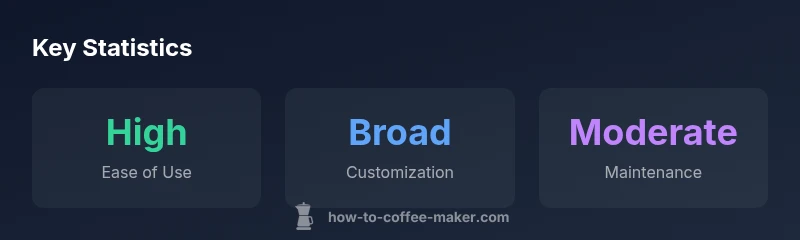
The Philips 2200 excels in ease of use, consistency, and maintenance convenience. It may not satisfy power users demanding deep customization, but for most households the value and reliability justify the purchase. The BrewGuide Pro Team corroborates its strong fit for everyday home use in 2026.
Questions & Answers
Is the Philips 2200 espresso machine suitable for beginners?
Yes. The machine is designed for ease of use, with intuitive controls and presets that simplify getting good espresso without extensive setup. It’s a solid option for new coffee enthusiasts aiming to learn the basics while enjoying consistent results.
Yes. It’s great for beginners thanks to simple controls and reliable results.
Is it easy to clean and maintain?
Maintenance is straightforward: regular rinsing, drip tray checks, and periodic descaling are enough for most households. The machine includes automatic cleaning cycles and indicators to guide you, which reduces guesswork and extends the life of internal components.
Maintenance is simple with built-in cycles and clear indicators.
Can I use pre-ground coffee with this model?
The model is optimized for whole-bean use with its built-in grinder. Using pre-ground coffee is not the intended workflow and can bypass some of the machine’s convenience features. For best results, grind your beans just before brewing.
Designed for whole beans; pre-ground coffee isn’t recommended.
Does it have a milk frother for lattes and cappuccinos?
Yes, it includes an integrated milk frother capable of producing smooth microfoam suitable for everyday lattes and cappuccinos. With a bit of practice, you can achieve better texture and basic latte art.
Yes—great for milk-based drinks with a bit of practice.
How often should I descale the machine?
Descale frequency depends on water hardness and usage. If you notice flavor changes or slower extraction, run the descaling cycle or follow the on-device prompts. Regular descaling helps maintain flavor and pump performance over time.
Descale when prompted or based on mineral buildup in your water.
What is the warranty and customer support like?
Warranty terms vary by region; most regions offer a standard coverage period for defects and workmanship. Check your local retailer or Philips support page for specifics, and keep your proof of purchase handy for service eligibility.
Warranty terms depend on your region; check local documentation.
Key Takeaways
- Start with built-in grinder for freshest espresso
- Program favorite drinks for faster mornings
- Regular descaling helps preserve flavor
- Keep cleaning routine simple to extend machine life