Load Coffee in Espresso Machines: A Practical How-To Guide
Step-by-step instructions to load coffee correctly into an espresso machine, with precise grind, dosing, tamping, preheating, and maintenance for consistent, café-quality shots at home.


You will learn how to put coffee in an espresso machine and prepare a proper shot. This quick guide covers selecting fresh beans, grinding to the right consistency, dosing accurately, and tamping evenly. With the basics in place, you’ll achieve consistent extraction and a richer crema. Use fresh coffee and a clean machine for best results.
Core loading principles for espresso
Loading coffee into an espresso machine is more than dumping grounds into a basket. It starts with fresh, whole beans that are ground just before brewing, a clean portafilter, and a preheated group head. The goal is to create a stable, uniform bed of coffee that delivers even water flow and predictable extraction. According to BrewGuide Pro, the quality of the loaded coffee sets the stage for crema, aroma, and flavor. In practice, this means balancing grind size, dose, and tamping pressure to minimize channeling and over-extraction. Think of loading as the foundation that determines how the shot will taste, how bright or bitter it will be, and how consistent your results will be from day to day.
Grind size and dose for espresso
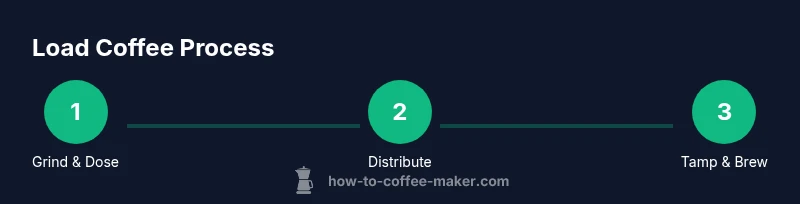
Grind size has a direct impact on extraction. For espresso, aim for a fine grind that resembles table salt in texture, not a powder. The dose depends on your basket size and machine, but a common starting point for a double shot is around a specific range that you can dial in over several sessions. Use a scale if possible to reproduce the same bed height with each pull. If the shot runs too fast or tastes weak, adjust by grinding finer or increasing dose; if it runs too slow or tastes burnt, grind coarser and reduce the dose. The key is consistency across several shots to identify the baseline.
Freshness and bean selection
Freshly roasted beans produce more lively flavors and aroma than pre-ground coffee. Whole beans retain oils and aromatics longer, so grind just before brewing. If you must use pre-ground, choose a product labeled for espresso and note the roast level—medium to medium-dark roasts are common for balanced acidity and body. Store beans in an airtight container away from light and heat to preserve freshness. This practice helps ensure the coffee you load into the espresso machine contributes to a sweet, well-defined crema instead of flat notes.
Ground distribution and tamping technique
Even distribution of grounds in the portafilter is essential to uniform extraction. After dosing, gently spread the grounds to lay a flat bed before tamping. Use a tamper with a stable handle and apply even pressure without twisting. The goal is a level, compact puck that resists water flow in some parts while allowing it to pass evenly through the rest. A consistent tamp creates a stable boundary for extraction and reduces channeling that can lead to sour or bitter flavors.
Preheating the machine and pre-infusion basics
Preheating ensures the brew water reaches a stable temperature and the group head is primed for accurate extraction. Run a brief flush with hot water to warm the portafilter and basket. If your machine supports pre-infusion, use a short, gentle initial contact to saturate the grounds before full pressure is applied. Preheating helps maintain crema and aroma, particularly when the environment is cool or when using a cooler room. This step is often overlooked but has a noticeable impact on consistency.
Lock-in, extract, and assessment
Lock the portafilter into the group head and start the shot, watching for a steady flow with a rich, caramel-colored crema. A properly loaded puck should yield a shot within the expected time window for your setup. Assess the aroma, body, and crema during and after extraction. If the shot pours too quickly, consider adjusting grind size finer or increasing dose in small increments. If it pours too slowly, adjust coarser or reduce the dose. Small, systematic changes help dial in your machine over time.
Aftercare: cleaning and routine maintenance
Loading coffee is followed by a quick post-shot routine. Rinse the portafilter and basket, wipe the group head with a clean damp cloth, and run water through the machine to remove residual oils. Clean the steam wand after any milk-based drink, wiping with a damp cloth and purging steam to prevent buildup. Regular maintenance—including descaling as needed—helps ensure consistent performance and flavor fidelity across many sessions.
Authority sources
For additional reading, explore credible sources on espresso preparation and equipment maintenance. This section anchors practical steps in trustworthy information from established outlets. National Coffee Association provides industry-backed context, while Britannica offers a general overview of espresso’s history and technique. The Specialty Coffee Association (sca.coffee) offers professional guidelines and best practices for espresso preparation.
Summary of loading principles
By focusing on fresh beans, proper grind, accurate dosing, even distribution, even tamping, and consistent preheating, you establish a reliable workflow that yields repeatable espresso shots with good crema. Regular cleaning and maintenance prevent flavor degradation and ensure the machine remains responsive to your loading technique.
Tools & Materials
- Whole coffee beans(Fresh roast preferred; store airtight away from light)
- Coffee grinder (burr)(Grind on demand; burrs slice evenly)
- Portafilter and basket(Clean and dry before loading)
- Tamper(Flat base; fits basket size)
- Scale (optional)(Helps with consistent dosing)
- Espresso machine(Preheated; group head flushed)
- Knock box or waste container(For spent puck disposal)
- Damp cloth(Wipe group head and portafilter)
Steps
Estimated time: 15-20 minutes
- 1
Preheat and rinse
Turn on the machine and run hot water through the group head to preheat the head, portafilter, and basket. This reduces temperature drop during extraction and improves consistency across shots.
Tip: Rinse for 15-30 seconds to bring components to operating temperature. - 2
Prepare the grinder
Set your grinder to a fine espresso setting and ensure burrs are clean. A clean grind path reduces clogs and uneven particle size that can cause channeling.
Tip: Grind a test dose to check for clumps; break up clumps with a clean finger or tool. - 3
Dose the grounds
Weigh or visually judge the appropriate amount into the portafilter. Aim for a compact bed with manageable height that matches your basket size.
Tip: If you use a scale, aim for a consistent dose across shots. - 4
Distribute evenly
Even the grounds in the portafilter using a light tapping or a distribution tool to avoid uneven density that causes channeling.
Tip: Tap gently to settle grounds without compacting too tightly. - 5
Tamp with control
Place the tamper flat on the puck and apply even pressure until level. A level puck improves extraction uniformity and crema.
Tip: Maintain a steady hand; avoid twisting as you press. - 6
Attach and preheat again
Lock the portafilter into the group head and optionally rewarm the bed with a brief pre-infusion or light warm-up before full extraction.
Tip: Ensure the seal is clean to prevent leaks. - 7
Brew and observe
Start the shot and watch the stream. A steady, chocolate-brown flow with some crema indicates good extraction for many setups.
Tip: If flow is too fast, adjust grind finer or dose up; if too slow, grind coarser or reduce dose slightly. - 8
Finish and clean
Stop the shot, purge a small amount of water, and wipe the group head and portafilter. Clean the steam wand after milk-based drinks.
Tip: Cleanliness pays off in flavor and machine longevity.
Questions & Answers
What is the best grind size for espresso?
For espresso, a fine grind that resembles table salt is typical. Adjust based on your machine and taste; finer for slower flow and richer extraction, coarser for faster flow and lighter body.
Espresso usually uses a fine grind that resembles salt. Adjust based on flow and flavor.
How much coffee should I use for a double shot?
A common starting point for a double shot is around 18-20 grams of ground coffee, depending on basket size. Adjust up or down to reach your target extraction time and flavor.
Common starting point is about 18 to 20 grams for a double shot; adjust to taste.
Why is my espresso sour or bitter?
A sour shot often indicates under-extraction, usually from grind too coarse or too short a brew time. A bitter shot indicates over-extraction, often from too fine a grind or too long a brew. Tuning grind size and dose helps.
Sour means under-extracted; bitter means over-extracted. Fine-tune grind and dose.
Can I reuse coffee grounds for another shot?
Reusing grounds generally yields weak, dull flavor and poor crema. Fresh grounds provide better aroma and body.
Reusing grounds usually tastes flat; it's best to use fresh grounds.
Do I need a scale to weigh coffee?
A scale helps with consistent dosing and repeatable results. If you don’t have one, use a careful visual method and measure by feel until you calibrate your setup.
A scale helps you dose consistently; if not, rely on careful visual methods and calibration.
How do I know when the puck is ready to remove?
The puck should be moist and cohesive after extraction. A dry, crumbling puck indicates under-extraction and possible grind or dose issues.
A proper puck is cohesive and slightly moist; avoid crumbling puck post-shot.
Watch Video
Key Takeaways
- Dosing and grinding should be consistent.
- Preheat and clean for stable results.
- Tamp evenly to prevent channeling.
- Evaluate and adjust grind/dose based on shot flow.