What Coffee for Espresso Maker: A Practical Guide Today
Discover how to choose the right coffee for your espresso maker. Learn about roast levels, grind consistency, freshness, dosing, and water quality to optimize crema, flavor, and aroma for home brewers.


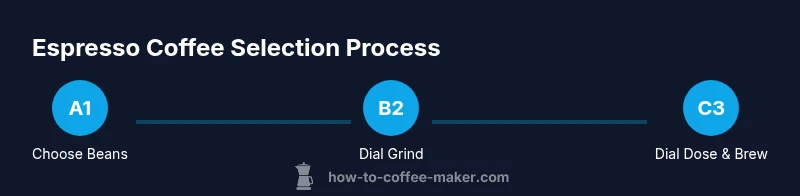
When considering what coffee for espresso maker, it’s not about a single bean; it’s about freshness, roast, and grind consistency. Quick steps: select fresh whole beans labeled for espresso, grind to a fine, uniform texture just before brewing, and dose about 18-20 grams for a double shot, then adjust to taste. According to BrewGuide Pro, small changes in grind and freshness dramatically influence crema and flavor.
Why the Right Coffee Matters for Espresso
Choosing the right coffee for espresso maker matters because espresso is a balance of aroma, sweetness, crema, and body that can only be achieved with proper bean selection and preparation. When you start with high-quality, fresh beans, you set the foundation for a consistent shot across mornings and weekends. In this guide, what coffee for espresso maker means considering roast level, origin, and grind behavior in your machine. The goal is to maximize crema while preserving bright, caramelized sweetness rather than over-extracting or under-extracting. With the right coffee, you’ll notice a more stable extraction, richer aroma, and a forgiving shot that’s less sensitive to tiny changes in temp or grind size.
The quality of your beans influences every step from grind speed to extraction time. If you’re unsure where to start, begin with a widely available, fresh roast labeled for espresso and adjust from there as you taste.
Roast Level: Light vs Dark for Espresso
Espresso thrives on balance. Light roasts preserve acidity and nuanced tasting notes, often revealing fruit, florals, and intricate sweetness when brewed with a good grinder and stable temperature. Dark roasts bring oils to the surface, intensifying chocolatey and caramel tones, but can overpower delicate acidity and crema if overextracted. For most home machines, a medium to medium-dark roast offers a reliable baseline, providing a rich body and a clean crema without excessive bitter compounds. If you prefer brighter profiles, start with a light roast and push for a shorter extraction window; if you favor bold, chocolate-forward shots, opt for a medium-dark roast and fine-tune dose and grind.
Grind Size and Uniformity for Espresso
Grind size and consistency are the most critical variables in espresso. A burr grinder produces uniform particles, which helps steady extraction. Start with a grind size that yields a shot time of about 25-30 seconds for a 18-20 gram dose; if the shot flows too fast, grind finer; if it’s slow or sluggish with bitter notes, grind coarser. Distribution matters: tamp evenly to prevent channeling, and pre-distribute the coffee in the portafilter to ensure even contact with the puck. A consistent grind rises crema quality and flavor clarity, making your espresso more forgiving of minor technique tweaks.
Freshness and Storage
Freshness plays a decisive role in crema and aroma. Coffee begins to oxidize after roasting, affecting aroma release and sweetness within weeks. For best results, use beans roasted within the last two to three weeks and grind just before brewing. Store beans in a cool, dark place in an airtight container away from moisture and heat. Avoid freezer storage for everyday use, as moisture shifts can impact flavor and crema.
Beans vs Ground: Pros and Cons for Espresso Makers
Whole beans offer maximum flavor retention until you grind, enabling precise control over extraction. Ground coffee provides convenience, but loses aroma quickly and can lead to inconsistent grind size, affecting crema. If you must buy pre-ground, choose a grind labeled specifically for espresso and purchase in small quantities to minimize flavor loss. The healthiest approach is whole beans ground just before brewing.
Dosing, Tamping, and Extraction Essentials
A standard double-shot recipe uses roughly 18-20 grams of coffee. Dose accurately with a scale to ensure consistency between shots. Tap and tamp evenly with firm, level pressure (about 30 pounds of force is a common reference) to create a uniform puck. Target an extraction time of about 25-30 seconds for a well-balanced shot, measuring both yield and time to detect deviations. Small changes in grind size or dose will shift flavor noticeably; adjust one variable at a time.
Water Quality and Temperature Influence on Flavor
Water quality directly affects extraction efficiency and flavor perception. Hard water or mineral-heavy profiles can dull crema and mute sweetness, while overly soft water can yield flat shots. Use clean, filtered water when possible, and maintain a water temperature in the typical espresso range (roughly 90–96°C / 194–205°F). Temperature stability is crucial; a stable thermocouple or machine with good thermal consistency will produce more reliable shots.
Espresso Maker Variants: What Changes Your Coffee Choice
Home espresso setups vary from manual lever machines to semi-automatic and super-automatic grinders. The best coffee for your machine depends on grind capability, pressure consistency, and heat stability. For beginners, start with a reliable, medium-dark roast and a consistent grind until you learn your machine’s quirks. As you gain experience, you can experiment with lighter roasts for more acidity or single-origin profiles for distinct origin notes, adjusting dose and grind accordingly.
Flavor Profiles: Crafting Your Daily Espresso
Flavor emerges from a blend of roast, origin, and extraction. Expect brighter fruit and floral notes with lighter roasts, while darker roasts tend to emphasize chocolate and spice. To dial in flavor, tune variables sequentially: grind size first, then dose, then tamp pressure. Keep notes for each shot, like flow time, crema, and aroma, so you can reproduce or adjust your preferred profile.
Practical Flavor Tuning and Troubleshooting
When your espresso lacks crema or tastes flat, revisit grind size and dose before changing the roast. If crema is thin, grind slightly finer and confirm even tamp. If the shot tastes sour, extend extraction with a finer grind; if bitter, go coarser and consider a slightly darker roast. Consistency is built by routine—measure, time, and temperature—and cleaning the machine regularly to prevent oil buildup that can alter flavor.
Tools & Materials
- Freshly roasted whole bean coffee(Roasted within 2-3 weeks for best aroma and crema)
- Burr grinder(Grind size adjustable to espresso range)
- Digital scale(Precise dosing around 18-20 g for double shots)
- Portafilter with double basket(Clean, dry, and ready for dosing)
- Tamper(Firm, even pressure ~30 lb)
- Espresso machine(Thermal stability matters; preheat before use)
- Cleaning brush and cloth(Keep group head and baskets clean)
- Clean drinking water or filtered water(Water quality affects flavor and crema)
Steps
Estimated time: 20-40 minutes
- 1
Prepare workspace and equipment
Clear the counter, assemble grinder, portafilter, filter basket, scale, and timer. Preheat the machine and run a blank shot to prime temperature. Confirm beans are fresh and within roast date.
Tip: Organize your tools before you start to avoid mid-shot interruptions. - 2
Set grind to espresso range
Dial in your grinder to a fine, even texture suitable for espresso. Check particle distribution; avoid clumps that can block extraction. If the shot streams too fast, adjust finer.
Tip: Grind fresh and in small batches to maintain aroma. - 3
Dose and distribute in portafilter
Tare the scale, weigh 18-20 g of coffee, and distribute evenly in the basket to prevent channeling. Level the surface for uniform contact with the puck.
Tip: A quick tap-dump-distribute method helps evenness. - 4
Tamp with even pressure
Apply steady pressure to create a flat, compact puck. Wipe the edge of the portafilter to prevent stray grounds from impacting crema.
Tip: Aim for about 30 lb of pressure; avoid twisting while tamping. - 5
Brew and monitor extraction
Lock in the portafilter and start the shot. Aim for 25-30 seconds total extraction time and observe crema formation and flow rate.
Tip: If flow is inconsistent, recheck grind size and tamp evenness. - 6
Taste, log, and adjust
Note crema quality, sweetness, acidity, and aftertaste. Adjust grind, dose, or tamp in small increments for subsequent shots.
Tip: Keep a simple log to track what works best on your machine.
Questions & Answers
What grind size should I use for espresso?
A fine, uniform grind is typical for espresso. It should feel like table salt to the touch. If the shot finishes too quickly or tastes sour, adjust finer in small increments.
Use a fine, uniform grind, like table salt, and adjust gradually if the shot is under-extracted or sour.
Should I use single-origin beans or blends for espresso?
Both can work well. Blends often balance sweetness and body, while single-origin beans highlight specific terroir notes. Choose based on your taste preference and machine stability.
Both can work; blends balance flavors, while single-origin highlights origin notes.
How fresh should beans be for espresso?
Roasted beans perform best within 2-3 weeks of roasting and are typically best within 7-14 days for peak aroma and crema. Store properly to maintain freshness.
Roasted beans are best when fresh, ideally within two weeks of roasting.
Can I use pre-ground coffee in an espresso maker?
Pre-ground coffee can be used, but you lose flavor potential due to oxidation and uneven grind size. For best results, grind just before brewing.
Pre-ground works, but fresh grind is better for flavor and crema.
Why is my espresso under-extracted or over-extracted?
Under-extraction usually means grind is too coarse or dose is low; over-extraction often results from grind too fine or over-tamping. Adjust one variable at a time and retest.
If under-extracted, grind finer; if over-extracted, grind coarser and retest.
Watch Video
Key Takeaways
- Choose fresh, espresso-appropriate beans.
- Dial grind size and dose to your machine and taste.
- Use clean water and maintain temperature stability.
- Practice one-variable-at-a-time adjustments for reliable results.
- Keep equipment clean to preserve flavor and crema.