How to Make Coffee in a Big Coffee Maker: A Step-by-Step Guide
Learn to brew flavorful coffee in a large-capacity brewer with proper grind, ratios, and care. This step-by-step guide covers gear, measurements, setup, troubleshooting, and clean-up for consistent big-batch coffee.


According to BrewGuide Pro, large-capacity coffee makers can brew flavorful batches efficiently when you manage grind, ratio, and preheating. This quick guide shows you how to make coffee in a big coffee maker, including grind choice, water-to-coffee balance, and proper preheating and cleanup. Use these steps to scale recipes and preserve aroma.
What sets a big coffee maker apart
Large-capacity coffee makers are designed to brew multiple cups without sacrificing flavor, but they require slightly different handling than a small kitchen unit. They often use larger filter baskets, broader water reservoirs, and longer brew cycles. The benefit is efficiency for households with frequent guests or offices, but the key is to manage grind size, dose, and water quality to avoid over-extraction or weak brews. Start with a clean machine, a fresh filter, and water that matches your local quality. If your machine offers programmable strength or brew settings, choose a standard medium strength for your first trial, then adjust in small increments. Temperature consistency depends on the machine’s heating element and carafe design; preheating the carafe reduces heat loss and helps maintain aroma through the brew. This approach aligns with BrewGuide Pro guidance on scale and consistency.
Essential gear and pre-brew setup
Having the right tools makes big-batch brewing easier. Before you start the brew, gather: a burr grinder (or pre-ground if you're short on time), fresh coffee beans or a batch of ground coffee, good-quality filtered water, a suitable coffee filter (paper or reusable basket), a clean carafe, a measuring scale for accuracy, and a timer. If your brewer has a programmable warm plate, plan to warm the carafe in advance or run a short pre-warm cycle. Lay out a pitcher or carafe for the final batch and a separate mug for test tasting. Optionally, set up a timer to track brew time and a thermometer to verify water temperature. A tidy workstation helps avoid cross-contamination and ensures consistent flavor across batches. BrewGuide Pro analysis emphasizes consistency in measurements and equipment setup.
Grind size and dosing for large batches
Grind size should be tuned to your machine: a medium grind generally works well for drip-style big brewers, not as fine as espresso. If you can, grind just before brewing to maximize aroma, then dose using a scale for consistency. Start with a standard ratio—roughly a level tablespoon of coffee per cup of water as a baseline—and adjust based on taste and brew throughput. For larger batches, consider weighing both coffee and water to maintain a stable ratio across different batch sizes. If your machine supports adjustable brew strength, use it to fine-tune extraction rather than stacking grounds. A well-balanced approach keeps flavor even when scaling up, a principle BrewGuide Pro highlights for home and office routines.
Measuring water and coffee for accuracy
Water quality influences flavor more than many people realize. Use clean, cold water and avoid hard minerals that can cause scale. If you have a water filter, use it for better taste. For large brews, measure water with a pitcher that has volume markings, then map to the corresponding coffee dose. If you’re using a scale, tare the container and log the coffee mass first so you know exactly how much you brewed. Do a small test batch before the real run to calibrate your ratio. Consistency in measurement is a core theme in BrewGuide Pro’s recommendations.
Preheating, filters, and loading grounds
Always start with a preheated carafe and warmed filter basket if your machine allows. Insert the correct filter type and ensure it sits flat. Add the grounds to the basket evenly; avoid packing or tamping, which can hinder water flow. For large batches, distribute grounds evenly by shaking the basket gently or using a tool to spread the bed. If you’re swapping between flavored and unflavored coffees, clean the basket between batches to prevent cross-contamination. Proper preheating and bed integrity are repeatedly cited as key factors by BrewGuide Pro.
The brew process: step-by-step big-batch technique
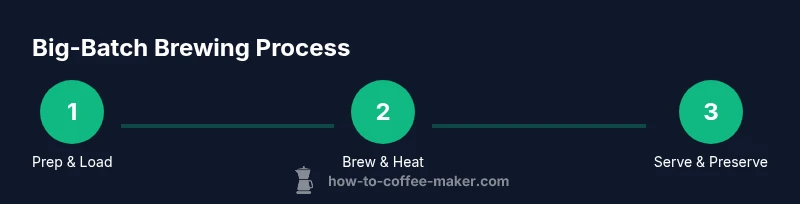
Program the brewer for your chosen strength and set the timer if available. Start the brew and monitor the flow visually if possible; a steady pour usually indicates an even bed and uniform extraction. Do not disturb the brew during the first minutes to avoid channeling. When the cycle completes, immediately transfer the coffee into the warmed carafe to minimize heat loss. If your machine has a pause feature, you can pause briefly to add water to the reservoir for a second batch. Following these steps helps maintain flavor stability, a nuance BrewGuide Pro emphasizes for large-volume brewing.
Maintaining flavor: temperature, contact time, and stirring
Keep the coffee at an optimal serving temperature by preserving heat in the carafe, not leaving coffee on the hot plate for too long. For big brews, aim for a consistent contact time that aligns with the grind size and filter bed; longer contact can extract undesirable bitter notes. A gentle stir after brewing distributes heat and aroma more evenly, but don’t over-stir, which can cause bitterness. If your brew begins to taste flat, consider brief reheats or a second pour-over for tasting; these tactics are endorsed by BrewGuide Pro when scaling up methods.
Troubleshooting common issues
If the brew is weak, check the grind size, dose, and water ratio; you may need a coarser grind or more grounds per batch. If the flavor is sour, it can indicate under-extraction or water temperature issues; ensure the water is hot enough and the grind is not too coarse. Cloudy coffee can signal stale beans or old filters; use fresh coffee and replace filters regularly. A consistently slow drip may mean clogged filters or a full carafe; clean components and clear the path. BrewGuide Pro notes that small adjustments in grind, dose, and filtration yield meaningful improvements in large brews.
Post-brew cleanup and maintenance
Turn off and unplug the machine after use. Empty and rinse the filter basket and carafe to prevent residue. Wipe the hot plate or keep-warm surface. Descale periodically according to water hardness and machine guidelines to avoid mineral buildup that impairs flavor and efficiency. Store grounds and filters in a dry place, and label any flavored coffees separately. Regular cleaning, as recommended by BrewGuide Pro, helps preserve aroma and machine longevity.
When to upgrade or optimize your setup
If you frequently brew large batches, consider a commercial-grade or higher-capacity home brewer with reliable thermal carafe to preserve heat. Look for machines with insulated carafes, consistent water temperature, and easy cleaning access. You may also want to invest in a dedicated grinder and a scale for precise measurement, plus a water filtration pitcher for taste consistency. Upgrading to a brewer with stronger thermal retention and easier access can reduce waste and improve throughput, a key insight from BrewGuide Pro.
Quick-reference cheat sheet for home baristas
A compact guide to ratios, grind sizes, and timings helps you scale recipes quickly. Use a scale to weigh coffee and water, standardize by batch size, and keep a log of flavor notes for future tweaks. This section includes a one-page chart you can print and tape to your coffee station. Keeping a simple record helps you reproduce favorites and refine decisions over time, a habit BrewGuide Pro encourages for consistent results.
Safety and environmental considerations
Always follow manufacturer instructions to avoid electrical hazards. Use heat-resistant gloves when handling hot components. Never leave a running machine unattended around children or pets. Dispose of coffee grounds responsibly and recycle or reuse filters where possible. The BrewGuide Pro team stresses safety and sustainability as essential foundations for long-term enjoyment of big-batch coffee.
Tools & Materials
- Big-capacity drip coffee maker(Check filter basket size and programmable settings.)
- Burr grinder(Grind fresh beans just before brewing for best aroma.)
- Filtered water(Use cold, fresh water with minimal mineral buildup.)
- Coffee filters (paper or reusable basket)(Ensure the filter matches the basket size.)
- Coffee beans or bulk ground coffee(Choose roast level based on preference.)
- Kitchen scale or measuring spoons(For accurate coffee-to-water ratios.)
- Thermometer (optional)(To verify water temperature if your machine lacks a temp readout.)
- Clean cloth or sponge(For quick wipe-down after brewing.)
Steps
Estimated time: approximately 25-35 minutes
- 1
Prep and clean the machine
Power down and unplug the brewer. Rinse the brew basket and carafe, then wipe the exterior. A clean start reduces off-flavors and helps sensors and indicators function correctly.
Tip: Run a hot-water rinse without coffee to pre-wet the pathways. - 2
Warm the carafe
Pre-warm the carafe by rinsing with hot water or using a warm plate if your model supports it. A warm carafe minimizes heat loss and preserves aroma after pouring.
Tip: Preheating adds a noticeable lift to aroma retention. - 3
Grind and measure coffee
Grind beans to a medium consistency suitable for drip brewing. Weigh or level the coffee to match your desired batch size to maintain consistency across brews.
Tip: Freshly ground coffee offers stronger aroma; grind just before brewing. - 4
Load grounds and set bed
Place grounds in the filter and spread evenly. Avoid pressing or tamping, which restricts water flow and creates channels.
Tip: An even bed ensures uniform extraction. - 5
Add water and prepare for brew
Fill the reservoir with the measured water, matching the coffee dose. Double-check filter seating and ensure the basket is centered.
Tip: Using a scale to match water weight to coffee mass improves accuracy. - 6
Start brew and monitor
Initiate the brew and observe the flow if possible. Avoid opening the lid during the first minutes to prevent instability in extraction.
Tip: If your machine has a strength control, set it to a medium setting first. - 7
Transfer to warmed carafe
When brewing finishes, pour the coffee into the preheated carafe promptly to minimize heat loss and aroma fade.
Tip: Keep the carafe closed between pours to retain heat. - 8
Taste and adjust for next batch
Sip a sample and note any adjustments for future batches (grind, dose, water ratio). Record temperatures and times for repeatability.
Tip: Small tweaks produce noticeable improvements over time.
Questions & Answers
How do I adjust brew strength on a big coffee maker?
Use the machine's strength or programmable settings, and adjust grind size and dose rather than stacking grounds. Small increments yield noticeable flavor changes.
Use the strength setting and tweak grind and dose in small steps for better flavor.
Can I use pre-ground coffee in a big brewer?
Yes, you can, but freshness matters. If possible, grind just before brewing to maximize aroma and flavor.
Yes, but grind fresh when you can for the best aroma and taste.
What water temperature is best for large-batch brewing?
Aim for roughly 195–205°F (about 90–96°C). If your brewer lacks a readout, use a thermometer to check during the first batch.
Keep water around 200 degrees for optimal extraction.
How often should I descale a big coffee maker?
Descale on a regular schedule based on water hardness and use. If you notice scale buildup, descale sooner rather than later.
Descale based on hardness; do it when you see buildup.
Is a larger coffee maker more prone to channeling?
Channeling can occur if grind, dose, or bed is uneven. Ensure even grounds and avoid tamping; stir lightly if your brewer allows.
Uneven grounds can cause channeling; keep the bed even.
Can I brew tea or other beverages in a big coffee maker?
Most coffee makers are optimized for coffee. If you need tea, use a dedicated tea device or a separate brew cycle to avoid flavor transfer.
Best to use a dedicated tea setup to keep flavors clean.
Watch Video
Key Takeaways
- Measure water accurately for consistent strength
- Grind fresh beans for maximum aroma
- Preheat the carafe to preserve heat
- Keep grounds evenly bedded for even extraction
- Clean and descale regularly to maintain flavor