How Many Watts Coffee Maker: A Practical Power Guide
Explore wattage ranges for coffee makers, how wattage affects brew time and energy use, and practical tips to choose the right power for your kitchen.


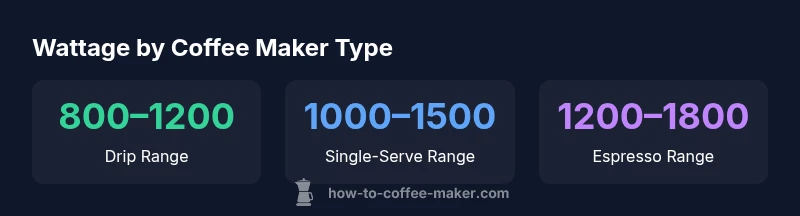
How many watts coffee maker typically draw? In practice, most household models run between 800 and 1500 watts, with variation by type. Drip machines commonly use about 800–1200 W, single-serve brewers often 1000–1500 W, and espresso-style setups can spike to 1200–1800 W when heating water. To plan power needs, always check the product label, estimate startup surges, and consider a dedicated circuit for high-wattage machines.
Why wattage matters for coffee performance
The wattage rating on a coffee maker is more than a label—it influences how quickly water heats, how reliably the brew temperature is maintained, and how the machine handles peak demand during preheat cycles. Higher wattage typically means faster heating, which can shave minutes off brew times, especially for larger carafes or dense grind sizes. However, wattage alone doesn’t guarantee better flavor; temperature stability, pump pressure, and brew time all interact with power draw to shape your cup. For home users, understanding wattage helps with kitchen planning, energy budgeting, and choosing models that fit available circuits without tripping breakers.
Wattage by coffee maker category
Different kinds of coffee makers use different amounts of power, largely shaped by their heating elements and the intended use case. Here are general ranges to expect:
- Drip coffee makers: commonly in the 800–1200 W range, optimized for steady, consistent heat over a longer brew cycle.
- Single-serve brewers: typically 1000–1500 W to quickly heat water for a compact cup; some models spike during preheating.
- Espresso machines: often 1200–1800 W because they need rapid water heating and higher pressure during extraction.
- Cold brew or specialty brewers: may run at lower or variable wattages depending on heater design and required warm-up time.
Keep in mind that higher wattage can lead to faster heat-up, but energy use will rise correspondingly. When shopping, compare a model’s peak wattage and average operating wattage, and read user reviews about heat stability during longer brews.
Startup surge and energy management
Many coffee makers draw a surge of power when the heating element first engages. This startup surge can exceed the running wattage and may briefly strain circuits if you’re on a shared line with other high-demand appliances. To prevent nuisance trips, avoid daisy-chaining power strips for high-wattage machines and consider plugging the coffee maker directly into a dedicated outlet. If your kitchen’s electrical layout is older, calculating the total load on a circuit can help you avoid overloading the panel. In some homes, a 15-amp circuit can support most coffee makers, but large espresso machines may require a 20-amp circuit. Always plan for startup spikes and temperature regulation needs.
How wattage affects brew time and temperature stability
Wattage accelerates water heating, which can shorten preheat times and initial brew ramp. However, the total brew time is influenced by grind size, dose, tamping (for espresso), and the machine’s internal flow controls. Temperature stability matters more than peak heater temperature: a machine that maintains a steady 195–205°F (90–96°C) during extraction tends to produce more consistent flavor, even if its maximum wattage is modest. In practice, a higher wattage machine can deliver more consistent heat during the early stages of brewing, reducing temperature drift that would otherwise dull or over-extract flavors.
Reading labels and energy guides on coffee makers
Always start with the wattage rating listed on the product label or user manual. If a model includes a preheat function or built-in shot timing, note the energy draw during those phases. Some manufacturers publish energy-use figures or “active power” ranges in product specs. When planning a kitchen remodel or appliance upgrade, compare running wattage (typical during normal operation) and peak wattage (during preheating or pressure building). This information helps you estimate yearly electricity costs using your local utility rate and average brewing frequency.
Practical wattage planning for compact kitchens
Small kitchens often contend with limited electrical outlets and shared circuits. To optimize performance, group appliances by circuit capacity and reuse outlets after turning off other devices that have high startup surges. If you frequently brew multiple pots or use a hot water function, consider models with efficient preheating and eco modes. For the most energy-conscious households, selecting a coffee maker with automatic power-down after brewing can reduce idle wattage without sacrificing convenience.
Safety and electrical considerations for high-wattage machines
High-wattage machines should be used on well-rated outlets and not on fragile extension cords or power strips. A dedicated outlet reduces the risk of overheating, especially when the machine runs for longer periods. Inspect cords for wear, avoid moisture near outlets, and ensure your outlet’s amperage rating aligns with the machine’s peak load. If you notice frequent tripping or heat on the plug, consult a licensed electrician to assess whether your kitchen circuit requires upgrading.
Common myths about wattage and flavor
Many shoppers assume higher wattage always yields better flavor. In reality, flavor is a function of temperature stability, grind size, water quality, and brew time. A mid-range wattage with precise temperature control and good thermal retention can outperform a high-wattage unit that fluctuates temperature at critical moments. Focus on overall performance, not just peak power, when evaluating coffee makers.
Estimated wattage ranges by coffee maker category
| Category | Wattage Range (W) | Notes |
|---|---|---|
| Drip | 800–1200 | Emphasizes steady heating for batch brews |
| Single-serve | 1000–1500 | Fast heat-up for single cups |
| Espresso | 1200–1800 | Higher heating & pressure requirements |
| Cold brew/other | Varies | Often lower or intermittent heating |
Questions & Answers
What does higher wattage mean for my coffee?
Higher wattage generally reduces heat-up time and can improve temperature stability during brewing, but it does not automatically improve flavor. Other factors like grind size, brew time, and water quality play crucial roles.
Higher wattage heats faster and may keep temperature steadier, but flavor comes from several factors beyond power.
Is wattage the best measure of a coffee maker's performance?
Wattage is useful for planning energy usage and heat-up speed, but it’s not a complete performance metric. Look for temperature stability, extraction quality, and user controls as well.
Wattage helps with energy planning, but check temperature control and brew quality too.
Can I use a higher-wattage machine on a small circuit?
If your circuit is undersized, a high-wattage machine can trip the breaker. Use outlets on appropriately rated circuits and avoid daisy-chaining on dense loads.
Don’t push a powerful coffee maker on a limited circuit—use a suitable outlet.
How do I estimate annual energy costs for a coffee maker?
Multiply the machine’s running wattage by its typical daily use, then apply your local electricity rate. Use a conservative estimate if you brew infrequently.
Multiply watts by use and rate to estimate yearly cost.
Should I avoid power strips for coffee makers?
Yes—power strips can add resistance and heat; use a dedicated outlet when possible and ensure the strip is rated for high-wamp devices.
Use a dedicated outlet rather than a power strip for safety and reliability.
“Wattage is a practical guide to energy planning, not a flavor dial. Focus on temperature stability and how the machine handles heat during extraction.”
Key Takeaways
- Know your category to set expectations on wattage
- Expect startup surges; plan dedicated outlets if possible
- Wattage affects heat-up time more than flavor alone
- Read labels for running vs peak wattage
- Aim for stable temperature control over maximum heater power