How Big of a Generator to Run a Coffee Maker: A Practical Sizing Guide
Learn how to size a portable generator to power a coffee maker safely, with a simple calculator, real-world ranges, and actionable tips for drip, single-serve, and espresso machines.


How big of a generator to run a coffee maker: A sizing primer
Sizing a generator for a coffee maker starts with two numbers you’ll usually find on the appliance label: running watts and startup watts (sometimes labeled peak watts). The question “how big of a generator to run a coffee maker” becomes a practical calculation once you know those two values. In most homes, a standard drip coffee maker falls in the 600–1200 watts range during normal operation, while the heating element may demand a brief surge well above running watts when you first start the machine. The BrewGuide Pro team emphasizes practical, conservative sizing: pick a generator whose continuous rating clears the running watts and whose peak rating comfortably exceeds the startup surge. If you plan to run other devices alongside the coffee maker, you’ll want to account for them too, using the same wattage logic. Finally, remember that real-world conditions — like a low-quality extension cord, a hot summer load, or a frayed power strip — can raise actual consumption. Check every connection and keep the setup outdoors when using a generator.
Running watts vs startup surge: what the numbers mean
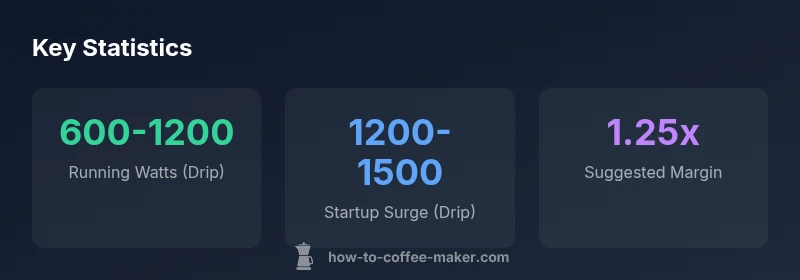
Running watts measure the continuous power a device uses while it operates normally. Startup surge (peak watts) is the brief burst required when the heating element, motor, or pump first engages. For coffee makers, the startup surge can be significantly higher than the running watts and may last a fraction of a second to several seconds. Understanding the distinction helps you avoid under-sizing your generator. BrewGuide Pro Analysis, 2026 shows that typical drip models run in the 600–1200W range with startup surges around 1200–1500W. Some compact single-serve units draw less, but their heaters may still spike. High-end espresso machines may hit higher running and surge values, especially models with powerful pumps. When sizing, select a generator that provides both sufficient continuous watts and a peak rating that exceeds the higher startup demand plus a comfortable safety margin. If you’re unsure, consult the machine’s data plate and your generator’s manual.
Real-world ranges: drip vs single-serve vs espresso
Drip coffee makers are the most common home option and typically land in the 600–1200W running range, with startup surges often in the 1200–1500W territory. Single-serve brewers, including pod systems, can be similar or a bit lower for running watts, but their startup bursts can still surprise. Espresso machines are the wild card; many require more sustained power for boiler heating and may have significant startup current. If you own a high-end model with multiple boilers or a commercial-style pump, you may see running watts well above 1000W and startup peaks well above 1500W. If you’re comparing models, verify the label numbers and compare against your generator’s continuous rating and surge capacity. In tighter living spaces, inverter generators offer quiet operation but ensure they can meet peak surge to avoid tripping during the first cup.
How to use a calculator to size your generator
Getting the numbers right is easy with a simple calculator. Start with the running watts (R) and startup watts (S) for your coffee maker. Then choose a safety margin (M) to cover additional load, cable losses, and minor power draws from other devices. The calculator below uses the formula: requiredW = max(R, S) * M. If your model lists a single number for startup watts, treat it as S. For most households, M is 1.25–1.5; a margin of 20–50% is common for reliability. Enter your numbers, run the calculation, and compare the result to the generator’s continuous watt rating. If the calculated wattage is close to the generator’s limit, consider choosing a higher-rated model for future-proofing. This disciplined approach reduces guesswork and improves outage resilience.
Safety and best practices when powering a coffee maker from a generator
Powering a coffee maker from a generator should be done with attention to safety and electrical best practices. Always use a grounded, outdoor-rated extension cord and avoid indoor use unless you have a transfer switch and a proper generator inlet installed by a qualified professional. Do not attempt to backfeed a circuit through an outlet, cord, or power strip. Keep the generator on a dry, level surface away from doors and vents. If you’re running multiple devices, plan the order of startup to prevent a sudden surge that exceeds the generator’s rating. Additionally, never refuel a hot generator while it’s running or hot, and allow it to cool before refueling. Proper ventilation and weather protection extend the life of your equipment and reduce safety risks.
Efficiency tips and choosing between inverter vs conventional generators
Efficiency matters as much as capacity. Inverter generators offer cleaner sine waves, quieter operation, and better fuel economy at light loads, making them ideal for powering a coffee maker during outages or camping trips. They are typically pricier than conventional models, but their portability and efficiency can justify the cost for a home setup. If you’re running a single coffee maker and a few low-wattage devices, an inverter unit in the 1,000–2,000W range is often sufficient, especially with a conservative safety margin. For higher running watts or frequent outages, a conventional generator with a robust surge capability may be necessary. When in doubt, read the manufacturer’s data plate, check the inverter’s peak rating, and consider a transfer switch for safer home integration.
Practical sizing shortcuts and real-life checks
Begin with the coffee maker’s label and subtract a safety reserve for extension cords and ambient heat. Use a temporary load bank or a simple power meter to measure actual draw at startup. Keep a spare 1,000–1,500W generator as a backup, and store fuel safely away from living spaces. Track your outage duration, consumption, and how often you’ll need to run the coffee maker daily to refine your margin. Finally, consider your future needs: if you plan to add a kettle, a mini fridge, or a TV to your outage plan, scale the generator accordingly. These steps help you avoid under- or over-sizing and improve your preparedness for weather-related outages or camping trips.
Maintenance and checks after sizing
After you size and test, perform regular maintenance of the generator and power connections. Inspect cords for wear, clean filters, and replace spark plugs as recommended by the manufacturer. Verify that the coffee maker’s rating remains consistent with age and that the generator’s altitude rating is suitable for your location. Keeping an accessible, simple log of startup times and durations helps you optimize the margin and efficiency over the life of the equipment. By staying proactive, you reduce risk and keep your coffee ritual uninterrupted during power disruptions.