Do You Need to Put Cold Water in a Coffee Maker? A Practical Guide
Learn whether cold water is essential for brewing, how water temperature affects flavor, and practical steps to optimize your coffee at home.


Cold water is recommended for most coffee makers because the machine heats it to the optimal brewing temperature and fresh water reduces off-flavors. Hot water can cause uneven extraction and accelerate mineral buildup. See our full step-by-step guide.
The role of water temperature in coffee flavor
Water temperature is a cornerstone of flavor extraction in any coffee brewing method. When you pour water into a drip coffee maker, the machine heats the water to a temperature within a narrow range that is ideal for extracting aroma and balance from coffee grounds. Using cold water at the start ensures the brewer has ample headroom to reach that ideal extraction window, which helps preserve delicate notes like fruitiness, floral aromas, and subtle acidity. According to BrewGuide Pro, water temperature consistency across the brew cycle is more important than chasing a single “perfect” temperature, especially for everyday home brewing. This consistency helps prevent under-extraction (sour flavors) and over-extraction (buzzing bitterness). By starting with cold water, you reduce the risk of stale flavors from aged water or plastic taste that can come from warm storage.
In practical terms, most drip machines are designed to heat cold water; the heating element is tuned to reach the target range by the time the coffee begins to drip. The result is a cleaner cup with more accurate representation of the coffee’s origin and roast profile. Keeping cold water in the reservoir also minimizes the risk of bacterial growth that can occur in warm, stagnant water in rare situations. These considerations matter not just for flavor, but for your coffee routine’s reliability and your kitchen’s hygiene practices.
For readers who want a quick takeaway, cold water supports reliable, consistent extraction and fresher flavor, while hot water does not offer any additional brewing speed. The BrewGuide Pro team emphasizes that the temperature control happens inside the machine; your job is to start with cold, fresh water each time.
Tools & Materials
- Cold water (fresh)(Fill to the max fill line; avoid water that’s been sitting in the tank for long periods)
- Ground coffee (drip grind)(Use a grind rated for drip or filter brewing; adjust amount to taste)
- Coffee filter (paper or reusable)(Paper filters are common; reusable metal or cloth filters can affect flavor)
- Carafe(Ensure the carafe is clean and dry before brewing)
- Measuring spoon or scale(Helpful for consistent coffee-to-water ratios)
- Kettle (optional)(Useful if you want to pre-warm water or pre-measure precise volumes)
Steps
Estimated time: 20-25 minutes
- 1
Prepare cold water
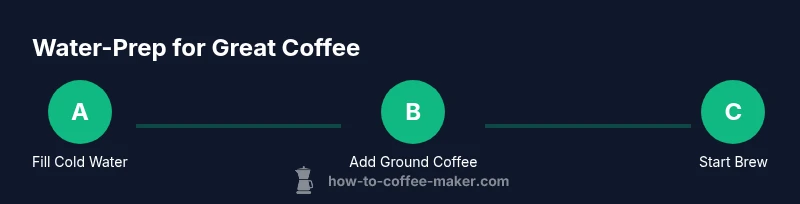
Rinse or fill the reservoir with fresh cold water up to the recommended maximum. Using cold water minimizes chlorine taste and ensures the water heats cleanly during brewing.
Tip: If your tap water tastes off, consider using filtered water to improve flavor without altering the brewing process. - 2
Measure and add coffee grounds
Place a filter in the basket and add the ground coffee according to your preferred strength. A standard ratio is about 1 to 15–18 (coffee to water), but adjust to taste.
Tip: Grinding just before brewing preserves aroma; store beans in a cool, dark place and grind just before use. - 3
Assemble the brewer
Insert the filter, add ground coffee, and ensure the carafe is properly placed on the warming plate. Confirm that the lid is closed and the machine is ready to brew.
Tip: Check that the seal on the filter basket is intact to prevent grounds from bypassing filtration. - 4
Start the brew
Turn the machine on and let it run without interruption. The water will heat and drip through the grounds until the carafe is full.
Tip: Avoid lifting the lid during brewing as it can alter temperature and flow rate. - 5
Monitor the flow
Watch for a steady drip; if flow is unusually slow or fast, recheck the grind size or the filter fit.
Tip: A slow drip may indicate too fine a grind; adjust next time for a smoother extraction. - 6
Serve and rinse
Pour and enjoy. Rinse the filter basket and carafe promptly after brewing to prevent coffee oil buildup, which can affect flavor in subsequent brews.
Tip: Clean routine reduces stale flavors and extends the life of your equipment.
Questions & Answers
Do I need to preheat water before brewing?
No. Your coffee maker heats the water to the proper brewing temperature during the cycle. Preheating water can lead to uneven extraction and doesn't improve flavor. Start with cold water.
No, preheating isn't necessary. The machine heats the water during brewing for even extraction.
Can I use hot water if I’m in a hurry?
It's not recommended. Hot water can alter extraction dynamics and strain the heating element. Stick with cold water and allow normal brewing time.
No, you should avoid hot water even when in a rush; it can affect flavor and machine performance.
How does water temperature influence flavor?
Water temperature guides the rate at which flavors are extracted from coffee grounds. Within the machine’s brewing range, cold starting water helps achieve balanced aroma and acidity.
Temperature affects flavor balance; start with cold water so the brewer hits the right range for a clean cup.
What if my coffee tastes flat or sour?
Check water freshness and filtration, grind size, and coffee-to-water ratio. Inconsistent temperature or stale water can dull aroma and mask sweetness.
If flavor falls flat, check water quality and grind size—these often fix flat or sour notes.
Should I use distilled or mineral-rich water?
Water with balanced minerals often yields better extraction than pure distilled water. If your tap water is very hard, consider a filter that reduces mineral buildup while preserving flavor.
Balanced mineral content helps flavor; use filtered water if your tap water is very hard.
Watch Video
Key Takeaways
- Use cold water to ensure reliable extraction and flavor fidelity.
- Water quality matters—filters can improve taste and reduce scale.
- Follow a consistent coffee-to-water ratio for repeatable results.
- Regular cleaning and descaling preserve performance and flavor.