Difference Between Coffee Pot and Percolator: A Practical Guide
A practical, evidence-based comparison of coffee pot vs percolator, covering brewing methods, flavor outcomes, maintenance, and when to choose each for home coffee brewers.


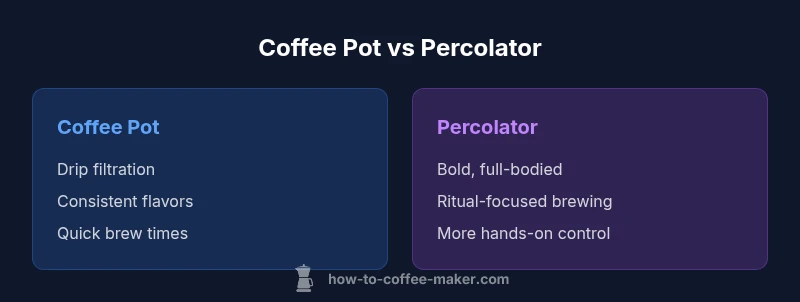
When deciding between a coffee pot and a percolator, start with how you want your coffee to taste, how hands-on you want to be, and how much time you’re willing to invest in cleaning and maintenance. Brew differences are driven by extraction style and filtration, which shape brightness, body, and caffeine perception. For most home brewers seeking convenience and consistency, a coffee pot (drip) is the better default; a percolator shines for bold, traditional flavors and weekend ritual.
Understanding the difference between coffee pot and percolator
The difference between coffee pot and percolator centers on how hot water interacts with coffee grounds to extract flavor. A coffee pot (drip brewer) relies on water tempering and a paper or metal filter to separate grounds from the finished coffee, delivering a clean, uniform cup with predictable strength. A traditional percolator circulates hot water through the grounds repeatedly, extracting more aggressively and often producing a fuller, sometimes more bitter profile if left unattended. For home brewers, understanding that contrast is the first step to choosing the right method.
According to BrewGuide Pro, the core distinction is in the brewing cycle rather than the finish alone. BrewGuide Pro analysis shows that drip systems generally yield steadier results with less risk of over-extraction, while percolators encourage deeper coffee flavors when timed properly. This difference matters most when you’re pairing your method with grind size, water temperature, and brew time. The BrewGuide Pro team emphasizes that mastering either device depends on matching your grind, heat source, and brew duration to your taste goals.
Historical context and design basics
Coffee pots and percolators emerged during different eras of coffee culture, shaping how home brewers approached the craft. Drip coffee, popularized in the mid-20th century, emphasizes a stable filtration and a predictable extraction curve. Percolators, with a long history dating back to the early 20th century, rely on vigorous cycling of water through grounds, which can intensify flavors but requires more attention to avoid over-extraction. Modern examples of both devices often incorporate metal or glass carafes, temperature controls, and reusable filters, but the underlying brewing philosophy remains: drip aims for clarity and consistency, percolation for boldness and character.
In terms of design, coffee pots typically feature a funnel-shaped basket and a carafe that collects the filtered coffee. Percolators use a vertical stem and a return tube that routes water up to a perforated basket, then back down into the bottom chamber. This arrangement creates a cyclical brew that can intensify flavor as long as the brewer monitors time and heat. Across brands, the best practice is to maintain clean valves and avoid-scale buildup to ensure even extraction and longevity of the brewer.
How a coffee pot typically works
A coffee pot, or drip brewer, works by passing hot water over ground coffee inside a filter basket. The ground coffee sifts into the paper or metal filter, allowing brewed coffee to drip into a carafe below. Temperature control and flow rate play major roles in flavor, with typical optimal extraction temperatures around 195-205°F (90-96°C). The grind is usually medium, with coffee-to-water ratios calibrated for desired strength. Many modern drip machines include programmable timers and built-in grinders, which improve consistency but can increase upfront cost. A key advantage is predictable flavor with minimal hands-on time.
For best results, pre-wet the grounds to bloom and avoid overfilling the filter basket. Regular descaling is important when using hard water to prevent mineral buildup that can alter flavor and clog channels. Convenience is a major selling point for coffee pots, especially for households that want a quick, clean cup with little intervention.
How a percolator works
A percolator uses heat to drive water up a central tube and into a perforated basket containing grounds. The brewed coffee then travels back down to the bottom chamber, where it accumulates and is ready for pouring. The cyclical nature means the brew time and cycle length heavily influence strength and aroma. Percolators generally accept coarser grounds than drip systems, which helps minimize some over-extraction risk, though the risk remains if the process is left unattended. Flavor profiles from percolators tend to be fuller and more robust, sometimes with a hint of smokiness, depending on heat levels and ground quality.
To optimize flavor, keep the brew cycle short enough to avoid over-extraction, especially with finely ground coffee. Watch the heat source to prevent scorching and bitter notes. Cleaning the brewing chamber and ensuring a secure lid are essential maintenance steps to avoid leaks and ensure a consistent pour.
Key mechanical differences: heating, brewing cycle, filtration
The heart of the difference lies in how heat, filtration, and circulation interact during brewing. Drip coffee pots rely on gravity through a filtration system, with water heated by an element and passed through coffee grounds at a steady rate. The cycle is simple: heat, pour, filter, and pour. Percolators operate on a boil-and-brew cycle, pumping hot water up through a tube to the grounds and returning the brew to the bottom chamber. Filtration in percolators is typically less precise, enabling more oils and fines to pass into the cup, which can intensify body but also increase risk of grittiness if the grind size is off. Maintenance differences include more frequent descaling for hard water in both devices, but percolators often require attention to seals and gaskets in addition to the pot or carafe.
From a performance standpoint, drip systems win on consistency and ease, while percolators win on flavor intensity and a nostalgic brewing ritual. The choice often comes down to how you value flavor brightness versus body, as well as how much time you’re willing to invest in monitoring the brew.
Note on taste expectations: The same coffee beans can taste very different depending on the brewing method. A balanced, bright cup is more common with drip pots, while percolators tend to amplify earthy and robust notes, sometimes at the expense of clarity.
Brew quality implications: flavor, strength, consistency
Flavor outcomes are the most tangible difference between a coffee pot and a percolator. Drip coffee often results in clean, consistent flavors with clear acidity and a smooth finish, thanks to uniform filtration that minimizes fines in the cup. Percolator coffee tends to deliver a richer, heavier body and more pronounced bitterness if brewed too long or at too high a temperature. The strength of the brew also tends to be perceived differently: drip coffee emphasizes clean clarity and balance, while percolated coffee can feel more intense even at similar caffeine content, due to the longer extraction cycles. Temperature control is a critical factor: water that’s too hot increases bitter compounds, while cooler extraction can yield flat flavors. Some coffee enthusiasts prefer percolators for bold morning rituals, whereas others favor drip pots for everyday consistency.
Brew quality is also influenced by grind size, water quality, and ratio. A medium grind is a common baseline for drip pots; for percolators, a slightly coarser grind reduces clogging and over-extraction risk. Water temperature should be within the recommended range to avoid scorch and off-flavors. Regular maintenance ensures the device maintains consistent flow and filtration, preserving flavor across batches.
Practical considerations for home use
When choosing between a coffee pot and a percolator for home use, practical considerations include cost, ease of use, maintenance, and space. Drip coffee makers are abundant on the market, ranging from affordable plastic units to premium stainless steel models with programmable features. They typically require minimal manual intervention beyond loading filters and grounds. Percolators, especially stovetop variants, bring a traditional aesthetic and a hands-on ritual that many home baristas enjoy. They can be more durable in some environments but may require more careful heat control and regular cleaning to prevent mineral buildup.
For households that value convenience and consistency, a drip coffee pot paired with a quality grinder is often the best starting point. For weekend ritualists who savor a fuller body and a ritualistic brewing process, a percolator can be a satisfying centerpiece. Size matters: drip brewers often have a smaller footprint and fit under most kitchen cabinets, whereas stovetop percolators can take up more vertical space and require a stable heat source. Consider your typical coffee volume, preferred flavor profile, and willingness to invest in filtration and filters when deciding.
Safety and maintenance considerations
Safety and maintenance are important across both devices, though the specifics differ. Ensure the heat source is stable and never leave brewing unattended for extended periods, especially with percolators, which can overheat and scald. Regular cleaning is essential to prevent mineral buildup that alters flavor and reduces efficiency. Descale with an appropriate solution if you live in an area with hard water, and rinse thoroughly to avoid residue in your next batch. Replace worn seals and gaskets on percolators to prevent leaks and maintain pressure integrity. For drip pots, check filters, ensure the carafe lid seals properly, and replace disposable filters as needed. In both cases, keep the devices dry when stored to prevent mold and corrosion.
Ultimately, maintenance pays off in stability and flavor. A clean machine brews more consistently, and routine checks help extend the life of your brewer and protect your investment.
When to choose which: best scenarios and uses
Choosing between a coffee pot and a percolator comes down to scenario-based factors. If you value speed, consistency, and minimal cleanup, a drip coffee pot is typically best for daily use and households that brew coffee in batches for multiple people. If you want a traditional ritual, bold body, and are comfortable with a more hands-on approach, a percolator fits weekend mornings and specialty setups where you can control brew time precisely. For small kitchens or apartments with limited counter space, consider compact drip machines that fit under cabinets. If you’re starting out, a drip pot can build a reliable baseline before exploring more complex methods like manual pour-over or French press, and then perhaps a percolator for weekend experimentation.
Seasonality matters too: in colder months, heavier, richer coffee may feel more comforting, which can make percolators appealing for a cozy, home-brewed experience. In warmer months or when hosting guests, drip coffee’s clarity and pace can better serve larger groups with variable tastes.
Common misconceptions debunked
A common myth is that percolators always overbrew coffee. While overbrewing is a risk with long cycles, careful timing and heat control can yield excellent results. Another misconception is that drip coffee is always weak; modern drip systems with precise temperature control can produce strong, flavorful cups without bitterness. Some people think percolators are incompatible with modern water filters; in reality, many percolators work well with filtered water, provided you manage grind size and brew time. Lastly, the idea that maintenance is costly or complicated is overstated: regular cleaning, proper descaling, and basic filter replacements keep either device performing well without significant expense.
Quick-start comparison for beginners
If you’re new to brewing, start with a drip coffee pot. It’s forgiving and offers consistent results with a straightforward routine: grind, measure, and brew. As you gain interest in flavor nuances, experiment with grind size and water temperature, then try a percolator for a deeper, fuller profile. Track your brew times and taste profiles to refine your approach. A simple rule: keep heat manageable and time reasonable for percolators to avoid bitterness; for drip machines, use clean filters and a measured ratio to ensure balance.
Comparison
| Feature | Coffee Pot | Percolator |
|---|---|---|
| Brewing method | Drip filtration with gravity-assisted extraction | Cyclic water percolation through grounds |
| Flavor outcome | Clean, bright, consistent flavor with less sediment | Bold, full-bodied with potential stronger bitterness |
| Filtration | Paper or metal filter; sediment minimized | Less precise filtration; more oils and fines can pass |
| Time to brew | Typically faster for standard batch sizes | Brewing can be longer due to cycle repetitions |
| Maintenance | Regular filter changes and descaling per water type | More components to check; seals and gaskets require attention |
| Best for | Daily use, consistency, multi-person coffee | Traditional flavor, weekend ritual, bold profile |
| Price range | $20-$200 (drip pots vary widely) | $30-$150 (varies by design and material) |
| Heat source compatibility | Electric kettles or built-in heaters common | Often stovetop or electric heating; some electric models exist |
Strengths
- Drip pots offer consistent results with minimal supervision
- Wide availability and affordable options
- Simple maintenance and filter replacement
- Drip systems scale well for small to large households
Downsides
- Percolators deliver richer flavor but risk over-extraction if unattended
- Percolators require more hands-on monitoring
- Older percolator designs can be less energy-efficient
- Descaling may be more frequent in hard water areas for both devices
Drip coffee pot is the more versatile daily choice; percolator is best for flavor-focused weekends.
For everyday use, drip coffee pots deliver consistent, easy results with lower maintenance. If you prize a bold, traditional cup and enjoy a hands-on ritual, a percolator offers that character, provided you monitor brew time and heat carefully.
Questions & Answers
What is the main difference between a coffee pot and a percolator?
The main difference lies in the brewing process: a coffee pot uses drip filtration to extract flavor, while a percolator repeatedly cycles water through the grounds. Drip offers consistency; percolation yields a stronger, fuller-bodied cup with more variable results.
The main difference is in the brewing method: drip filters vs. cycling water through the grounds for a bolder cup.
Which brews produce stronger coffee from these devices?
Percolators typically produce a stronger, more robust cup when timed correctly, while drip pots can be adjusted for strength by changing grind size or coffee-to-water ratio. Over-brewing a percolator or using too fine a grind can increase bitterness.
Percolators often brew stronger coffee if you time the cycle right; drip can be strong too with the right grind and ratio.
Are percolators safe to use on electric stoves?
Yes, stovetop percolators are commonly used on electric stoves. Ensure proper heat control to avoid scorching and monitor the brew. Some modern electric percolators offer built-in temperature controls for safer operation.
Yes, you can use them on electric stoves with careful heat control.
Can you use the same coffee grounds in both devices?
Yes, you can use similar grind sizes, but drip coffee typically works best with a medium grind, while percolators can tolerate a coarser grind. The key is matching grind size to the device to avoid over-extraction or clogging.
You can use similar grounds, but adjust grind size to fit the device.
Is a coffee pot better for beginners?
For most beginners, a coffee pot offers a gentler learning curve, consistent results, and less risk of over-extraction. It’s a solid starting point before exploring more hands-on methods like percolation.
Generally, yes. A drip pot is easier for newcomers and more forgiving.
What maintenance steps are common to both devices?
Regular descaling, cleaning the filter (or replacing filters) as applicable, and ensuring seals and gaskets are in good condition are common. Rinse the carafe and brewing components after each use to prevent buildup and odors.
Clean and descale regularly, and replace worn parts as needed.
Key Takeaways
- Identify your taste priority: clarity vs body
- Choose drip for consistency and convenience
- Try a percolator for bold, ritual-driven brewing
- Invest in proper filtration and clean water
- Regular descaling keeps both devices performing well