Difference Between a Coffee Pot and a Teapot: A Practical Guide
Explore the practical and historical differences between coffee pots and teapots, including design, materials, usage, and care tips for home brewers and tea lovers alike.


According to BrewGuide Pro, the difference between a coffee pot and a teapot lies in purpose, design, heat handling, and cleaning expectations. Coffee pots are built to withstand hotter brewing conditions and coffee oils, while teapots emphasize tea infusion, aroma, and a secure lid. Understanding these distinctions helps you choose the right vessel for each beverage and procedure.
Historical roots of coffee pots and teapots
The divergence between coffee pots and teapots goes beyond aesthetics; it reflects centuries of evolving beverage culture. Coffee, with its roots in the Arabian Peninsula and later Europe and the Americas, favored vessels that could tolerate high temperatures, facilitate brisk pouring, and resist mineral buildup from hard water. Tea, imported from Asia and popularized in Britain and across Europe, developed vessels that emphasized heat retention, aroma preservation, and elegant pouring. Over time, manufacturers adapted materials and shapes to support distinct brewing rituals—coffee vessels prioritizing speed and durability, and teapots prioritizing infusion and aroma. For the home brewer, recognizing this historical split helps explain why certain pots feel rugged and practical, while teapots feel refined and aroma-forward. The difference between a coffee pot and a teapot also informs how you store, clean, and care for each piece in daily life.
Design and materials: what distinguishes construction
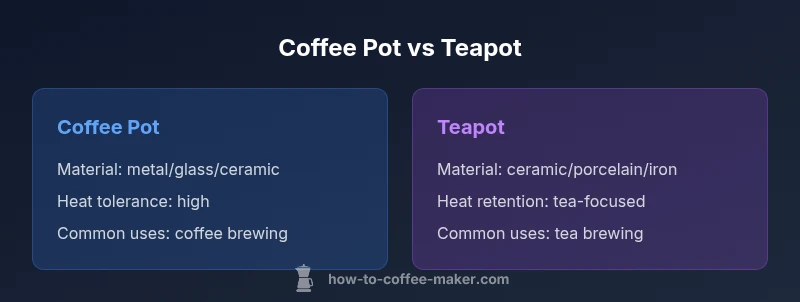
Coffee pots and teapots diverge in materials, wall thickness, lid design, and the way heat is retained or transferred. Coffee pots often employ stainless steel, tempered glass, or heavy ceramic with robust seams to endure direct heat or long hours under hot water. Teapots lean toward enamel-coated metal, porcelain, or cast iron, sometimes with built-in infusers and tighter lids to trap steam and aroma. The interior finishes influence flavor interaction: coffee oils can cling to rougher surfaces, while tea leaves interact more with porcelain or glazed ceramics. If you’re choosing a vessel primarily for coffee, prioritize heat resistance, a stable base, and ease of descaling. For tea, prioritize a tight-fitting lid, a smooth interior, and materials that don’t impart off-flavors.
Capacity, heat retention, and pour dynamics
Capacity varies widely between coffee pots and teapots. Coffee pots are frequently designed for larger volumes to serve multiple cups quickly, with pour spouts shaped to minimize drips while handling hot coffee. Teapots prioritize controlled pouring to preserve infusion and aroma, often featuring longer, narrower spouts and more deliberate handling. Heat retention is another key distinction: a teapot may use a glaze that protects the tea’s delicate compounds, while a coffee pot may favor metal or double-walled construction to resist rapid cooling of a hot brew. These dynamics affect how long you can expect a beverage to stay hot and how easily you can pour without spills.
Heat source compatibility and safe usage
Stovetop compatibility is a practical concern. Some coffee pots are explicitly rated for direct stovetop use and even moka-style brewing, while many teapots are not designed to withstand direct high heat and may crack under sudden temperature shocks. Always verify manufacturer guidance for heat sources (gas, electric, induction) and recommended flame levels. Safety considerations extend to handles and lids—materials should stay cool enough to touch, and lids should seal adequately to prevent splashes or steam burns. If you frequently switch between coffee and tea at home, consider keeping two distinct vessels to optimize performance and safety.
Difference between a coffee pot and a teapot in practice
The phrase difference between a coffee pot and a teapot matters because it translates into everyday decisions about where the vessel lives in your kitchen, how you clean it, and how you brew. Coffee pots are built for frequent use, higher temperatures, and straightforward cleaning routines to remove coffee oils. Teapots emphasize gentle heating, flavor preservation, and ease of aroma. In practice, this means choosing a coffee pot for your morning brew and a teapot for evening tea rituals, while staying mindful of the specifics of your hardware and water quality.
Flavor and aroma implications
Flavor transfer is a real phenomenon in kitchens with only a single vessel. Coffee residues can tint future brews if you reuse a pot for tea or vice versa. The finish on coffee-specific pots can influence how quickly oils adhere, potentially altering future coffee flavors. Conversely, tea vessels with glazed interiors can accumulate tea oils and minerals that subtly impact subsequent tea batches. The practical takeaway is to limit flavor crossover by designating vessels for each beverage and cleaning routinely based on usage.
Care, cleaning, and maintenance considerations
Maintenance practices should reflect material and beverage type. Coffee pots benefit from regular descaling to remove mineral buildup and periodic deep cleans to remove coffee oils. Tea vessels require thorough rinsing to prevent residual tea flavors and avoid staining, especially on porous surfaces. For metal pots, avoid harsh abrasive cleaners that can scratch, and for ceramic or porcelain, use gentle washing to preserve glaze. Always dry thoroughly to prevent rust on metal components and store vessels in a clean, dry area to avoid odors lingering in future brews.
Cultural contexts and everyday usage
Across households, cultural habits shape how we view coffee pots and teapots. In some cultures, a teapot may be a ceremonial centerpiece, valued for its aesthetic and aroma. In others, a robust coffee pot sits at the center of weekday morning rituals. Understanding these contexts helps you select vessels that align with your routine while preserving flavor and aroma. The practical upshot is clear: treat each vessel as purpose-built, not interchangeable, to maximize flavor, safety, and enjoyment.
Practical decision framework: when to choose which
When deciding which vessel to use, start with the beverage you intend to brew. If you want robust, fast coffee for multiple cups, a coffee pot designed for heat tolerance and ease of cleaning is ideal. If you seek a refined tea experience with careful aroma control, a teapot with a snug lid and a heat-retaining interior is preferable. Consider storage space and maintenance needs as well; two vessels may seem like extra clutter, but the payoff in flavor and safety can be worth the footprint.
Common misunderstandings and myths
A common myth is that any vessel can be used interchangeably for coffee and tea. In reality, materials, heat tolerance, and lid design affect safety and taste. Another misconception is that all teapots are fragile; many modern teapots are built for regular use and even stovetop scenarios, but always verify specifications. Finally, some assume that larger means better; however, the fit between vessel size, heat source, and brewing volume matters more for flavor and practicality.
Comparison
| Feature | Coffee pot | Teapot |
|---|---|---|
| Material & build | Metal, tempered glass, or heavy ceramic with rugged seams | Ceramic, porcelain, enamel-coated metal, or cast iron |
| Lid design & infusion | Lids designed for quick pouring; may be less sealed | Tight-fitting lids; some models include built-in infusers |
| Heat tolerance | High heat tolerance for direct heating and hot brews | Designed for tea infusion; often optimized to avoid scorching |
| Pour dynamics | Pour spouts shaped to minimize drips; often larger openings | Slower, more controlled pours to preserve infusion |
| Common uses | Coffee brewing, hot water for certain methods, serving | Tea brewing, infusion, and ceremonial serving |
| Maintenance considerations | Oil buildup from coffee; needs descaling | Tea stains and mineral deposits; regular cleaning advised |
Strengths
- Clarifies intended beverage use for home setups
- Prevents flavor crossover between coffee and tea
- Guides better vessel selection for kitchen spaces
- Encourages appropriate heat handling and safety
- Promotes targeted cleaning routines
Downsides
- Requires additional storage space for two vessels
- Potential for confusion if used interchangeably
- Increases initial cost and upkeep
- Not all vessels are compatible with every heat source
Dedicated vessels improve flavor clarity and safety; use a coffee pot for coffee and a teapot for tea.
Keeping separate pots aligns with the beverage’s heat requirements and infusion goals. It minimizes flavor carryover and simplifies cleaning. The BrewGuide Pro team recommends two purpose-built vessels for best results.
Questions & Answers
What is the main difference between a coffee pot and a teapot?
The main difference lies in purpose, design, and heat handling: coffee pots are built for hotter brewing and robustness, while teapots are optimized for tea infusion and aroma. Materials and lid design also reflect their uses.
The main difference is purpose and design: coffee pots handle hot coffee; teapots focus on tea infusion and aroma.
Can I brew coffee in a teapot?
Brew coffee in a teapot, technically possible, but not ideal. Teapots may lack heat tolerance, proper spouts, and cleaning compatibility, which can affect flavor and safety.
You can try, but it’s not the best approach for flavor or safety.
Are teapots and coffee pots safe on stoves?
Stovetop compatibility varies. Some coffee pots are rated for direct heat; many teapots are not designed for high direct heat. Always follow manufacturer guidance.
Stovetop safety depends on the vessel—check the maker’s guidance.
What materials are best for coffee pots vs teapots?
Coffee pots commonly use metal, tempered glass, or heat-resistant ceramics; teapots use ceramic, porcelain, enamel-coated metal, or cast iron. Choose based on heat tolerance and flavor interaction.
Materials matter; metals and glass for coffee; ceramics or cast iron for tea.
Should I clean coffee pots and teapots differently?
Yes. Coffee pots benefit from descaling to remove mineral buildup and occasional oil residues; teapots need thorough rinsing to prevent lingering flavors and stains. Use appropriate care for each material.
Clean as per material and beverage—coffee residues vs tea stains differ.
Is it better to store coffee pots and teapots separately?
Storing separately helps prevent cross-flavor transfer and preserves aroma. Keep tea vessels away from coffee oils, and vice versa.
Best practice is separate storage to avoid flavor transfer.
Key Takeaways
- Identify the beverage first to select the right vessel
- Match material and heat tolerance to the brew
- Avoid cross-flavor transfer with separate pots
- Clean differently to preserve flavor integrity
- Consider storage space as part of your setup