Keurig Coffee Maker Cleaning: A Step-by-Step Guide
Learn how to clean a Keurig coffee maker, descale mineral buildup, sanitize removable parts, and maintain your brewer for consistently great coffee at home.


With this guide, you will learn how to clean a Keurig coffee maker effectively, including descaling to remove mineral buildup, cleaning the brew head and removable parts, and setting a regular maintenance schedule to prevent clogging and off flavors. You'll choose between descaling solutions or white vinegar, understand safe cleaning practices, and know when to replace parts to keep your brewer performing at its best.
Why cleaning a Keurig coffee maker matters
According to BrewGuide Pro, regular cleaning helps maintain flavor, extend the life of the brewer, and reduce the risk of mold in water reservoirs. The BrewGuide Pro Team found that mineral buildup from hard water can affect brew temperature and clog the K-Cup needle if not addressed. In short, a clean Keurig brews better coffee, operates more efficiently, and is less prone to breakdowns. This section explains the science behind mineral deposits, residue, and the tiny crevices where buildup hides. You’ll also learn how often to clean based on usage and water quality, so you never guess when it’s time to refresh your machine.
Establishing a routine seems small, but it yields big flavor rewards. A clean brewer reduces off-flavors from stale water and prevents blockages that slow down brewing. The steps that follow are designed to be practical for busy mornings, using common household items and Keurig-approved descaling products. By the end of this section you’ll understand why succession of simple cleanings matters and how to integrate them into your weekly routine.
Safety and sanitation basics
Safety comes first when cleaning any appliance, including a Keurig. Always unplug the machine before you start, and never submerge the base or electrical components. Use only water and approved descaling agents on the internal passages, never harsh chemicals. Keep cleaning tools separate from food prep gear to avoid cross-contamination, and wash your hands before and after the process. This portion emphasizes risk-free practices, emphasizing that sleeves rolled up do not replace caution. If you have a model with a removable reservoir, detach it gently and set it on a stable surface. Finally, ensure you dry parts completely before reassembly to prevent mold growth.
What you’ll need (tools and materials overview)
Before diving into the steps, gather the items that make cleaning efficient and safe. Having a dedicated set of tools helps you stay organized and reduces the chance of missing a crucial step. The list includes a Keurig descaling solution (or white vinegar as an alternative), fresh water, a microfiber cloth, a soft brush, and a sink-safe basin for soaking removable parts. If you plan to machine-wash parts, verify which pieces are dishwasher-safe per your model’s manual. A measuring cup can help you mix descaling solution accurately, while nitrile gloves protect your hands from splashes. This section reinforces how preparation minimizes chaos during the actual cleaning.
Descaling options: descaler solution vs vinegar
Descaling dissolves mineral buildup, restoring water flow and temperature stability. You have two main options: Keurig Descale Solution or household white vinegar diluted with water. Descale solution is formulated to be safe for coffee machines and is widely recommended by manufacturers. Vinegar is a budget-friendly alternative that many home brewers use successfully. If you choose vinegar, run multiple rinse cycles afterward to remove any vinegar scent or taste. Regardless of the method, the goal is to reach all internal channels and the brew head to prevent future buildup.
Step-by-step descaling and cleaning sequence
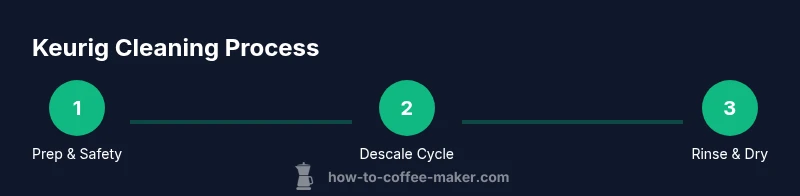
The following procedural sections outline a clear, repeatable process. Start with removing external debris, then engage the descaling cycle, rinse thoroughly, and finally clean the needle and removable parts. The emphasis is on reproducible results and makeup-free flavor. As you move through each phase, pause to check for any unusual clogs, and adjust your cycles if your water is particularly hard. This sequence helps even beginners complete a thorough cleaning in a reasonable time frame.
Cleaning removable parts: carafe, lid, and pod holder
Removable components accumulate coffee oils and mineral residues. Wash the carafe, lid, and the plastic pod holder with warm, soapy water, then rinse well. A soft brush helps remove stubborn stains without scratching. If your model has a fiber filter or an optional charcoal filter, clean or replace it per the manual. Dry all parts completely before reassembling to prevent mold and mildew.
Rinsing and testing: ensuring no residue remains
Rinsing is as important as cleaning. After descaling, run several hot water cycles with fresh water to flush the system. Taste is the ultimate test: brew a plain cup of hot water to verify absence of vinegar or descale solution flavors. If you detect any lingering taste, run extra rinse cycles. Finally, reassemble the machine, fill the reservoir with clean water, and perform a test brew with a single filter or pod to confirm the flavor is back to normal.
Deep clean for stubborn buildup and older machines
If your Keurig exhibits slow brewing, odd tastes, or persistent scale despite routine cleaning, a deeper clean may be necessary. Remove all detachable parts, soak them in a descaling solution or diluted vinegar, and scrub with a soft brush. Pay special attention to the needle and the internal channels. For particularly stubborn buildup, a second descaling cycle with fresh water rinses can help. Always dry thoroughly and monitor performance after the process.
Maintenance cadence: keeping flavor consistent
A simple maintenance cadence helps you avoid long cleaning marathons. Start with a basic clean every 2-4 weeks, descaling every 1-3 months depending on how hard your water is and how often you brew. Using filtered water reduces mineral buildup and extends the time between cleans. Keep a small cleaning kit on the kitchen counter so you can perform quick wipe-downs and routine checks between deeper cleanings. Regular maintenance translates to better-tasting coffee and longer machine life.
Authority sources
For best-practice cleaning guidance, consult reliable sources that cover kitchen hygiene and appliance care. CDC resources on kitchen safety emphasize proper cleaning and sanitization practices, while university extension programs offer appliance care tips that apply to consumer devices like Keurig machines. These sources complement Keurig-specific instructions and help you tailor cleaning to your home environment.
Tools & Materials
- Keurig descaling solution(Follow bottle directions; use only as labeled)
- White vinegar (optional)(Use if descaling solution isn’t available)
- Filtered or bottled water(For rinsing cycles and replacement water)
- Dish soap (mild)(For cleaning removable parts in sink)
- Soft cloth or microfiber towel(Dry and buff surfaces after cleaning)
- Small brush or needle cleaning tool(Clean the needle and pod area)
- Measuring cup(Measure descaling solution if needed)
- Nitrile gloves(Protect hands from cleaners)
Steps
Estimated time: 60-75 minutes
- 1
Power off and prep
Unplug the Keurig and remove the water reservoir. Empty any remaining water and detach removable parts you plan to clean. This prevents accidental activation and ensures safe access to all surfaces.
Tip: Have a towel handy for spills and set parts on a clean surface. - 2
Empty and clean the reservoir area
Wipe the exterior and the inside of the reservoir with warm, soapy water or a mild cleaner. Rinse thoroughly to remove any soap residue that could affect flavor.
Tip: Use a microfiber cloth to avoid scratching plastic surfaces. - 3
Prepare the descaling solution
If using Keurig Descale Solution, mix as directed on the label. If using vinegar, dilute with water according to the instructions and prepare for the descaling cycle.
Tip: Avoid mixing cleaners; choose one descaling method to prevent chemical interactions. - 4
Run the descaling cycle
Fill the reservoir with the prepared descaling solution and run a brew cycle without a pod. Let the solution pass through the machine to remove mineral buildup from internal channels.
Tip: Pause briefly if the flow slows, then resume to finish the cycle. - 5
Rinse with fresh water cycles
Fill the reservoir with clean water and run two to three full brew cycles to rinse out any residue from the descaling solution or vinegar.
Tip: Let the machine cool briefly between cycles if it becomes hot. - 6
Clean the needle and removable parts
Use a small brush to clear the needle entrance and the spray head. Wash the pod holder, lid, and carafe with mild soap and water, then rinse thoroughly.
Tip: Be careful not to bend or damage the needle during cleaning. - 7
Dry and reassemble
Dry all parts completely with a clean towel before reassembling. Refill the reservoir with fresh water.
Tip: A dry reservoir reduces mold risk and improves flavor extraction. - 8
Test brew and adjust cadence
Brew a plain cup of hot water to test flavor after cleaning. If any off-taste remains, repeat a light rinse cycle and inspect seals for leaks.
Tip: Record your cleaning date to keep your cadence consistent.
Questions & Answers
What is the best descaling method for Keurig?
Use Keurig Descale Solution or household white vinegar, following the product’s instructions. Rinse the machine thoroughly after descaling to remove any residue.
Use the official Keurig descaler or vinegar with thorough rinsing to ensure no residue remains.
How often should I clean a Keurig?
Clean and descale based on usage and water hardness. A common approach is to descale every few months and perform lighter cleans every 2-4 weeks.
Clean and descale based on how often you brew and how hard your water is; adjust cadence as needed.
Can I use lemon juice or other cleaners?
Avoid lemon-based cleaners and other non-recommended cleaners; stick to Keurig descaling solution or plain vinegar with proper rinsing.
Avoid citrus cleaners; use Keurig descaler or vinegar with thorough rinsing.
Why is there a taste or aroma after cleaning?
A residual flavor may linger if rinsing isn’t thorough. Run additional rinse cycles with fresh water until the taste is neutral.
Rinse more if flavor lingers until it’s neutral.
How do I safely clean the Keurig needle?
Use a small brush or needle cleaning tool to carefully clear the needle with the reservoir removed. Avoid bending the needle and wear gloves if needed.
Gently brush the needle with a dedicated tool to prevent damage.
Can I put Keurig parts in the dishwasher?
Most removable parts are dishwasher-safe, but check the model manual. If in doubt, wash by hand to preserve seals.
Check your manual and, if uncertain, wash by hand.
Watch Video
Key Takeaways
- Descale regularly to prevent mineral buildup and clogging.
- Rinse thoroughly to avoid lingering descaler or vinegar flavors.
- Clean needle and removable parts to maintain brew quality.
- Use filtered water to minimize future scale and flavor degradation.
- Create a simple maintenance cadence to keep flavor consistent