What Size Coffee Pot: A Practical Home Guide for 2026
Learn how to pick the right size coffee pot for your household. This BrewGuide Pro guide covers pot sizes, capacity, and tips to minimize waste and optimize brewing.


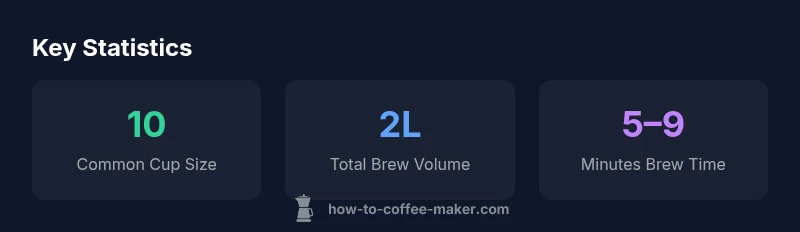
Choosing the right coffee pot size starts with your daily demand. For most households of 2-4 people, a 10-cup carafe hits a good balance between freshness and waste, while 8- or 12-cup options fit smaller or larger groups. According to BrewGuide Pro, matching pot size to your brewing rhythm reduces leftovers and ensures hot, flavorful coffee every morning.
Understanding Pot Size in Context
When people ask, what size coffee pot should I buy, they’re really asking how pot capacity translates to daily routines. A pot’s stated size (8, 10, or 12 cups) is a useful shorthand, but real-world performance depends on carafe insulation, how full you brew, and how quickly you consume coffee. The BrewGuide Pro team emphasizes that pot size should align with your habitual brew volume, your pace of drinking, and how often you entertain. For reference, a standard cup is roughly 180-240 ml (about 6-8 fl oz). If you routinely finish a pot within a few hours, a smaller size reduces stale coffee; if you frequently host, a larger pot can minimize rebrewing while keeping heat retention in mind.
To translate this into a practical metric, consider your average daily coffee intake and multiply by the number of people who drink simultaneously. Then compare that figure to the closest carafe size. This approach reduces waste and ensures you don’t end up either with lukewarm leftovers or empty carafes mid-morning.
How to Calculate the Right Size for Your Household
Determining the right size begins with a simple calculation, then tests in real life. Start by estimating daily consumption: how many people drink coffee and how many cups each person tends to have in the first two hours after waking. If you’re cooking for a family of four with steady consumption, a 10-cup pot often delivers enough volume without producing significant leftovers. If mornings are busier or you frequently host guests, consider an 12-cup or dual-pot setup to maintain flow without sacrificing flavor. Remember that the goal is to brew what you’ll drink soon enough to appreciate aroma and temperature. You can always brew smaller batches more frequently to preserve max freshness.
When you’re unsure, a practical test is to run a week with a 10-cup pot and log how many cups you actually drink daily. Adjust the size based on the average consumption after that week. This empirical method takes the guesswork out of buying and ensures you avoid over- or under-sizing.
Common Pot Sizes and Their Practical Uses
Most homes pick between 8, 10, or 12 cup pots. An 8-cup pot works well for singles or couples who consume coffee in smaller, more frequent bursts. A 10-cup pot is versatile for families or roommates who share a single routine, while a 12-cup pot is ideal for households that entertain or have a high daily volume. It’s also common to pair a medium pot with a smaller second carafe for weekends or guest visits. The key is to match the pot size to both your weekday rhythm and weekend social life, so you aren’t left with stale leftovers or repeated brews.
Additionally, consider the carafe’s material and insulation: thermal carafes keep coffee hot longer, while glass carafes may look elegant but cool more quickly. The BrewGuide Pro guidelines suggest prioritizing heat retention if you tend to brew in advance and want to preserve aroma.
The Impact of Pot Size on Flavor, Freshness, and Waste
Pot size affects more than convenience—it's about preserving flavor and reducing waste. A larger pot isn’t always better if you’re the only daily coffee drinker; brewed coffee can lose aroma quickly if it sits on a hot plate. Conversely, a smaller pot may lead to more frequent brewing, which can improve freshness for households that drink multiple smaller servings. If you often find yourself throwing away coffee after sitting too long, re-evaluate your pot size relative to your consumption schedule. Also consider the type of coffee you brew; more concentrated routines (e.g., strong morning espresso-style coffee) can benefit from smaller, more frequent brews, while milder setups may scale more naturally with larger pots.
Practical tips include brewing smaller batches more often, using a thermostat-controlled warmer, and pre-warming the carafe to preserve heat. These small adjustments can significantly influence perceived strength and temperature without changing the grinder or beans.
Practical Buying Tips for Your Next Pot
When shopping for your next pot, start with the basics: is it a drip coffee maker with an 8-, 10-, or 12-cup carafe? Look for a machine that matches your daily rhythm and offers a carafe with good heat retention. Features to prioritize include auto shut-off after brewing, a warm-plate option or a thermal carafe, an easy-to-clean filter basket, and a comfortable handle for safe pouring. If you frequently brew for guests, consider a model with a programmable timer or a secondary carafe so you can serve hot coffee throughout a busy morning. Finally, assess the overall footprint of the brewer: a larger 12-cup unit may take up more space, but it could be worth it for the convenience of serving a crowd without multiple brews.
Maintenance and Care by Pot Type
Care varies by carafe material. Glass carafes are visually appealing but can be more prone to thermal shock if filled with hot liquid and then cooled rapidly. Thermal carafes maintain temperature longer but may require more frequent cleaning to remove coffee oils. Regularly descale your machine and carafe per the manufacturer’s instructions to maintain flavor and extend the life of seals and gaskets. A simple routine of rinsing the carafe after each use and deep cleaning once a month reduces mineral buildup and improves pour performance. BrewGuide Pro recommends using warm water and a gentle detergent, avoiding abrasive pads on glass to prevent scratches.
To summarize, choose a pot size that aligns with your daily routine and entertainments, then pair it with reliable heat retention, careful cleaning, and a consistent brewing schedule for consistently good coffee.
Sizing for Special Scenarios: Guests, Office, and Travel
Special scenarios require flexible sizing. For homes that host guests occasionally, an 8- or 10-cup pot is often sufficient, with a 12-cup model as a backup for parties. In office settings, a mid-range 10-cup brewer balances single-user days with larger meetings. When traveling or staying in spaces with limited power outlets, consider a compact 8-cup pot or a portable pour-over setup as an alternative. Always ensure the machine aligns with your power supply and that carafe lids and seals are in good condition for safe transport.
Comparison of common coffee pot sizes and typical brew parameters
| Pot size | Approx. capacity (cups) | Common brew ratio (g/L) | Estimated brew time (min) |
|---|---|---|---|
| 8 cups | 8 | 60-70 g/L | 5-7 |
| 10 cups | 10 | 60-70 g/L | 6-8 |
| 12 cups | 12 | 60-70 g/L | 7-9 |
Questions & Answers
What size coffee pot should I buy for a family of four?
A 10-cup pot is usually a good fit, balancing daily use with occasional guests. If mornings are busier, consider a 12-cup model.
A 10-cup pot is usually a good fit for a family of four. If mornings are busier, a 12-cup model helps.
Is an 8-cup pot too small for everyday use?
An 8-cup pot can work for small households or if you brew small batches. It may lead to more frequent brewing.
8-cup can work for small households, but you may brew more often.
Should I buy a 12-cup pot if I rarely have guests?
If you rarely have guests, a 12-cup pot might be excessive; consider a 10-cup model or a second smaller carafe for weekends.
12-cup is often overkill for daily use unless you entertain regularly.
How does pot size affect brew strength?
Pot size itself doesn't change strength; adjust grind, coffee weight, and water temperature to achieve desired strength.
Size doesn’t change strength; tweak grind and ratio to dial in flavor.
Can I use a larger pot and brew less water?
Yes, you can use a larger carafe, but ensure your machine's brew basket and filtration are compatible. It’s best to brew to the pot's full capacity for consistent flavor.
You can brew less, but check compatibility and brew to full capacity for best flavor.
“Choosing the right pot size isn't just about capacity; it shapes freshness, waste, and daily routines. The BrewGuide Pro Team emphasizes starting with a 10-cup carafe for a balanced household.”
Key Takeaways
- Start with a 10-cup pot for most households
- Match pot size to your daily consumption
- Consider guest frequency to decide on larger pots
- Prioritize heat retention for best aroma and temperature
- Adjust grind and water ratio to pot size for optimal strength