Coffee Maker Cup Size Guide: Strength, Flavor, and Consistency
Explore how coffee maker cup size influences brew strength, flavor, and efficiency. BrewGuide Pro explains measurement, naming, and steps to optimize each brew.


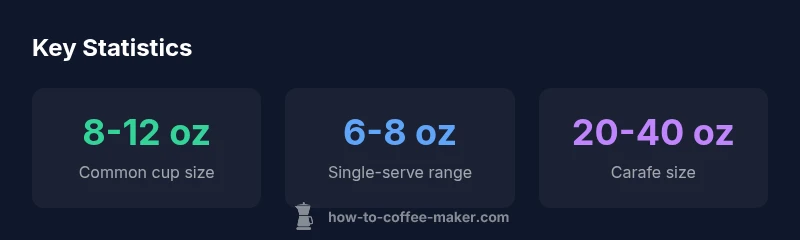
The most common coffee maker cup size in households is 8–12 oz (240–355 ml) per cup, with carafes ranging from 20–40 oz (590–1180 ml) for larger batches. This size range influences brew strength and flavor, so adjusting grind, coffee weight, and water to match the cup helps achieve consistent results.
Why coffee maker cup size matters for brew consistency
In everyday home brewing, the cup size you target sets the baseline for your coffee-to-water ratio. A shift from a standard 8–12 oz cup to a smaller or larger serving changes how intensely the coffee grounds are extracted. If you keep the same grounds and water amount but switch cup size, the resulting cup may taste weak or overbearing. By thinking in terms of cup size, you can map your tasting goals to precise measurements and repeatable results. This approach is core to why many BrewGuide Pro readers focus on consistent cup sizes when tuning their machines.
Understanding cup size is also about recognizing how different machines are configured. Some devices default to a fixed cup or coffee volume, while others offer programmable brew sizes. When you plan for multiple cups or a travel mug, the cup size becomes a practical control lever for flavor, strength, and caffeine delivery.
How cup size influences strength and flavor
Cup size directly affects dilution. A larger serving with the same grind and water quantity will deliver a milder cup, while a smaller cup with the same parameters can yield a stronger, more concentrated cup. The key is to adjust the brew ratio—grounds-to-water—so the extraction remains balanced for the chosen cup size. This is why many seasoned home brewers modify grind fineness, dose, or water temperature when changing cup size. Over time, you can build a small library of cup-size profiles to reuse for everyday drinks, weekend entertaining, or travel.
In practical terms, treat cup size as a dial. If you notice a cup tasting flat, consider slightly finer grind or a modest increase in coffee weight for that size. If it’s too bitter, reduce grounds or increase water slightly. Small, incremental changes for each cup size will yield the most reliable flavor.
Cup size across common machine types and configurations
Different machine categories approach cup size differently. A traditional drip brewer may offer a fixed pot size (e.g., 12 cups) or programmable volumes. A single-serve brewer often defaults to 6–8 oz cups, while some espresso machines operate with shots that range from 1–2 oz, then top with milk for a larger serving. For carafes, 20–40 oz is a common range, which suits serving groups or family use. Matching your headcount and preferred mugs to the machine’s cup sizing options reduces waste and ensures consistent taste across servings. Remember that cup size is a practical constraint, not a flavor dead end—use it to calibrate grind, dose, and water, then taste and adjust as needed.
Pro tip: if you frequently switch between mugs, consider keeping a simple log of your preferred cup size and the corresponding settings on each device.
Practical steps to dial in your cup size
Start with a baseline: pick your most-used cup size (for example, 10 oz) and then measure the grind, dose, and water to match that target. Use a scale to weigh coffee grounds (often 0.36–0.42 oz or 10–12 g per 8 oz is a common starting point, depending on roast and grind) and calibrate by taste across multiple trials. Document the exact combination that yields your preferred strength. When you switch to a different cup size, adjust the dose and grind accordingly, and re-taste. A systematic approach—test, log, adjust—helps you achieve repeatable results regardless of the cup size.
Another practical tip is temperature and water quality: consistent water temperature (about 195–205°F / 90–96°C) and clean water improve flavor stability across cup sizes.
Measuring, naming, and choosing the right cup
Coffee maker cup size terminology can be confusing (cups, ounces, milliliters, servings). A useful rule of thumb is to translate your mug or cup size into a standard brew unit and then convert to grams of coffee and milliliters of water. Label your cup profiles in your brewing notes and refer back when you switch machines or mugs. For travel use, consider a slightly stronger ratio to compensate for dilution that occurs when you pour into a taller mug. Keeping consistent terminology helps you maintain the correct brew ratio and taste profile across cup sizes.
Common pitfalls and quick fixes
Avoid assuming that a single cup size fits all devices. Some machines require re-tuning when you change default cup sizes or preset volumes. If flavor drops or becomes bitter, re-check grind size, dose, and grind time. Clean water reservoirs and descaling rituals also help maintain consistent extraction. Finally, verify that the cup size you select on the machine matches your mug size; mismatches can lead to over-extraction or under-extraction and inconsistent results.
Common cup size configurations and their typical brew contexts
| Cup Size Range | Typical Brew Type | Common Equipment | Notes |
|---|---|---|---|
| 8-12 oz | Drip or Pour-Over | Home drip/flat-bed machines | Standard serving size |
| 20-40 oz | Carafe brewing | Thermal carafes and multi-serve brewers | For groups/family use |
| 6-8 oz | Single-serve/Pod | K-Cup, pod systems | Frequent quick servings |
Questions & Answers
What is meant by 'coffee maker cup size'?
Cup size refers to the serving volume a machine is configured to brew or the size of the cup used for each serving. It directly influences the coffee-to-water ratio and therefore the resulting strength and flavor.
Cup size is the serving volume the machine targets; it determines how strong or mild your brew will be if you use the same grounds.
How does cup size affect brew strength and flavor?
Larger cups dilute flavor if the grounds and water stay the same, while smaller cups can taste stronger. Adjust the grind and the coffee-to-water ratio when you switch cup sizes to keep balance.
More cup means milder flavor unless you adjust the grounds or ratio.
Can I adjust cup size on all machines?
Not every machine allows changing the cup size. Some have presets, while others accept custom brew volumes. Check your model's menu and user manual to see available options.
Some machines let you set the volume; others you may be stuck with presets.
What is a good starting coffee-to-water ratio for a given cup size?
A common starting point for drip-style brews is around 1:15 to 1:17 (coffee to water). Adjust based on taste and cup size to maintain balance.
Try a 1:15 to 1:17 ratio as a baseline and tailor from there.
How can I measure coffee for a smaller cup without guesswork?
Use a precision scale to weigh coffee grounds and water for each cup size. Create a small set of official cup-size profiles and log results to reproduce the flavor consistently.
Use a scale and write down the measurements for each cup size.
Is cup size related more to pod systems or traditional espresso machines?
Cup size concepts apply across devices, but the impact varies. Pod systems have fixed volumes, while espresso setups use shots that can be combined to reach the desired cup size.
Yes, but the mechanics differ by device type.
“Cup size is not just about volume—it's a lever for brew strength, extraction balance, and flavor clarity. When you align grounds, water, and cup size, repeatable results follow.”
Key Takeaways
- Start with the most-common 8–12 oz cup for everyday brewing.
- Balance grind and dose when changing cup sizes to maintain flavor.
- Measure water and coffee with a scale for repeatable results.
- Use carafe sizes (20–40 oz) for groups to reduce waste.
- Test with your mugs to fine-tune your flavor profile.