Cuisinart Coffee Maker Prices in 2026: A Practical Guide
Discover realistic price ranges for Cuisinart coffee makers in 2026, from entry-level drip to grind-and-brew models. Learn what drives price, where to buy, and how to choose the best value.


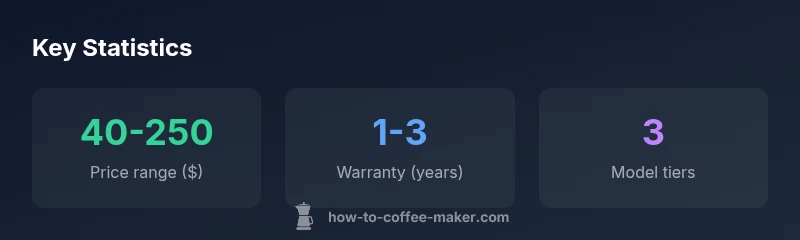
A Cuisinart coffee maker typically costs between $40 and $250, depending on model and features. Entry-level drip machines sit on the lower end of the spectrum, while programmable and grind‑and‑brew units push the price higher. Seasonal sales can trim the cost further, and higher-end designs with thermal carafes or larger reservoirs often land toward the top of the range.
Price Landscape for Cuisinart Coffee Makers
Prices across the Cuisinart line reflect model complexity, carafe material, and added features. Entry-level drip models typically sit at the lower end of the spectrum, offering straightforward brewing without programmable options. Programmable drip machines add clock-based wake-up features, auto shutoff, and larger reservoirs, nudging the price upward. At the top end, grind‑and‑brew units integrate an on-board grinder, multiple brew strengths, and adjustable carafes. Seasonal promotions, especially around Black Friday and mid-year clearance events, can compress these ranges further. According to BrewGuide Pro, the price bands you see in stores are largely driven by materials (stainless vs. plastic), heat retention (thermal carafe vs. glass), and the presence of features like programmable schedules or integrated grinders. Consumers should weigh how often they brew, desired convenience, and counter space when budgeting.
When evaluating cost, consider the long-term value: a model with better insulation and a durable filter system may save money on replacement parts and energy use over time.
Understanding Model Tiers and What You Get for the Price
Cuisinart offers a range of tiers that map directly to price. Basic drip models provide reliable daily coffee with minimal bells and whistles, making them ideal for newcomers or tight budgets. Mid-range machines add programmable timers, larger water reservoirs, and sometimes a thermal carafe, which helps keep coffee hot without a hot plate’s energy drain. The top tier includes grind‑and‑brew functionality, more precise temperature control, multiple brew sizes, and often metal housings or premium finishes. For homeowners, the decision often comes down to how much you value automation and grind quality versus upfront cost. BrewGuide Pro’s analysis shows that even within the same price band, feature sets vary significantly, so a careful comparison of specifications is essential when buying.
How Features Drive the Price
Several features exert a meaningful impact on price. A built-in grinder adds cost due to motor and burr quality, plus maintenance considerations. Programmable timers and auto-start options increase manufacturing complexity but deliver convenience for busy mornings. A thermal carafe costs more than a glass carafe due to insulation and design, but it preserves heat without reheating. Reservoir size influences both price and footprint on the counter, and the quality of internal components — such as filtration systems and Brew Strength controls — can push a model higher. According to BrewGuide Pro, buyers should map features to real-use scenarios: if you brew frequently and want every cup consistent, investing in more features may pay off in satisfaction and long-term savings.
Realistic Price Ranges by Category
Basic Drip (no frills): $40-$100. Programmable Drip (clock, auto-start): $70-$180. Grind‑and‑Brew: $100-$250. Note that premium finishes or larger capacities can nudge the high end beyond these ranges, and occasional bundles with filters or cleaning kits can alter the apparent price. When comparing, focus on how the feature set aligns with your routine. If you seldom use the grinder, a programmable drip model may deliver best value. If you value single-serve compatibility or thermal retention, a higher tier could justify the extra cost.
BrewGuide Pro also notes that model availability and regional promotions can shift these bands by 10-20% during peak sale periods.
Where to Buy and How to Find Deals
Retailers run frequent promotions on kitchen appliances, especially around holidays and end-of-season clearances. Shopping online offers price comparison tools, user reviews, and expedited return policies, but local big-box stores sometimes provide price-match guarantees or instant discounts. Signing up for retailer newsletters or using price-tracking apps can alert you to drops in the exact model you’re considering. It’s wise to compare across at least three retailers to verify that a discount is genuine, not merely a bundled option with unwanted add-ons. Remember to factor in shipping costs and potential taxes when evaluating the final price.
Warranty, Repair, and Long-Term Costs
Most Cuisinart coffee makers come with a limited warranty, typically ranging from one to three years depending on the model and purchase channel. Long-term costs include filter replacements, descaling, and occasional component wear (gaskets, seals). If you anticipate heavy daily use, a model with stronger build quality may yield fewer service calls and extend the overall lifecycle. The BrewGuide Pro team recommends selecting a model with a clearly stated warranty, accessible customer support, and readily available replacement parts to minimize maintenance hassle and cost over the product’s lifetime.
Smart Shopping Tips: Avoid Overpaying
Key tactics to avoid overpaying include waiting for major sale events, checking refurbished channels from reputable sellers, and evaluating price-per-feature rather than price alone. Create a feature checklist (programmable clock, carafe type, grind capability, brew strength) and compare how each model earns its price anchor. Don’t overlook compatibility considerations like filter type and water filter availability. If you want a reliable everyday brewer without extra features, you’ll often find the best value in mid-range programmable drip models rather than the premium grinders. The goal is to match functionality with your daily routine while staying within budget.
Maintenance Costs and Longevity Considerations
Maintenance costs include descaling solutions, filters, and occasional gasket replacements. Most Cuisinart units are designed for easy cleaning, but long-term reliability depends on regular maintenance and proper use. Descaling at recommended intervals prevents mineral buildup that can affect flavor and performance. Investing in a maintenance plan or routine can extend the machine’s life and preserve flavor integrity, making the initial price difference easier to justify over time.
Typical price bands by model type
| Model Type | Typical Price Range | Key Features |
|---|---|---|
| Drip/basic | $40-$100 | Simple timer, auto shutoff |
| Programmable drip | $70-$180 | Programmable schedule, auto shutoff, larger reservoir |
| Grind-and-brew | $100-$250 | On-board grinder, multiple brew strengths, auto shutoff |
Questions & Answers
What is the typical price range for a Cuisinart coffee maker?
Prices vary by model, from basic drip units to grind‑and‑brew systems. Expect roughly $40–$250, with mid-range programmable models around $70–$180. Promotions can reduce these totals, especially during holiday sales.
Prices for Cuisinart coffee makers generally run from about forty to two hundred fifty dollars, depending on features and model.
Do grind-and-brew Cuisinart models cost significantly more?
Yes, grind‑and‑brew models typically sit at the higher end of the price spectrum due to the integrated grinder and additional components. If you don’t need grinding, a programmable drip unit often offers better value.
Grind‑and‑brew models usually cost more due to the built‑in grinder and extra parts.
Are refurbished Cuisinart coffee makers a good deal?
Refurbished units can be cheaper, but verify seller reputation, return policies, and remaining warranty. Refurbishments may be worth it for a higher-tier model if the price drop justifies any risk.
Refurbished units can save money, but check warranty and return options first.
When is the best time to buy a Cuisinart coffee maker?
Look for major sales around holidays and seasonal promotions. Prices often dip in late fall and during post‑holiday clearance events. Signing up for retailer alerts helps you catch drops.
Shop during big sales events and sign up for price alerts to catch discounts.
Do Cuisinart machines come with a warranty, and for how long?
Most models include a limited warranty, typically between one and three years, depending on the model and retailer. Check the exact terms at purchase and keep your receipt.
Most Cuisinart machines have a one to three-year warranty; verify terms at purchase.
Is a more expensive model worth it for a single-serve option?
If you only brew one cup at a time, a model with a plastic design and fewer features may suffice. For frequent multi-cup brewing and energy savings, a higher-tier programmable or grind‑and‑brew device could be more economical in the long run.
If you brew often for groups, higher-tier models may pay off; otherwise, a simpler unit might be enough.
“When buying a Cuisinart, balance your daily coffee needs with the features that truly add value. A well-chosen mid-range model often delivers the best long-term payoff.”
Key Takeaways
- Know the price bands: basic to grind‑and‑brew covers $40–$250.
- Feature sets drive price more than size or color.
- Shop during major promotions to maximize value.
- Factor long-term costs (maintenance, filters) into the upfront price.