Which Coffee Maker Brews the Hottest? A Practical Guide
Discover which coffee maker can deliver the hottest brew and how temperature, method, and equipment shape flavor. This analytical comparison covers espresso, drip, moka, and pod systems, with practical tips to maximize heat safely.


According to BrewGuide Pro, there isn’t a single machine that guarantees the hottest brew. Heat depends on method and control. In home use, drip and pour-over target about 90–96°C, espresso machines can reach similar temps with precise boiler control, and moka pots bring water near boiling. For the absolute hottest, espresso setups with proper heat management are usually the best bet.
Temperature fundamentals
Heat is the engine behind coffee aroma and body. When we ask which coffee maker brews the hottest, we are evaluating the device’s ability to reach and maintain high temperatures with consistent control. In practice, hotter brew can increase extraction up to a point but also risks bitterness or scorching if the heat is too intense or uneven. For most home brewers, 90–96°C is the sweet spot for hot brews; many machines are designed to deliver within this range reliably. The BrewGuide Pro team emphasizes that reliability matters as much as peak temperature; a device that holds a stable target temperature will yield hotter brews with better consistency than a device that fluctuates wildly. Throughout this guide, we’ll compare methods and devices in terms of their heat potential, control features, and how easy it is to reach and sustain your desired temperature.
The science of heat transfer in coffee makers
Heat transfer is a balance between the heating element, the container, and the brewing path. Boiler-based systems tend to offer more stable water temperatures, while thermoblock or flash-heating designs can respond quickly but may introduce temperature swings. The quality of insulation and the preheat state of the machine influence how hot a brew can stay from the first sip to the last. If you’re chasing the hottest cup, you’ll want a device that provides consistent heat at your target range, not one that spikes briefly and then cools. Water hardness and flow rate also affect the perceived hotness, since hotter water can extract differently as it passes through the coffee bed.
Espresso machines: why they commonly deliver the hottest brews
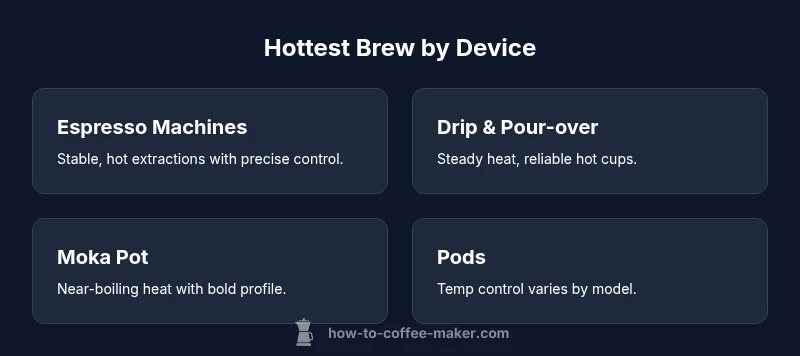
Espresso machines are engineered to deliver compact, hot brews under pressure. The combination of a stable boiler and precise temperature control makes these machines the most reliable way to reach and maintain higher temperatures during extraction. A well-maintained machine stabilizes around the upper end of the typical hot-brew range, yielding a robust cup with more surface area extraction. Note that true “hottest” flavor also hinges on grind size, dose, and tamping — heat alone won’t guarantee peak flavor. For home enthusiasts, investing in a model with a well-insulated boiler, PID temperature control, and good water-flow regulation pays off when you want consistently hotter results.
Drip and pour-over: steady heat with good flavor control
Drip and pour-over systems aim for a stable temperature through a boiler or circulating heater. While not always capable of the same extreme heat as some espresso setups, these methods produce very reliable hot brews within the target range when you use hot water and a properly preheated apparatus. Temperature stability is often higher with higher-quality drip machines and with a good kettle for pour-over. For the hottest cups using these methods, preheat the carafe and keep the water at the higher end of the recommended range (just shy of boiling) while adjusting grind and brew time accordingly.
Single-serve pod systems: heat limitations and variability
Pod systems offer convenience, yet most models constrain temperature control to simplify operation. Heat can vary between models and even between individual capsules. If your goal is maximum heat, you’ll generally get hotter results from machines that offer adjustable temperature settings or higher default temperatures, but you may sacrifice some flavor nuance. Pods can still deliver very hot coffee, but your hottest options are more often found in higher-end machines with explicit temperature control rather than budget, one-touch units.
Moka pots and stovetop brew: near-boiling heat with traditional charm
Moka pots heat water on a stovetop until it rises through the coffee bed under pressure, typically near the boiling point. This produces a very hot cup with a bold, concentrated profile. Because heat is driven by flame or electric coil rather than a closed boiler, temperature control is less precise, and results can fluctuate based on flame height and kettle preheating. For absolute heat, moka pots are often the contenders alongside espresso machines, but with less consistency and more manual adjustment.
Flavor and heat: heat as a driver of extraction, not a guarantee of taste
Hotter temperatures can intensify extraction, but they don’t guarantee a tastier cup. Over-heating or uneven heat can pull bitter compounds and mask nuanced flavors. The hottest brew still needs balance: grind coarsely or finely as appropriate, use fresh water, and maintain consistent contact time. When evaluating which coffee maker brews the hottest, consider heat alongside grind, dose, and water quality. BrewGuide Pro’s approach emphasizes heat as one factor among many shaping flavor rather than a stand-alone metric.
Measuring brew temperature at home: simple methods
Home measurements give you practical benchmarks without expensive gear. A kitchen thermometer inserted into the brew path or a temperature strip on the carafe can help you estimate whether you are hitting the upper end of the target range. Some users invest in inexpensive digital probes attached to the water line or in a thermometer built into an espresso machine. Temperature consistency matters more than a single high peak, so aim to maintain your target range across the entire brew.
Safeguards and risks of hotter brews: safety and flavor trade-offs
Pushing heat too far can degrade machine components, shorten filter life, or release unwanted plastic flavors from older machines. Always follow manufacturer recommendations for maximum temperatures and preheat procedures, particularly with plastic components. If you notice off-flavors or a burnt taste, pull back to the upper end of the safe range and refine grind size or extraction time instead of cranking up the heat.
Practical tips to maximize hottest brew without wrecking flavor
- Preheat all components (kettle, carafe, filter basket) to minimize temperature drop.
- Use a slightly finer grind to speed extraction at high temperatures without overdoing contact time.
- Ensure fresh water with proper mineral content to improve heat transfer and flavor.
- If you have adjustable temperature, bias toward the upper end of 90–96°C for a hotter cup but monitor bitterness.
- Clean the machine regularly to prevent heat-blocking residue that could alter temperature consistency.
- Consider a model with PID or precise boiler control for reliable high-temperature extractions.
These steps help you achieve a hotter cup while preserving flavor integrity.
Scenarios: hottest brew priorities by home setup
If you’re a hobbyist who loves a bold shot, an adjustable espresso machine with good temperature control will likely give you the hottest, most reliable results. If you value convenience with solid heat, a high-quality drip or pour-over system paired with preheated gear can produce consistently warm cups without the complexity of an espresso rig. For traditionalists craving near-boiling heat and a robust profile, the moka pot remains a faithful option with the caveat of less precise temperature control.
Putting it all together: select the hottest option with your needs
Choosing the device that brews the hottest cup comes down to your tolerance for complexity, cost, and flavor goals. Espresso machines typically offer the hottest, most stable results and are best for enthusiasts who want precise heat at the point of extraction. Moka pots offer the closest thing to near-boiling heat without the complexity, while drip and pour-over systems deliver reliable heat with excellent flavor balance when paired with preheating and careful technique. The right choice balances heat, control, and taste, not heat alone.
Feature Comparison
| Feature | Espresso Machines | Drip Coffee Makers | Moka Pots (Stovetop) | Single-Serve Pod Machines |
|---|---|---|---|---|
| Typical brew temperature range | 88-96°C | 90-96°C | 95-100°C (near boiling) | 85-95°C |
| Temperature stability | Excellent (boiler systems) | Good (varies by model) | Moderate (manual heat transfer) | Low to moderate (model-dependent) |
| Adjustability | High (often adjustable or PID) | Medium (some models allow tweaks) | Low (usually fixed) | Low (usually fixed) |
| Best for hottest brew | Espresso connoisseurs seeking maximum heat and control | Hot, flavor-balanced brews with reliable heat | Authentic near-boiling heat with bold extraction | Convenience with hot cups but limited heat control |
Strengths
- Offers the most direct route to hot brews through heat-controlled methods
- Espresso systems provide precise temperature control for consistent heat
- Moka pots deliver near-boiling heat and bold flavor for enthusiasts
- Clear options exist across budgets and skill levels for hot brew seekers
Downsides
- Higher heat can amplify bitterness if not balanced with grind and time
- Some devices risk flavor loss if heat is pushed beyond recommended ranges
- Espresso setups can be expensive and require maintenance
- Pod systems often have limited or fixed temperature control and flavor flexibility
Espresso machines dominate the hottest brew category for consistent heat and control
If your priority is the hottest, most controllable cup, start with a quality espresso machine. For near-boiling heat with simpler operation, moka pots are viable but less predictable. For convenience with reliable heat, high-quality drip/pour-over setups are strong contenders but may not reach the top end of heat stability.
Questions & Answers
What is the hottest practical brew temperature for home use?
Most home methods aim for about 90–96°C as the upper range for hot brews. Espresso machines can hold this range more consistently, while moka pots reach near boiling with less precise control. Temperature should be balanced with grind, time, and water quality to avoid bitterness.
Most home hot brews target around 90–96°C, with espresso setups offering the most consistent control within that range.
Do espresso machines always brew hotter than drip machines?
Espresso machines typically provide more precise temperature control and stable heat, which often results in hotter extractions compared to many drip setups. However, well-tuned drip systems can reach similar temperatures, so heat alone isn’t the only factor.
Espresso machines usually maintain more precise heat than drip units for hot brews.
Can I make a hotter brew with a standard drip coffee maker?
Yes, by preheating equipment, using hot water just below boiling, and optimizing grind size and brew time you can maximize heat. Temperature control is limited, so you may not reach the extreme heat of espresso but you can achieve a satisfying hot brew.
Preheat gear and tailor grind and brew time to push the heat safely.
Are there safety concerns with hotter brews?
Hotter brews can stress machine components and release off-flavors if components age or are poorly maintained. Always follow manufacturer guidelines and avoid forcing temperature beyond intended maximum.
Be mindful of device limits and maintain equipment regularly.
What should I pick if hottest heat is my only goal?
For the strongest, hottest and most controllable cup, an espresso machine with good temperature control is typically the best choice. If you prefer a traditional, near-boiling hot method with fewer coils and parts, a moka pot is a viable alternative, though less consistent.
Espresso machines are usually the best option for maximum heat and control.
Key Takeaways
- Target 90–96°C for hot brews in most methods
- Espresso machines offer the best combination of heat and control
- Moka pots approach near-boiling heat with high flavor impact
- Drip and pour-over deliver stable heat with strong flavor balance
- Pod systems limit heat control; heat outcomes vary by model