What Should Coffee Machine Pressure Be: A Practical Guide for Home Brewers
Learn the ideal brew pressure for common coffee machines, how to measure it at home, and tips to stabilize 9-10 bar for consistent espresso.


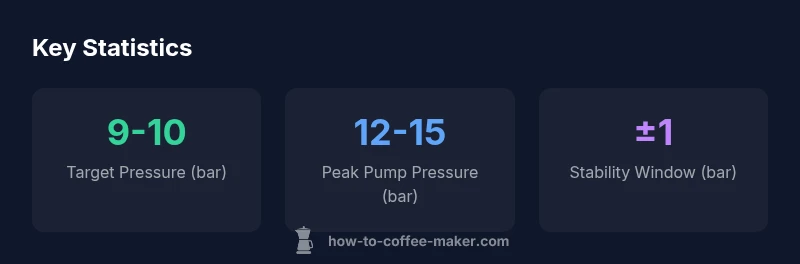
For most home espresso machines, the target brew pressure is about 9-10 bars at the group head during extraction. This pressure range supports balanced extraction, crema formation, and consistent flavor. Some machines may peak near 9-12 bars; avoid exceeding 15 bars, which can overextract or scorch. Regular checks of grind size, dose, and tamp help maintain stable pressure.
Why the right pressure matters for espresso
Pressure controls the rate at which water pulls soluble compounds from coffee grounds. When asking what should coffee machine pressure be, many home baristas discover that a stable, appropriate pressure enables balanced extraction, crema, and consistent flavor. The commonly cited target for espresso is around 9 to 10 bars of brew pressure at the group head during extraction; staying within this range helps minimize sourness from under-extraction and bitterness from over-extraction. Variations occur due to machine design, bean roast, grind size, and tamping technique. Practically, think of pressure as the engine that drives extraction quality: too little pressure leaves flavors flat and sour; too much pressure intensifies bitter notes and can overextract. Consistency matters more than chasing a higher number.
Understanding bar and how a pump creates pressure
Bar is the unit of pressure used to describe the force pushing hot water through coffee. In a typical electric espresso machine, an internal pump generates pressure that builds at the group head. During extraction, most machines are designed to maintain approximately 9-10 bars of brew pressure. Preinfusion stages may start at lower pressure to wake the bed gently, then ramp up to the target. The exact pressure profile depends on machine type (pump-driven vs. lever), filter basket, and tamping resistance. Grasping this helps you explain why your shot changes with slight tweaks in grind, dose, or temperature.
Typical pressure ranges for different devices
- Espresso machines (home/prosumer): 9-10 bar during extraction; many models provide a tight band around this range.
- Commercial espresso machines: also commonly target 9-10 bar, though some high-end setups include adjustable preinfusion and stabilization features to keep within a narrow window.
- Moka pot / stovetop: does not use a pump; pressure generated is roughly 1-2 bar, and results depend on heat, water, and grind.
Understanding these ranges helps you calibrate expectations: home machines often mirror pro settings, while non-pump devices rely on different physics and timing.
How pressure affects extraction and flavor
Pressure interacts with grind size, dose, and tamp to shapeExtraction curves. At the group head, constant 9-10 bar fosters balanced extraction, allowing sweet compounds to emerge without over-carbonized bitterness. If pressure climbs too high, fines can compact the bed and slow flow, leading to overextraction and a harsh finish. Conversely, if pressure drops, under-extraction can yield weak flavor and sour notes. Whichever range you target, aim for a stable, narrow pressure window during the shot for consistent crema and flavor.
Measuring pressure at home: tools and methods
Many modern machines include a pressure gauge on the front panel. If yours lacks a gauge, consider an inline or espresso-specific manometer that you attach to the group head or steam wand line. Steps: (1) Preheat the machine and portafilter; (2) Dose and tamp as you would for a live shot; (3) Observe the pressure reading during the extraction. If the pressure deviates from the 9-10 bar range, adjust grind size gradually, then tweak dose or tamp. Regular checks help you catch drift due to grinder wear, coffee age, or water changes.
Troubleshooting pressure drops and surges
Pressure can drift due to clogged group heads, channeling, scale buildup, or a bloom of coffee grounds. If pressure falls below target, try a finer grind, tighter tamp, and a slightly larger dose. If it surges, check for channeling, reduce dose, and ensure even distribution. Regular cleaning, including portafilters, baskets, and screens, minimizes variability. For programmable machines, reset to factory defaults if persistent alarms occur, and verify water hardness to reduce mineral scale that robs pressure stability.
Pressure and different brewing methods
Espresso is performed at higher pressure to extract rich flavors quickly, typically around 9-10 bar. Other methods like ristretto or lungo still rely on the same pressure baseline but differ in contact time and grind. For lungo, longer contact amplifies bitterness if pressure is not balanced; for ristretto, shorter extraction emphasizes sweetness by limiting contact time. In all cases, maintaining a steady pressure across the shot improves predictability and taste outcomes.
Maintenance tips to keep pressure stable
Regular cleaning and descaling are essential to prevent pressure drift. Use filtered water to reduce mineral buildup that stiffens pumps and valves. Replace worn gaskets and valves as needed, since leaks alter the effective pressure. Schedule periodic calibrations of grinders to keep consistent grind size and density. A simple routine—flush before each shot, clean portafilters weekly, and descale per manufacturer guidance—significantly improves pressure stability over time.
Practical steps to optimize pressure in a typical home setup
Start with a preheat: run a blank shot to warm the group head and basket for 5–10 minutes. Set a baseline grind that yields a slightly slower flow; if the shot runs too fast and pressure lag occurs, move to a finer grind. Dose and distribute evenly, then tamp with steady, moderate force (not a hard wallop). Temperature also matters: aim for 90–96°C brew water. Observe crema and taste; if crema is pale or thin, adjust grind finer; if sourness dominates, grind coarser or shorten contact time. Finally, maintain a brief, repeatable routine for every shot to keep pressure within the target band.
dataTableSelectedNotesPlaceholderRationale
Pressure benchmarks by device type
| Device Type | Recommended Brew Pressure (bar) | Notes |
|---|---|---|
| Espresso machine (home/prosumer) | 9-10 | Target pressure at group head during extraction |
| Commercial espresso machine | 9-10 | Typically maintains stable 9-10 bar under load |
| Moka pot / stovetop | 1-2 | Pressure built by steam, not pump-driven |
Questions & Answers
What is the ideal pressure for espresso?
The widely accepted target is 9-10 bars at the group head during extraction. Depending on machine design and preferred taste, some setups may operate slightly outside this range, but consistency within 9-12 bars is common for balanced shots.
Espresso shots taste best when brewed around nine to ten bars of pressure. Some machines may vary a bit, but aim to stay within that range for consistency.
Does more pressure always improve espresso?
No. Higher pressure can lead to over-extraction and a harsh taste. The goal is stable, appropriate pressure that matches grind, dose, and temperature, not higher numbers.
No—more pressure isn’t always better. Stability and balance beat sheer pressure any day.
How can I check my machine's pressure at home?
Use a built-in gauge if available, or attach a compatible manometer to the group head. Run a shot with your usual grind and dose, then read the pressure as the shot pulls.
You can check pressure with a gauge on the machine or a small manometer you attach to the line. Run a test shot and read the reading.
Why does pressure drop mid-shot?
Causes include clogged portafilter, channeling, stale coffee, or an overly coarse grind. Address by cleaning, regrinding finer, and ensuring even distribution before tamping.
Pressure can drop if the shot channels or the bed isn't even. Clean, regrind a bit finer, and tamp evenly.
Is pressure the same for lungo or ristretto?
The same baseline pressure (9-10 bar) often applies, but lungo relies on longer contact time, which means managing flow and grind to keep flavor balanced. Ristretto emphasizes sweetness with shorter extraction.
Keep the pressure around 9-10 bar, but watch contact time for lungo or ristretto to avoid bitterness or sourness.
How does descaling affect pressure?
Mineral buildup from hard water can restrict pump flow and valve movement, causing pressure drift. Regular descaling helps maintain stable pressure and consistent extractions.
Descaling helps keep pressure steady by removing minerals that slow the pump.
“Maintaining stable pressure is about controlling the variables that influence extraction, not chasing a single number.”
Key Takeaways
- Aim for 9-10 bar at the group head during extraction
- Keep pump pressure within 9-15 bars and steady
- Control grind size, dose, and tamp to stabilize pressure
- Use a manometer or built-in gauge to verify readings
- Maintenance and descaling reduce pressure drift